Thursday, 5 October 2023

Prof. Fathi Habashi 1928-2023


It was sad to hear the news last week of the death of Prof. Fathi Habashi, who would have been 95 years old on Monday. Born in Minya, Egypt, Fathi became Emeritus Professor of Extractive Metallurgy at Laval University, Canada and he is renowned as one of our profession's most prolific scribes, probably having published more mineral processing books than Agatha Christie has murder novels. When he showed me the Laval University library in 2016 I was amazed to see that a whole section of bookshelves was devoted to his publications, many books and journal papers. 

By the Habashi Collection at Laval University

I have known Fathi for many years, meeting regularly in USA for the SME Annual Meetings, where he frequently gave keynote lectures on his travels around the world.

At the Elsevier stand in Denver, 2009
Seattle, 2012 with Nick Hazen and Maurice Fuerstenau

Fathi's involvement with students is particularly worthy of note as he continued to mentor aspiring professionals and encourage Canadian undergraduate students to pursue hydrometallurgy well into his 90s. It is for this reason that Metsoc's Hydrometallurgy Section chose to honour him by naming one of its undergraduate awards after him, the Fathi Habashi Scholarship. He had many tips for graduate students, a few being “(i) Once you get a satisfactory job consider getting married so that you can lead a civilized life; (ii) You may become a distinguished scientist or a merited engineer but don’t forget that you are first a human being who should be modest and considerate; (iii) Do not stay in what is called “an ivory tower”. Travelling and attending conferences have enormous, sometimes unexpected benefits”.

Our thoughts at this time are with Fathi's wife Nadia, who Barbara and I met in Quebec seven years ago.

Monday, 2 October 2023

UK Mining conference 2023

The UK Mining Conference 2023 was held over 1.5 days from 13-14 September, at the Princess Pavilion, Falmouth, Cornwall. It was very well organised by ABMEC, the only Trade Association representing the British mining supply chain, providing member services to help promote sales and business growth. The Cornwall connection was initiated by Jeremy Wrathall and his team at Cornish Lithium plc.

The conference was attended by over 280 delegates from the whole mining supply chain, including investors, brokers and producers. There were even two delegates from Tata Steel in India and one from Canada, who had come over to hear about the lithium developments in Cornwall. There is much activity in the UK mining industry and in particular Cornwall, and with the world’s insatiable demand for technology metals such as lithium, copper, tin, tungsten, cobalt as well as minerals to increase food production and provide housing and infrastructure for an ever-growing population, the industry is booming.

Due to other commitments I was only able to attend the first afternoon session, so this is by no means a comprehensive report on the conference. The presentations highlighted the opportunities to responsibly extract the abundance of metals and minerals in the UK, recap on the work undertaken so far and illustrate the potential investment opportunities that lie ahead.

Supplementing the 23 presentations, covering all aspects of mining, exploration and development in the UK, were site visits to Cornwall's tin and lithium developments and to Tungsten West's operation at Hemerdon, across the border in Devon.

It was good to see so many young people at the event, especially young women pursuing careers in mining and geology.  Some of the Camborne School of Mines (CSM) students are photographed below with me and Carol Richards, the CSM Association secretary.  

Young people are the lifeblood of sustainability in the mining industry and I aimed my invited talk on the evolution of mineral processing at these students, hoping that I could inspire them to enter this most crucial operation in the mining chain. Two of the CSM students, Codi Brooks and Sally Salter, followed my presentation and spoke enthusiastically about their short time in the mining industry where they have already travelled to some exciting parts of the world. Jamie Hinch, a PhD student at the University of Oxford talked about his research project on the social aspects of lithium mining in Cornwall. 

Codi, James and Sally

Finding the future workforce is a problem internationally and CSM Director Pat Foster discussed this and showed how education and skills must be developed. In 1989 undergraduate mining degrees in the UK were offered by the Universities of Nottingham, Leeds, Strathclyde, Newcastle, Cardiff, North Staffs Polytechnic, Camborne School of Mines and Royal School of Mines. By 2005 only Camborne School of Mines and the University of Leeds had mining degree courses and by 2010 there was only CSM. By 2020 there were none, the CSM degree course being 'paused' and this year will be the final year of mining degree undergraduates. 

Pat stressed that there is a real need to bring back a full time Mining Engineering Degree but in the meantime a degree apprenticeship course starts this year, combining studying part-time at CSM and the rest of the time with their employer. Fourteen students have so far enrolled, all working in operating mines, and CSM also runs attractive MSc courses in mining, geology and mineral processing. Pat concluded by saying that we all work for one of the world's most essential industries, which is crucial to the energy transition and green economy. But we struggle to recruit young people into our industry today. There is an urgent need to promote our industry and we all have a role in this.

Falmouth's Chain Locker is my "local" and I was a little disappointed that on a fine evening delegates were confined to the upper restaurant for the first night buffet rather than in our usual sundowner area outside by the inner harbour. The restaurant was crowded, hot and noisy so I did not remain too long, but long enough for me and my old friend Ian Townsend, who both began our long careers in Zambia, to be interviewed by Ian's son, Jeff Townsend, founder of the Critical Minerals Association. Jeff asked about our long lives in the mining industry and the opportunities that it has given us for travelling the world.

With Ian Townsend

The conference ended on the evening of 14th September with a gala dinner at Falmouth's National Maritime Museum and it was good to have fine wine from Cornwall in the pre-dinner session, the excellent sparkling wines from the Camel Valley vineyard.

CSM students and staff

The highlight of the evening was the presentation of awards by St Austell and Newquay’s Member of Parliament Steve Double, who is Chair of the All-Party Parliamentary Group on Mining and Quarrying, which is supported by the Mineral Products Association. The aim of the group is to help keep Members of the Commons and Lords up to date with issues affecting the industry which represents the biggest flow of materials in the economy. 

I was pleased to receive the Lifetime Achievement Award, which I accepted on behalf of MEI (posting of 20th September). The award for Exploration went to Richard Williams, the CEO of Cornish Metals, who is also co-founder and CEO of Winshear Gold Corp., an exploration company with gold projects in Peru, which previously discovered the 1 million ounce SMP gold project in Tanzania. The ESG Award went to Kate Harcourt, an independent ESG advisor for over 10 years, with an MSc in the technology before it was fashionable! in 2018 Kate was nominated as one of the top 100 Global Inspirational Women in Mining.

Steve Double with Richard, Kate and me

I look forward to next year's conference, which will be in Falmouth again, on the week commencing 10th June.

@barrywills

Thursday, 28 September 2023

September summary: good news, bad news and MEI honoured on both sides of the Atlantic

Just days after it became the first country to land near the Moon's south pole India launched its first observation mission to the Sun. Reports in the Indian press suggest the cost will be around £36m. India last year overtook Britain to become the world's fifth biggest economy so it is hardly surprising that many observers are asking why the UK, with its post-Brexit woes and severe cost of living crisis, causing many to struggle, is still pumping aid into India, £2.3 billion over the 5 years to 2021. In July it was revealed that aid will jump another 70% next year to a nation that has a bigger economy than that of the UK. There must be a good reason. Can anyone explain and make sense of it?

I'm sure that Prof. TC Rao, the "father of Indian mineral processing" would have opined on this, but sadly he died on the 5th of the month, 13 days before his 83rd  birthday. People come and go and are soon forgotten, but it is evident from all the comments on the posting of 6th September that TC Rao's legacy will be remembered for a long, long time. He was a good friend and I will miss him a lot. As I will Fathi Habashi, Emeritus Professor of Laval University, Canada, who died this month, just a few days before his 95th birthday.

There was great news for British scientists earlier in the month with the announcement that the UK is to rejoin the EU's flagship scientific research scheme, Horizon. Prior to Brexit UK scientists were always the big winners in the grant process for past Horizon programmes, often outcompeting Germany, the other European science superpower.

Associate membership had been agreed as part of the Brexit trade deal when the UK formally left the EU in 2020 but Britain has been excluded from the scheme for the past three years because of a disagreement over the Northern Ireland Protocol. The delay and uncertainty in agreeing associations led to a drop in applications from UK scientists to work on European projects that were underwritten by UK government money. The impasse also led some EU nationals working in the UK to take their research back to their home countries or to other EU states. In addition, British researchers who had been in leadership roles in some big, long-running projects were forced to step down. Hopefully the new deal will re-energise the sector, encouraging UK researchers to reassert their prominence in European science.

UK Prime Minister Rish Sunak announced this month a major overhaul of the Government's green policies, the key change being a five-year delay in the ban on the sale of new petrol and diesel cars and a more pragmatic approach to the net zero target by 2050.

The move has predictably provoked a backlash among politicians of all parties and green activists but maybe his predecessors' green targets were not that practical considering the constraints likely to be imposed due to the supply of the raw materials needed for the green transition. Mining production would need to be considerably ramped up as there is physically not enough material at current extraction rates to produce one generation of renewables technology (which needs to be replaced every 20 years or so) and to phase out fossil fuels.

Critical metals were the subject of many of the presentations at the UK Mining Conference in Falmouth this month, attended by over 280 delegates and I was pleased to have been invited to give a presentation on the evolution and importance of mineral processing. I was also honoured to receive the Lifetime Achievement Award at the Gala Dinner at Falmouth's National Maritime Museum, which I accepted on behalf of MEI (posting of 20th September). I would like to take the opportunity here of thanking my nominators, Prof. Patrick Foster, Director of Camborne School of Mines, and Ian Townsend, retired consultant, formerly with Outotec.

I would also like to thank Dr. Rob Dunne, semi-retired consultant and former adjunct Professor at both the University of Queensland and Curtin University, Australia for nominating me for the Frank F. Aplan Award of the Society for Mining, Exploration & Metallurgy (SME) which I was informed will be presented to me at the SME Annual Meeting in Phoenix in February. Thanks also to those who supported the nomination: Prof. Tim Napier-Munn, former director of the JKMRC, Australia, Prof. Cyril O'Connor, of the University of Cape Town and former Chairman of the IMPC, Dr. Ronel Kappes, of Newmont Corp., USA and Prof. Corby Anderson, of Colorado School of Mines, USA.

And I was more than pleased to hear that Amanda's voluntary work, for a charity supporting people affected by domestic abuse and sexual violence, has been recognised by a nomination for The King’s Award for Voluntary Service celebrating the outstanding work of local volunteer groups across the UK. Naturally we are immensely proud of Amanda's efforts, both within and outside MEI.

The really bad news from UK this month concerns the chaotic start to the academic year for teachers and pupils in many schools in the UK.  During the post-war building boom of the 1950s, 60s and 70s, reinforced aerated autoclaved concrete (RAAC) was viewed as a wonder material, as filled with bubbles of air it is about a quarter of the weight of normal reinforced concrete. Due to its light weight, planks of RAAC were widely used to make the roofs. However it became apparent that the porous, sponge-like concrete could easily absorb moisture, particularly on roofs, weakening the material and also corroding steel reinforcement within.

About 30 years ago it became known that the lifespan of RAAC in many public buildings, including hospitals and schools, was no greater than 30 years. This is a problem for which urgent action has been long overdue, yet the decision to take it has come at possibly the most disruptive time possible, the start of the school year. And it's no surprise that many are wondering about chaos in the Department for Education, all part of a Britain which seems broken at the moment.

Source: Matt, The Telegraph and Nick Newnann, Spectator

And this month our thoughts have also turned to north Africa where thousands have been tragically killed in the massive earthquake in Morocco and the devastating flooding in Libya. Nature has been particularly cruel over the past months.

@barrywills

Monday, 25 September 2023

Memories of IMPC 2003 Cape Town: African Night

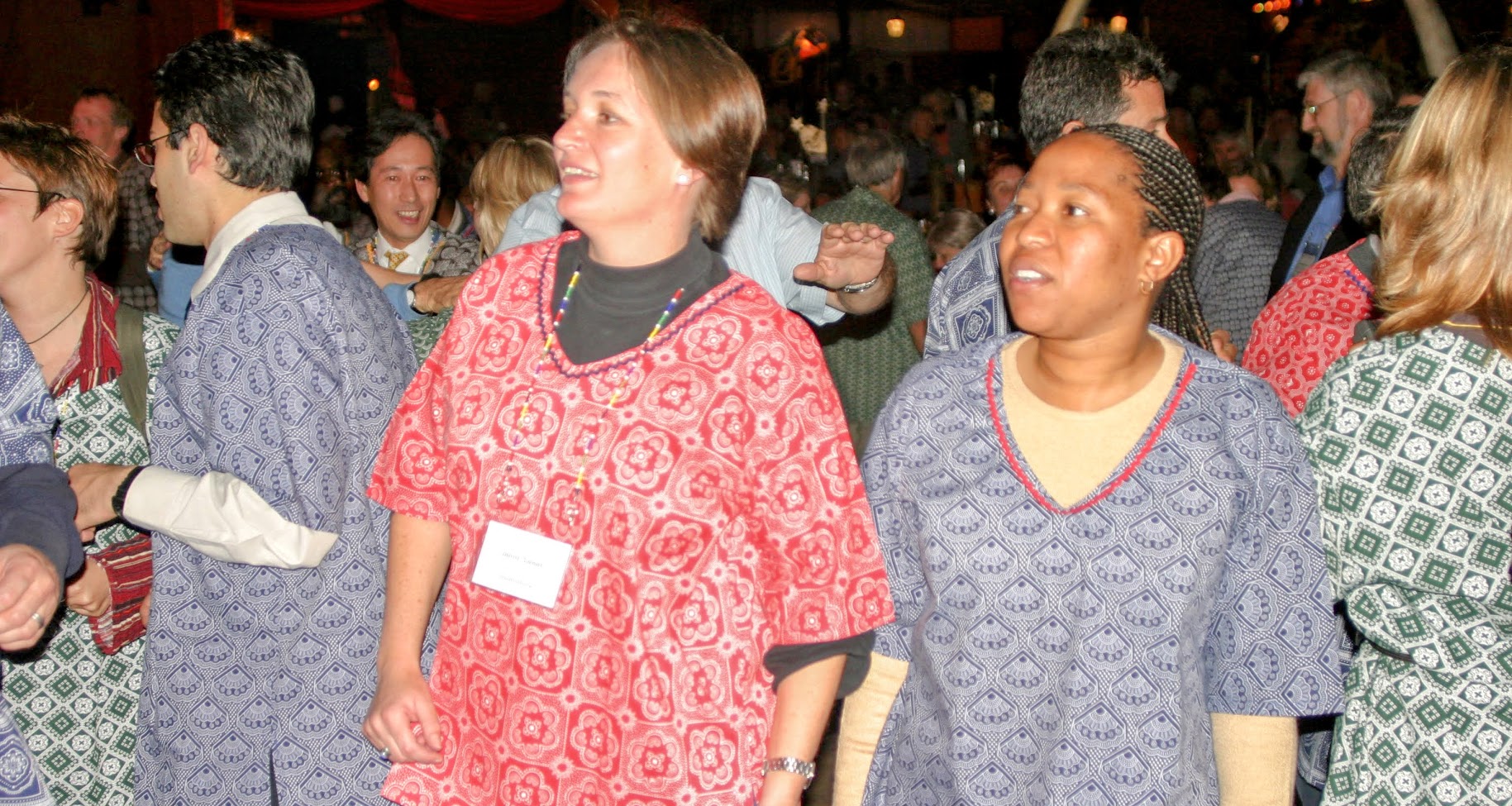
Those who attended the African theme evening at Ratanga Junction during the IMPC in Cape Town, 20 years ago, will never forget it, as it is a prime candidate for the most enjoyable conference social event ever. With top class entertainment, fine food and wines it is fairly obvious from the photos below that a great time was enjoyed by all!


@barrywills

Friday, 22 September 2023

A sea of new faces at the September Mining Sundowner

There was a record attendance at last night's Cornish Mining Sundowner at Falmouth's Chain Locker.

It started off fairly normally, with a few new faces and it was particularly good to welcome Laura Tyler (left on photo below), Chief Technical Officer at BHP, Adelaide, who was on a brief visit to Cornwall. 

Laura was guest speaker at the CSM Association Annual Dinner in March, and what an inspirational speech it was, urging the young people in the audience to follow their dreams and to grasp any opportunities that arrive. Laura left Camborne School of Mines in 1991 with an MSc in mining engineering, so it was great to see the numbers boosted last night by a mass entry of new CSM MSc students who began their courses this week. These are the future of our industry so I hope we will be seeing many of them at the sundowners over the coming months.

The next sundowner, at the Chain Locker, will be on Thursday October 19th from 5.30pm.

@barrywills

Wednesday, 20 September 2023

MEI honoured at the UK Mining Conference

The UK Mining Conference was held last week in Falmouth and at the final evening Gala Dinner at the National Maritime Museum I was pleased to accept the UK Mining Lifetime Achievement Award. I thank Amanda for announcing this on LinkedIn and I really appreciate the kind comments that have been received.

However, I want to stress here that this honour was not a solo effort and at the Awards Dinner I accepted it on behalf of MEI. As most people know, MEI is a small family business, and I must thank my wife, Barbara, who has supported me in everything that I have done in our 56 years of marriage. My partners in MEI are our son Jon and daughter Amanda and I doubt if I would have got this award without their contributions.

Amanda and I formed MEI in the late '90s and Jon joined us in 2003. As he now lives in Luxembourg he could not be present at the awards ceremony, but Barbara and Amanda were. 

With Barbara and Amanda at the UK Mining Gala Dinner
The MEI team in Cape Town in April