Showing posts with label Pyrometallurgy. Show all posts

Wednesday, 7 December 2022

Prof. Noel Warner: 1932-2022

I heard rather belatedly a few days ago of the death of Prof. Noel Warner, on April 14th at the age of 90.

Noel Warner was Emeritus Professor of Minerals Engineering at the University of Birmingham, UK. I got to know this genial Australian very well in the late 80s and early 90s when he was external examiner for the mineral processing degree at Camborne School of Mines. He was President of the Institution of Mining and Metallurgy, 1992-3.

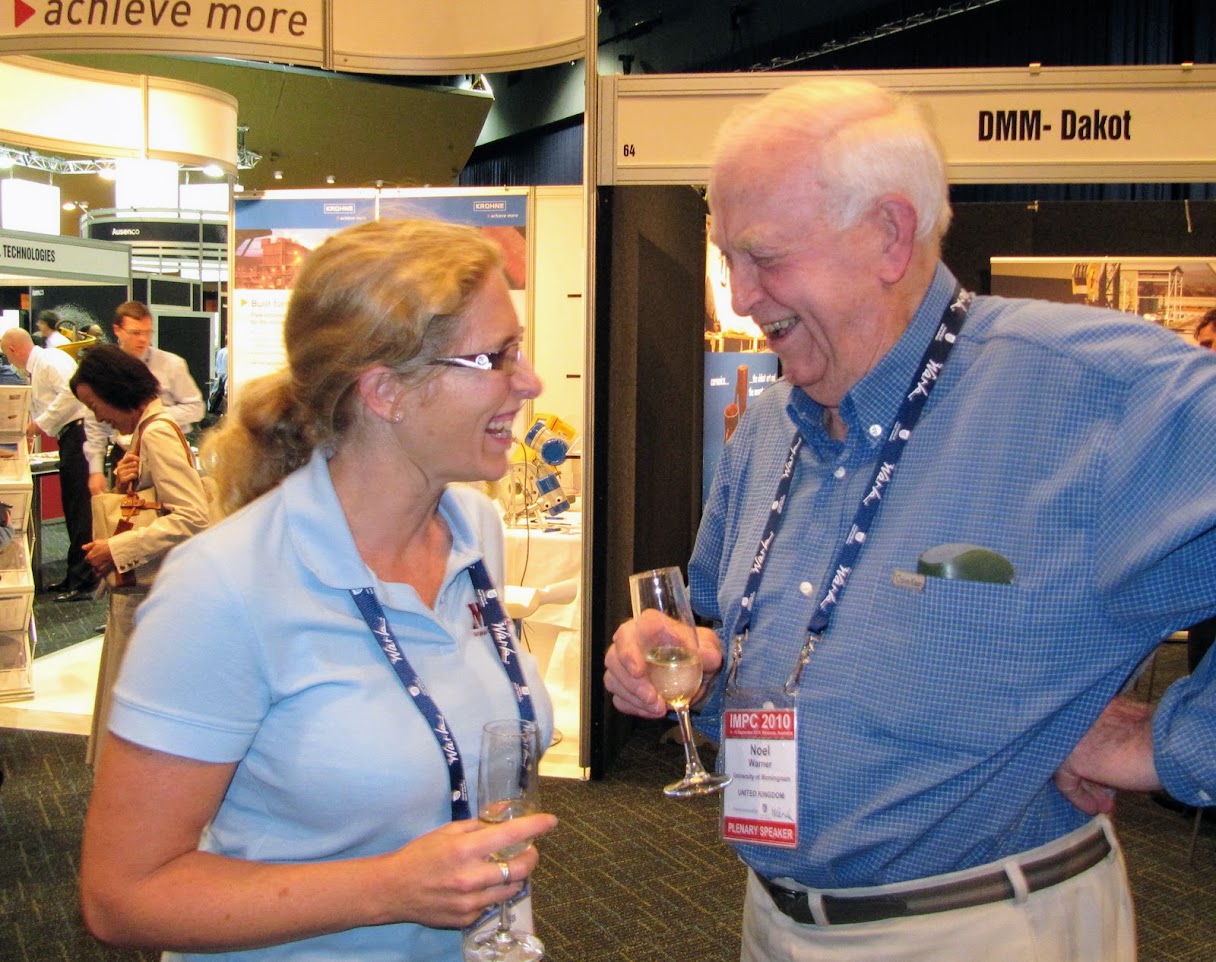
Amanda Wills with Noel Warner at the 2010 IMPC in Brisbane

He used to talk passionately of the process that he and his team at Birmingham were developing for the treatment of polymetallic massive sulphide deposits. The process was direct ore smelting. What was to become known as the Warner Process (Minerals Engineering Vol. 2 Number 1, 1989) was radical, in that the ore was smelted in a single furnace, the enormous amount of energy required to do this being recovered from the molten slag. Expensive comminution was avoided, apart from some preliminary crushing, and the inefficient flotation step was also by-passed. Pilot plant runs using McArthur River ore showed that zinc and lead recoveries could be well over 90% and with the adoption of innovative energy recovery technology, the thermal requirements could be satisfied by the inherent energy content of the ore itself. The Birmingham team showed that the energy requirements of direct ore smelting could be competitive with conventional mineral processing, particularly for ores containing sulphides.

Noel got a pilot plant built and operated at the University of Birmingham and demonstrated that the closed circuit could be worked on a big scale, and a number of people were attracted to come and see it, but enthusiasm was not overwhelming. Maybe it was too radical an innovation to be thrust on what was then a very conservative industry?

It's a shame that Prof. Warner never saw his process adopted commercially. It is certainly novel and operating at around 1000C the processing dynamics are very fast compared with flotation and electrowinning.

I have no doubt that comminution and concentration techniques will continue to evolve, but will there be a time when they lose the battle, when the remaining ores are so finely disseminated and intergrown that they can no longer be treated by physical methods? Is no mineral processing the future of mineral processing, and will the future be direct hydrometallurgical and pyrometallurgical routes? Maybe one day Prof. Noel Warner will be remembered for his unique invention.

@barrywills

Thursday, 14 January 2021

Greta Thunberg's criticism of the Cumbrian coal project highlights her naivety

Environmentalist Greta Thunberg has criticised the government's decision not to intervene in plans for the UK's first deep coal mine in 30 years. The West Cumbria Mining development has led to protests by climate campaigners, including of course Extinction Rebellion, who have argued that the new mine, which will reportedly emit 8m tonnes of carbon annually, contradicts the UK’s pledge to be carbon neutral by 2050 (posting of 12 October 2020).

Extinction Rebellion Cumbria staged a "climate change crime scene" outside the council in October (Source BBC)
Ms. Thunberg tweeted to her 4.4 million followers last week "The UK government has decided not to intervene with the plans of opening a brand new English coal mine. This really shows the true meaning of so called “net zero 2050”. These vague, insufficient targets long into the future basically mean nothing today".

Her tweet has prompted hundreds of comments, the majority applauding her stand but not all, thankfully. Many of them appreciate why this mine is being developed but their comments are often met with blatant abuse from those totally ignorant of the difference between thermal and metallurgical coal.  

West Cumbria Mining plans to mine under the seabed to extract around 2.7m tonnes of metallurgical coal annually, which is essentially, and solely, for use within industry and not for power stations. Steel and chemical factories in Scunthorpe, Lincolnshire and Port Talbot are expected to utilise the mine's output, with the company arguing that the coal will replace imports and will not increase emissions because it will not be shipped over from the US, Canada, Russia and Australia. 

What Greta Thunberg, and other extremists with limited technological knowledge, do not realise is that achieving a carbon-free society will require vast quantities of raw materials to build the electric vehicles and wind turbines of the future, and the most essential material will be steel, the ubiquitous alloy used in construction. A single wind-turbine, for instance, requires well over 300 tonnes of steel, and to make steel we need metallurgical coal from which we produce coke for the iron blast furnaces.

Although environmental considerations are driving the introduction of new technologies, blast furnace related technologies for the production of pig-iron are still by far the most common methods for ironmaking and are predicted to be the single largest process until 2050. The blast furnace is reliant on a plentiful supply of coke, the hot air blast oxidising the coke to carbon monoxide, which reduces the iron ore, hematite, to pig-iron, a very brittle alloy, containing around 4% carbon. Liquid pig-iron is then refined in oxygen converters, which reduce the carbon content to a value dependent on the use for the steel, 'mild steel', which is used for general engineering applications, having a carbon content of round 0.2%.

It is unlikely that technologies that do not use liquid pig iron will dominate in the coming decades, and ore, coal and limestone will remain the main raw materials used to make pig-iron. Existing technologies that produce liquid pig-iron outside the blast furnace are considerably inferior to blast furnace smelting with respect to productivity and integral total fuel consumption, which includes the fuel costs incurred to produce coke, agglomerated ore-bearing materials, hot blast air, and oxygen. The blast furnace process is also the leading technology in terms of the scale of production and has the lowest production costs. 

So it may seem paradoxical, but mining of coal is essential in the quest for a zero-carbon society. Metallurgical coal is required to produce steel, but it is rarely appreciated that fossil fuels, whether from coal or gas, will also be needed for some time yet, in order to help build the electric vehicles and wind turbines of the future. There just aren't enough renewable sources of energy at present to provide the energy to mine and extract the necessary raw materials and to manufacture the multitude of renewable energy devices and electric vehicles which are proposed.

We have talked a lot on the blog about educating mining sceptics, but the unfortunate thing is that those that we really need to educate are often those with the highest profile, who attract hordes of unthinking followers. 

@barrywills

Tuesday, 18 June 2019

Report on Computational Modelling '19

Computational Modelling '19 was held at the National Maritime Museum, Falmouth, UK, from June 11-12. The 7th in the series, which began in Cape Town in 2005, this was by far the smallest, with an attendance of 26 delegates representing 12 countries.

This begs the question as to whether this conference series has ran its course. Computational modelling techniques, such as DEM and CFD are now accepted tools in mineral processing, and their use is a feature of all current MEI Conferences, so is there a need for a small specialised conference dealing with developments and uses of these techniques? The argument for is that the conferences do have a multi-disciplinary flavour, the papers this year covering liberation and comminution, flotation, hydrometallurgy, pyrometallurgy, dewatering and materials handling. It is always useful to bring scientists from disparate groups together, as it promotes lateral thinking, but I would like the views of those who attended this year and in previous years.

The following is my report on the papers presented. More detail on people and actvities are in the posting of 12th June.
Tuesday June 11th

Paul Cleary
Particle based modelling is well suited to predicting complex multiphase flows within mineral extraction processes. Applications include comminution with particle breakage and flow in crushers and particle breakage and slurry transport within mills and separation, both wet and dry, by screens. In such models the coarser particulate phases are represented by DEM (Discrete Element Method) and the finer slurry or powder phases by SPH (Smoothed Particle Hydrodynamics). Emerging opportunities also exist in flotation where discrete phases for bubbles and particles can be coupled to continuous free surface liquid phases. These models have become quite sophisticated and continue to increase in the range of scales modelled and the fidelity of the physics represented as computer power continues to rise and computational modelling codes continue to develop. A fine keynote lecture from Paul Cleary, of CSIRO Data61, Australia, showcased a range of leading edge application examples of this modelling and discussed the increasing role of hybrid and multiscale methods.

Process simulators have become increasingly useful for design, optimization and control in mineral processing, evolving from simple models of isolated unit operations to complex integrated simulation environments. There has been an increase in the number of mineral processing simulation platforms available and publications on their application; however, a recent overview of the topic is missing in the literature.


Juliana Segura-Salazar

Juliana Segura-Salazar, of Imperial College, UK,  presented a critical review of the state-of-the-art of process simulators for the minerals industry, discussing and contrasting their capabilities and limitations, as well as identifying some of the challenges that need to be addressed. She discussed recent developments towards the application of these simulators in a more systemic context as a support tool for decision making within the minerals sector. This is particularly relevant if process simulation is to play a key role in overcoming the multiple challenges faced by mineral processing operations in the context of sustainability.

Luis Cisternas
As highlighted by Luis Cisternas, of Universidad de Antofagasta, Chile, mineral processing usually utilizes multi-unit separations because complete separation is seldom achieved in one unit. The analysis and design of these circuits have been an active area of research in the exploration for improvements in mineral processing. Linear circuit analysis (LCA) has been proposed as a simple tool for the analysis of mineral processing circuits. Clearly, LCA is a tool with several advantages, but it does have its limitations and disadvantages. Luis analysed some limitations and disadvantages of LCA. The results show that LCA must be used carefully because its application can introduce errors and incomplete analysis.

Component wear is a key consideration for the minerals industry given the abrasive nature of particle-laden flow such as mineral slurries. Studying wear through experimentation is time-consuming and expensive, thus, an accurate simulator to understand and predict wear is highly desirable. This allows for optimisation of design and operating parameters to improve performance, as well as enhance the service life of these parts. Lily Ip, of Imperial College, UK, described a finite element based CFD wear simulator, which includes the ability to model coupled solid-fluid motion of slurries through representative Lagrangian particles and perform dynamic remeshing of geometry in response to wear and moving components. The capabilities were illustrated through examples ranging from simple geometries to that of complex moving geometries such as centrifugal pumps.

Lily Ip with Stefan Kirsch
Taking us to the lunch break, Stefan Kirsch, of Robert Bosch Packaging Technology B.V., The Netherlands and Technical University Dresden, Germany, discussed how vertical discharge and filling processes of granular media have been successfully described with the aid of DEM in the past. However, a major challenge is often the identification of accurate interaction parameters (model calibration) such as friction and restitution coefficients. In-situ bulk calibration has been shown to be an efficient approach to generate high fidelity models. However, Stefan showed that in the case of vertical transfer and especially when working with low particle counts, randomness intrinsic to the process, can be detrimental to efficient and reliable implementation. A second constraint is shortcomings in the physical model of DEM and differences between lab scale and industrial equipment. These factors can lead to systematic errors in the calibration process and may restrict model transferability. Stefan described a study where several example media were assessed to deduce suitable calibration and quantitative validation strategies for DEM models.

Grinding and liberation were the topics discussed in the five papers in the afternoon session.

Feed size distribution is one of the important parameters that affect ball milling and can be tailored to optimally produce a desired mill product. To that end, Ngonidzashe Chimwani, of the University of South Africa, described how batch tests were used to investigate the effect of feed tailoring in ball milling using a South African gold ore. Narrow-size feeds of the ore were prepared and milled with sets of single-size balls. From the experimental data obtained, milling parameters of the gold ore were determined, validated and then used to simulate the breakage patterns of different feed size distributions for further analysis, with the purpose of finding the feed size distribution that produces the highest amount of the desired size range for gold leaching.

Ngonidzashe Chimwani with Bertil Palsson and Jarrod Hart
Discrete element methods (DEM) have provided the ability to resolve the complex phenomena experienced by ore within comminution devices such as tumbling mills. The new developments in DEM techniques and the corresponding increase in computational power has made it more feasible to study the movement of individual ore particles as they traverse a tumbling mill. A range of information can be extracted on individual particle impact histories, such as kinetic energy at the time of collision, velocities of individual particles, per-particle stress tensors, impulse and collision energy. DEM codes have been modified to provide the required information that can be analysed in an associated software to investigate the impact of varied operational parameters on the resultant granular dynamics, and we were looking forward to Olumide Ogunmodimu, of JKMRC, Australia, exploring the reaction of individual ore particles to the breakage environment within a tumbling mill using DEM techniques, studying the stressing conditions that would lead to either impact or abrasive breakage. Unfortunately, however, entirely due to no fault of his own, Olumide was unable to attend the conference but his paper is available on the Proceedings USB.

Simon Larsson
Modelling of wet grinding in stirred media mills requires the simultaneous modelling of grinding media, a moving internal stirrer, and the pulp fluid. Simon Larsson of Luleå University of Technology, Sweden, showed how wet grinding in a stirred media mill was simulated using coupled incompressible computational fluid dynamics (ICFD) and discrete element method (DEM) and finite element method (FEM) simulations. The grinding media was modelled with the DEM, the pulp fluid flow using the ICFD and the mill structure using the FEM. The combined model was used to predict the wear rate in the system. The model can be used to study process parameters and their effect on the wear map distribution and power consumption. The two-way fully coupled ICFD-DEM-FEM preserves the robustness and efficiency, and it allows the use of large time steps for the fluid with very low computation times.

The main roles of liners are to protect the mill shell and promote effective ball motion for grinding. For this reason the liner profile is carefully selected to ensure that the productivity is maximized and due liner replacement is made when this objective is no longer met. These issues have been extensively studied on shell liners as mill relining is a significant cost component of ball milling. To date, not much has been written about end-liners and the kind of forces they are subjected to. In his second paper,   Ngonidzashe Chimwani described a DEM simulation scheme which was conducted to look at how ball size distribution, mill filling, end-liner configuration and shape affect the distribution of forces acting on the few liners that were used as a case study to understand end-liner wear and damage.
Mapilane Madiba
In mineral processing plants there is a challenge in turnaround time for issuing results timely to reduce delays in the decision-making process. Mineral liberation is considered as one of the efficiency drivers for downstream processes such as flotation. Thus, delayed decision could be costly. Mapilane Madiba of University of South Africa, described the development of a procedure to quantify and minimise the time analysis for mineral liberation.

After a good first day of presentations, a number of hardy souls braved the cold and windy conditions for a 3 mile walk around the Pendennis Headland and to awaiting drinks in one of Falmouth's oldest pubs, the Chain Locker.

In the 16th century Pendennis Castle moat
Welcome ale in the Chain Locker
Wednesday June 12th

Mapilane Madiba of University of South Africa was back on the podium first thing to further review correction methods to solve limited representativeness in mineralogical analysis of measured liberation data. Although progress is being achieved, there are still challenges facing correction methods. Therefore, the advantages and disadvantages of specific issues, such as point spread function, excitation energies and the monochromatic assumption of X- Ray source, facing the correction methods were discussed.

Flotation then dominated the morning session. Luis Cisternas, of Universidad de Antofagasta, Chile discussed how regrinding of rougher concentrate, scavenger concentrate, and/or cleaner tailing is common practice to liberate valuable mineral attached to gangue particles. However, the methodologies proposed for the design of flotation circuit based on optimization usually do not consider regrinding. Luis analysed the effect of regrinding in the design of flotation circuit structures.
Guichao Wang
Guichao Wang, of Southern University of Science & Technology, China, showed how direct numerical simulations of a particle-bubble collision system composed of monosized spherical solid particles and air bubbles in a quiescent liquid and homogeneous isotropic turbulence have been performed. Particle-bubble collisions in a quiescent liquid were first simulated and compared to the existing experimental work of particle-bubble collisions. A DNS model for studying the effect of turbulence on the collisions between particles and bubbles was then developed. Turbulence was found to first increase particle-bubble collisions to a certain extent, and, with further increase turbulence intensity, the particle-bubble collision rate was reduced.

Phil Schwarz described how the flow field, gas dispersion and solids concentration in a flotation cell fitted with an Outotec flotation mechanism were studied at CSIRO Minerals Resources, Australia, using both experimental and multi-phase CFD modelling. He showed that the complex multi-phase CFD model can be used to predict the major characteristics determining flotation kinetics: namely turbulence, bubble size and distribution, and solids distribution. The CFD flotation model can therefore be used for investigations on the design and operation of the cell, for example, in parametric studies on the effect of stirring speeds and aeration.

Phil Schwarz (centre) with Guichao Wang and Russia's Dmitrii Maiorov
at the Chain Locker

Asmaa Hadane
Flotation is an important separation process for beneficiation of sedimentary phosphate rocks. In order to evaluate hydrodynamic efficiency, Asmaa Hadane, Mohammed V University in Rabat and Mohammed 6th Polytechnic University, Morocco, showed how a CFD multiphase model of water-phosphate flow was used to investigate the main hydrodynamic criteria namely: the agitator power consumption and the solid distribution in the flotation cell depending on the impeller rotational speed and the phosphate volume fraction.  A second CFD study considered the injection of air bubbles. She described work on the air dispersion and the solid distribution in the complete cell volume, in order to analyse the phosphate-air contacts within the flotation tank, which represent the key elements to establish convenient conditions to maximize the flotation performance.

Several ore deposits are polymetallic with two, three or more base metals. These base metals include copper, lead, zinc, cobalt, nickel, molybdenum, and pyrite among others. Usually, polymetallic ore is separated by sequential flotation circuits for each base metal. In his 3rd paper of the conference, Luis Cisternas argued that the methodologies proposed in the literature for the design of flotation circuits consider only one base metal and there is no literature for the design of integrated flotation circuit for polymetallic ores. Luis proposed a procedure for the design of polymetallic integrated flotation circuits, the methodology considering a superstructure to represent the set of feasible flotation circuits, disjunctive expressions for the selection of operation conditions of flotation stages, and a mixed integer nonlinear programming model. The integrated flotation designs were compared with sequential flotation circuits, and advantages and disadvantages identified. 

A better understanding of controlling factors in mineral flotation will undoubtedly be possible using advanced CFD simulations over entire full-scale industrial cells. Such macro-scale simulations require sub-models to quantitatively describe the rates of bubble-particle attachment and detachment: the huge number of particles and bubbles in an industrial cell mean that macro-scale models cannot resolve the details of bubble-particle interaction. Micro-scale models and experimental investigations can be used to improve sub-model formulas for attachment and detachment rates. In his second paper, Phil Schwarz, of CSIRO, showed how micro-scale models of bubble-particle interaction are extended to account for near-field hydrodynamic effects, ie effects that have influence on particle motion near the bubble interface. These near-field effects include the mobility of the bubble interface (which influences the shear rate near the interface); the so-called lubrication force (which slows the particle approach); lift force; and modification to the drag force on the particle. The micro-scale CFD simulations show that the lubrication force is the most significant of these additional affects, and that the degree of interface mobility has an important influence on the magnitude of the other additional forces. Recommendations for sub-models for use in macro-scale CFD models were discussed.

Yann Foucaud
Continuing with the flotation theme after lunch, Yann Foucaud, of Université de Lorraine, France, stressed that understanding the adsorption mechanisms of reagents is a key step to enhance flotation. New depressants and collectors, which are more efficient, selective, and environmental friendly have been developed, but few experimental methods can currently identify the surface molecular mechanisms with accuracy and confidence. Yann showed that atomistic simulations aid understanding of the mechanisms involved in reagent adsorption.
Derek Machalek

 
After Yann's presentation, there was a complete change of direction. Derek Machalek, of the University of Utah, USA, showed that rotary kilns require large fans to blow air through them to support processing of minerals and if fan controls can be modified to respond to rapid changes in electric demand, they can become valuable grid assets. Due to their considerable thermal inertia, kilns and the associated fans are traditionally operated continuously in a steady manner to avoid process disruption. However, advanced model predictive control (MPC) can allow for the rigid process to be operated flexibly. Ultimately the flexible process can respond to grid demand requirements by ramping the kiln fan.

In a further paper Derek showed how the evolution of the electrical grid requires flexibility in electricity consumption. Given the tremendous amount of electricity consumed by mineral processing, these facilities could become a grid asset if they can leverage sources of flexibility. While facilities generally try to maximize ore throughput, de-watering represents one source of flexibility due to the holdup capacity of the water table itself and storage tanks to which the water is pumped. A second source of flexibility is intermediate product transportation with storage capabilities at each end. By developing predictive automation algorithms, these holdup capacities can be effectively leveraged. This makes the facility able to respond to grid signals, which can save on demand charges, while also becoming an asset to the grid.

Alireza Eslamian
Alireza Eslamian, of ESS Engineering Software Steyr GmbH, Austria, presented a novel coupled DEM-SPH method that simulates agglomeration and spheronization of powder mixtures to produce pellets. Optimal design of iron ore pelletizers, which allows generation of pellets of uniform size and form, is a common challenge and demands a deep insight into the physics of powder mixture accumulation and agglomeration. Iron ore pellets are spheres ranging between 6 and 16 mm, used as feed for blast furnaces, and usually contain 64-72% Fe, while the residuals consist of limestone, dolomite, and bentonite as binder.  Alireza said that no method for simulating the formation of pellets out of raw material mixtures in pelletizers has yet been proposed. He showed how a coupled DEM-SPH method has been developed by ESS. SPH is used to simulate the raw material mixture as a continuum media, while DEM simulates the formation of pellets in connection with raw material mixture.

It is standard practice to never stop the drive on a thickener, even during a shutdown, unless the bed in the thickener is drawn down to such an extent that the soft bed remaining will not pose a problem during restart. To avoid this, thickeners are typically equipped with an uninterrupted power supply to ensure non-stop raking. In the final paper of the conference Justin Jacobs, of Paterson & Cooke Ltd, USA, described how a client was interested in being able to stop and restart the thickener rake as needed, without drawing down the thickener bed. For this case, hydraulic transport and deposition of the thickener underflow required a specific rheology, eliminating the drawing down option. Justin showed how a complete rheology characterisation, using CFD established the drive size required to make a thickener restart under load possible. The CFD model was validated using an existing thickener rake with a known geometry, fluid rheology, and motor torque measurements.

Justin Jacobs (right) relaxing with delegates at the Chain Locker

Despite the low numbers this has been a productive conference and I will, of course, advise if we intend to continue with this series. All the papers presented are available on USB from MEI.

Twitter @barrywills

Monday, 19 June 2017

Computational Modelling '17 Conference Diary

The conferences in MEI's Computational Modelling series are the smallest, but most specialised of all our events, and attract a core of researchers working in this cutting edge field. Computational Modelling '17, the sixth in the series, was held at the St. Michael's Hotel, Falmouth, UK, from June 13-14, and below is my short report on the event, which I hope captures the flavour of the two days.
 
Tuesday June 13th
Stephen Neethling and Jon Wills
The conference was opened this morning by MEI's Jon Wills, who introduced the 33 delegates from 12 countries to beautiful Falmouth and Cornwall, after which Stephen Neethling, of Imperial College, UK, set the scene for the conference with his keynote lecture on the modelling of multi-phase minerals processing systems.
Minerals processing is characterised by complex multi-phase flows that present significant modelling and simulation challenges. Recent advances in not just computational power, but also the models, algorithms and implementations, especially in terms of parallel processing, have resulted in significant improvements in our ability to directly simulate these systems. Despite the computational resources available, the shear range of scales at which important phenomena occur at in minerals processing means that no one technique can hope to resolve all the complexity of these systems. This means that the approach used needs to be tailored to the system and scale being studied, and Stephen examined a range of different approaches that have been applied within the Imperial College group (more info: s.neethling@imperial.ac.uk).
In his paper "Decoupling the impact of rock properties and operational settings on minerals processing performance: a data-driven approach", Suriadi Suriadi of the Queensland University of Technology, Australia showed that mining operations record a large amount of data from multiple sources (e.g. block model, online processing information) which, currently, is neither effectively nor systematically used to understand and improve operational performance. He proposed a generic semi-automatable data analytics method, the Integrated Analysis Method (IAM) which addresses the disconnection between disparate datasets. IAM enables evidence-based understanding of rock and machine parameters, laying the foundation for a more sophisticated way to model and predict mining processes to deliver financial value (more info: s.suriadi@qut.edu.au).
Adrian Hinde is a well known face at MEI Conferences. Formerly with Mintek, South Africa, he is now an independent consultant. He discussed how, in mining operations, comminution or size reduction usually begins with the use of explosives to generate a run-of-mine product suitable for transport to the metallurgical plant. At the plant, the ore is crushed and milled in stages to liberate and concentrate the valuable mineral species. As a result of laboratory and pilot scale comminution tests it is possible to develop mathematical models of comminution equipment to guide the design, control and optimisation of production scale circuits. Data from these tests can be subject to significant levels of experimental error. Adrian looked at the application of statistical resampling techniques to estimate model parameters and their confidence limits, irrespective of whether the models are linear or nonlinear in structure. Consideration was also given to the application of these techniques for reconciling mass balances around comminution circuits with recycle streams (more info: adrianh@icon.co.za).
Following the coffee break Yuande Zhou, of Tsinghua University, China, asked what can we learn from single spherical particle breakage. The role of single particle breakage has been recognized to be of great significance in many industrial practices as well as in geotechnical and geological events. Many types of single particle breakage test methods have been proposed in the literature and widely used to determine the comminution characteristics of ore particles, such as the twin pendulum test, the JK drop weight test, and the short impact load cell test. Considering the randomness and heterogeneity of ore particles, the breakage distribution function has been more widely adopted for describing the size distribution after crushing or grinding from a statistical aspect. Yuande presented an investigation into the breakage performance of single spherical particle under quasi-static platen compression (more info zhouyd@tsinghua.edu.cn).
Tuande Zhou (centre) and Ahad Harzanagh prepare for their presentations
Vertically stirred mills are widely used for comminution in wet and dry conditions in numerous industrial applications. This type of mill has lower specific energy consumption (kWh/t) compared with the ball mill and part of this efficiency is due to the spectrum of energy involved in grinding media movement. The vertical mill does not waste energy with the lifting of balls, for example, and imposes impacts of lesser magnitude and greater frequency of collisions with the grinding media. Douglas Mazzinghy of the Universidade Federal de Minas Gerais, Brazil, discussed numerical analysis of vertical stirred mills scale-up using the discrete element method to obtain the spectrum of energy of the grinding media for vertical mill and ball mills (more info dmazzinghy@demin.ufmg.br).
Domenico Daraio, of Johnson Matthey Technology Centre, UK also discussed attritor mill- grinding media dynamics, showing how a full understanding of both media motion and medial ball-impeller-grinding chamber interactions are the key features to improve performance and/or product quality. He presented results of a study using the DEM modelling to provide information on the grinding media dynamics and the state of stress inside an attritor mill when changing impeller designs (more info domenico.daraio@matthey.com).
Elizma Ford, of Mintek, South Africa, also used DEM in experimental testing conducted in a batch stirred mill, to investigate the effect of bead size and stirrer speed on product particle size (more info elizmaf@mintek.co.za). 
Elizma Ford, with Janco Strydom, Matti Lampinen, Ahad Harzanagh and Stephen Neethling
Following the lunch break, Luis Cisternas, of Universidad de Antofagasta, Chile, discussed how the use of simulation in milling operations is a difficult task because there are uncertainties in operation conditions and mill model parameters, no papers having been published in the literature that propose how to consider these uncertainties. He showed that uncertainty analysis (UA) and global sensitivity analysis (GSA) can be useful tools in the identification of operational conditions for mill systems under uncertainties. A semi-autogenous grinding was used to explain the procedure, UA being used to study the effect of distribution and magnitude of the uncertainties of the input variables on the responses of the grinding process and control of the uncertainty of the significant input variables allowing control of the uncertainty in output variables (more info luis.cisternas@uantof.cl).
This was followed by two papers from Luleå University of Technology, Sweden. Par Jonsén said that modelling of wet grinding in a tumbling mill is an interesting challenge. A key factor is that the pulp fluid and its simultaneous interactions with both the charge and the mill structure have to be handled in a computationally efficient approach. He showed how the pulp fluids can be modelled with a Lagrange based method called incompressible computational fluid dynamics (ICFD) that gives opportunity to model free surface flow (more info par.jonsen@ltu.se).
In the second Luleå paper, Simon Larsson discussed an experimental and numerical study of granular flow using particle methods, and the application in handling of potassium chloride. He showed how advanced optical measurements using digital speckle photography were utilised to obtain the flow characteristics and to support the development of a numerical model of the material flow (more info simon.larsson@ltu.se).
As explained by Christian Ihle, of the University of Chile, slurry pipelines transporting a coarse –the comminution product– and a fine fraction, both in the presence of seawater, can cause an alteration of the liquid phase chemical composition, and he presented results of work on numerical simulation of cation exchange in fine-coarse seawater slurry pipeline flow (more info cihle@ing.uchile.cl).
Christian Isle and Michail Akritopoulos
In the final paper of the day, Chenwen Wang, of Lanzhou University, China, discussed the removal efficiency of industrial particles resulting from aggregation with different amounts of water vapour in a cyclone separator, demonstrating that improving wetting, and choosing the appropriate humidity conditions, in agglomeration and collection could be an effective way to collect ultrafine dust from industry (more info wangchw16@lzu.edu.cn).
We are enjoying glorious weather in Falmouth, ideal conditions for delegates to unwind at the end of the day, for the 3 and a half miles coastal walk to the Quayside Inn in old Falmouth, led by Jon (see also posting of 13th June).
Overlooking the Fal Estuary

Wednesday June 14th
Screening is one of the most widely used unit operations in mineral processing plants. In crushing circuits, the proper selection and sizing, optimization and their operation as efficient as possible is essential in terms of the performance and profitability of crushing circuit and the whole plant. Ahad Harzanagh of Hacettepe University, Turkey, discussed the effects of various design and operating variables on the efficiency of screening, investigated by means of DEM simulation of industrial vibrating screens (more info ahad.aghlmandi@gmail.com).
Wet high intensity magnetic separators (WHIMS) are used in magnetic separation of minerals with low susceptibility. The dynamic process of material built-up in the matrix is influenced, among others, by the matrix geometry, gradient and strength of the magnetic field. These factors, however, do change with the built-up of magnetic material in the matrix. Detecting the built-up of magnetic material is crucial to the continuous operation of WHIMS. Raheel Rasool of the Institute of Mineral Processing Machines, Germany, presented a numerical modelling approach for WHIMS. The electro-magnetic and the fluid flow field are modelled with the FEM, while the material particles are identified and evolved using the Level-set approach. Such a framework retains the influence of magnetic particles on the surrounding magnetic field and can be used to detect and predict material build-up in the matrix (more info holger.lieberwirth@iam.tu-freiberg.de).
Raheel Rasool (right) with Holger Lieberwirth
Jiangang Ku, of Fuzhou University, China, studied the magnetic flux density distribution of particles based on finite element analysis, to produce a simplified model for calculating the magnetic induction field (MIF) of an irregular magnetic particle. The results show that sphericity is the key factor affecting the MIF of an irregular particle, the calculated value of the MIF distribution using the particle volume radius becoming more accurate the higher the sphericity (more info kkcc22@163.com).
Luis Cisternas of Universidad de Antofagasta, Chile, presented what he said was a comprehensive review of all significant research applying computational optimization to flotation design problems. Specifically, the optimization algorithms, superstructures utilized, objective functions, cell and bank models, and the incorporation of uncertainty were considered, and the new knowledge generated using these techniques was highlighted (more info luis.cisternas@uantof.cl).
More on flotation after the coffee-break, with Pablo Brito-Parada, of Imperial College, UK, presenting a three-dimensional numerical framework for the modelling of the pulp phase in froth flotation. It is important to understand the dynamics of the turbulent three-phase flow in the pulp phase to design efficient flotation tanks. Computational fluid dynamics (CFD) has been used in the past for simulating the hydrodynamics of the pulp phase and flotation rate estimates have been calculated using these models for simple flotation cell geometries. However, the aforementioned simulations have made use of commercially available codes, which provide limited tractability, and have often considered multiphase models that are limited to monosized bubbles and/or particles. To address these limitations, the group at Imperial has implemented polydispersed flow models in an open-source finite element code called Fluidity (more info gaurav.bhutani@gmail.com).
The morning session finished with five papers on pyrometallurgy. Par Jonsén, of Luleå University of Technology, Sweden, discussed the numerical prediction of fracture in iron ore pellets during handling and transportation (more info par.jonsen@ltu.se).
Chris Pickles, of Queen's University, Canada discussed advances in the modelling of pyrometallurgical processes. Pyrometallurgical processes tend to operate at relatively high temperatures and thus equilibrium is usually approached. Modelling is an attractive alternative to performing both costly and time consuming pyrometallurgical experiments, and Chris reviewed some of the software available and its application to pyrometallurgical processes (more info christopher.pickles@queensu.ca).
The refractory linings used in smelting furnaces undergo cooling and heat-up cycles when the furnaces are shut down and restarted. Herman Kotze, of the University of Pretoria, South Africa, described the development of a 3D finite element model of a DC smelting furnace, to reach an improved understanding of furnace refractory linings under transient thermal and mechanical loads (more info ah.kotze@gmail.com).
Herman Kotze, Philip Schwarz and Matti Lampinen
Mineral industries require effective processes of both combustion and mineral transformation. Mostly, general purpose computational fluid dynamics (CFD) models are inadequate and interactive combustion and mineralization calculations are essential in reasonably predicting the gas species, temperature and flow fields as well as emissions and calcination/transformation levels of the minerals. Michalis Akritopoulos, of CINAR Ltd, UK) discussed modelling and experimental results from a Parallel Flow Regenerative Kiln (PFRK). The PFRK kilns are considered the most energy efficient in the lime industry and exhibit energy efficiency of about 85% in most cases (more info tahir@cinar.co.uk).
Rotary kilns are used in several minerals processing operations, as well as related industries such as cement manufacture. They have been found to be ideal for some roasting and calcining processes, as well as some other operations such as nodulization. Examples are alumina calcining, the ilmenite reduction stage of the Becher process, iron ore reduction, and pet coke calcination. Taking us to the lunch-break, Philip Schwarz, of CSIRO Mineral Resources, Australia, described a hybrid simulation methodology for rotary kilns including granular flow and heat transfer (more info phil.Schwarz@csiro.au).
Hydrometallurgy was the theme of the afternoon, and final, session of the conference. Matti Lampinen, of Lappeenranta University of Technology, Finland, stressed that hydrometallurgical reactor leaching is a multiphase reaction system, and research and development of reactor leaching faces many of the challenges typically found with such systems. In view of the complexity of the task, the use of sophisticated modeling and simulation tools is a valid approach for analysis of the important phenomena behind the leaching process, their interactions and relative importance. Matti presented modelling and simulation work that provides good premises for the development of leaching reactors, based on atmospheric direct leaching of zinc concentrates (more info: matti.lampinen@lut.fi).
Heap leaching is a major recovery method for extracting metal from low grade ores. Due to the long leach cycles and solution residence times it is desirable to simulate these systems for both control and optimisation purposes as the impact of an operational change on the performance is very slow. Due to the wide range of length scales involved, the effect of micro-scale mineralogical and textural properties have to be approximated and parametrised when modelling at the heap scale. Normally this is calibrated using experimental data obtained from time-consuming leaching experiments. Francisco Reyes, of Imperial College, UK, showed that by combining X-ray micro-computed-tomography (XMT) and an appropriate simulation environment, leaching rate kinetics can be assessed in a more comprehensive and time efficient way (more info f.reyes-leiva14@imperial.ac.uk).
In the final paper, Janco Strydom, of Stellenbosch University, South Africa, described the simulation of a high-pressure base metal leaching operation, including control layers and abnormal event detection. The critical control layers included sensors, actuators, regulatory controllers, alarm systems, safety interlocks and supervisory control. With the help of expert knowledge, a fault (abnormal event) library was incorporated into the dynamic model. With the use of this dynamic process model, fault detection and identification techniques can be more accurately evaluated for hydrometallurgical industry use. Furthermore, with the use of economic performance functions, an economic case can be made for the use of process monitoring in industry (more info lauret@sun.ac.za).
MEI's Amanda Wills closed the conference, and invited delegates to attend Computational Modelling '19, which is planned to be held in April 2019 in Cape Town, where the series began back in 2005.
A final Cornish cream tea in the hotel gardens
Draft papers presented at the conference are available from MEI Online, and authors have been invited to submit final papers for peer-review to a special Computational Modelling issue of Minerals Engineering.
Twitter @barrywills

Thursday, 30 June 2016

Sustainable Minerals '16 Conference Diary

This was the 4th in the series of conferences previously known as Sustainability, Resource Conservation and Recycling (SRCR), and was held at the St. Michael's Hotel Falmouth, Cornwall, immediately following Biohydromet '16 at the same venue. The 2-day event was sponsored by Genesys International, Zeiss and Outotec, with media partners Industrial Minerals and International Mining. MEI consultant was Prof. Markus Reuter, Director of the Helmholtz Institute Freiberg for Resource Technology, Germany.
Thursday June 23rd
I opened the conference this morning, welcoming the 48 delegates from 15 countries.
We have been priviledged to recruit a very eminent keynote speaker to start the conference. Prof. Robin Batterham, Kernot Professor of Engineering at the University of Melbourne, was, until recently, Group Chief Scientist, Rio Tinto Limited, President of the Australian Academy of Technological Sciences and Engineering and Chairman of the International Energy Agency Expert Group on Science for Energy. Robin was Chief Scientist to the Australian Federal Government from 1999 to 2005. His keynote lecture "The mine of the future - even more sustainable" showed how sustainability is something that is ever important but not necessarily easy to progress. His presentation reflected his own sustainability journey of many years with a focus on the massive changes seen in the mining industry. Despite all the progress, many would see sustainable mining as an impossibility and this issue was addressed head on. He stressed that we will need mining for at least the next 50 years so we may as well be as sustainable as possible. The realities are that moving to higher levels of sustainability requires dedicated leadership, an understanding of the four pillars of sustainability and, interestingly, a willingness to take risks and innovate. He concluded by saying that mining in the future would be much different than today, and to a large extent invisible, with increased use of in-situ leaching of a wide range of minerals.
Despite the economic downturn in the mining industry, technological innovations and emerging technologies are becoming increasingly available for rapid mineralogical and textural analysis of rock samples and drill core. Accurate mineralogical identification and systematic documentation can enhance deposit knowledge across the mining chain. From the earliest stages of mine-life, accurate mineralogical identification can also enhance environmental characterisation which traditionally utilises a range of wet chemical tests to predict acid generation and acid neutralisation. An enhanced understanding of both the ore and gangue mineralogy allows accurate prediction of the geoenvironmental characteristics of future waste materials. Nathan Fox of the University of Tasmania, Australia, presented examples of hyperspectral data for acid neutralisation capacity domaining from volcanic hosted massive sulphide and porphyry deposits.

Nathan Fox, with his wife Anita Parbhakar-Fox (centre) and Elaine Govender-Opitz
Cornish company Petrolab Ltd is a sponsor of MEI's next conference, Process Mineralogy '17, and Chris Brough showed how liberation analysis by automated environmental mineralogy can be used in the simulation of accelerated weathering, in order to predict, via humidity cell testwork, the long-term behaviour of future mine waste material.
Chris Brough with Fannie Lessard, Fernanda Vilasbôas and Stoyan Gaydardzhiev
Resource efficiency is a policy concept that aims to maximize the supply of resource materials that can be drawn from a mineral resource with minimum waste production. It has become one of the major policy concepts to enable responsible development in mining. Following the coffee break Sebastian Spuerk, of RWTH Aachen University, Germany introduced a new method for multi-criteria evaluation of resource efficiency in mining operations and measures that consider intensities in land, water, energy and mineral deposit consumption. These resource intensities have been assessed for over twenty major copper mines.
Sebastian Spuerk (2nd right) with Tobias Braun, Bernd Lottermoser and Hao Ma
The use of metals is growing exponentially and Theo Henckens, of Utrecht University, The Netherlands asked whether this continuing growth of metal usage is sustainable in the long term. He concluded that the extraction of eight metal ores should be reduced by more than 50% compared to the present extraction rate in order to be sustainable.
Mining legacies are often dominated by large waste facilities and their associated environmental impact: heavy metals and acid leakage via acid mine drainage. Interestingly, the toxicity of this leakage is partly due to the presence of valuable metals in the waste deposits and this paper shows that there is only a thin line between waste and ore. Eleonore Lebre of the Sustainable Minerals Institute, University of Queensland, Australia, discussed sustainable practices in the management of mining waste, focusing on prevention.
The coal processing industry in South Africa produces large tonnages of ultrafine waste each year, which poses a local pollution risk and represents a loss of coal resources. Sue Harrison, of the University of Cape Town (UCT), presented an environmental performance assessment of froth flotation for coal recovery and sulfur removal from fine coal waste.
With the South African delegates, six from UCT: Palesa Diale, Alexander Opitz, Rob Huddy, Sue Harrison, me,
Mali Manono (of Vaal University of Technology), Dee Bradshaw and Elaine Govender-Opitz
Acid rock drainage poses a severe environmental risk, contributing to the non-sustainable nature of mining activities. While the quantification of the “worst case” risk for acid generation is relatively quick and inexpensive, investigating the time-frame of onset of acid generation and the potential for metal deportment and elevated salinity levels necessitate extended experimental durations of months to years. In a further paper from University of Cape Town, Alex Opitz described a study highlighting the effectiveness of using sequential chemical extraction geochemistry tests to identify the deleterious elements within a gold waste sample which has the potential for environmental risk. Furthermore, the amalgamation of test results with detailed sample mineralogy allows for identification of the host minerals and the potential conditions under which the identified environmental risk may be realised. The ability to gain this information over a short time period will inform the development of ARD mitigation and treatment strategies.
Conference consultant Markus Reuter, of Helmholtz Institute for Resource Technology, Germany, discussed how the EU has recently adopted an ambitious Circular Economy (CE) package. This CE plan covers the whole cycle from production and consumption to waste management and the market for secondary raw materials. The action plan aims at "closing the loop" of product lifecycles through greater recycling and re-use, and envisages bringing benefits for both the environment and the economy. Recycling forms the heart of the CE system. Ultimately all products will have to be recycled at their End-of-Life (EoL). For these reasons, finding ways to maximise the recovery of materials from EoL products while at the same time lowering the environmental footprint of our collective existence and therefore lowering greenhouse gas emissions is a vital priority to a CE.
Anna Kaksonen and Rosa Verburg during the lunch break
Following the lunch break, Sue Harrison, of the University of Cape Town, explored the opportunities for soil-related applications of fine coal processing wastes in South Africa, where it is estimated that the coal processing industry produces more than 14 million tons of fine coal waste per year. As society moves towards a circular economy with a closed resources cycle, the importance of re-using and re-purposing large volume wastes is becoming increasingly recognised, and Sue discussed the potential applications of fine coal waste as raw material for constructed soils or as an additive to existing soils in the South African context.
Rare earth elements are used in a range of renewable energy technologies, from wind turbines, to batteries, catalysts and electric cars, improving the performance and efficiency of these technologies. There are a range of geological settings that can form economic deposits of rare earth elements, and these have widely varying properties. To date there has been limited quantitative data comparing the environmental performance of these deposits during the exploration, construction and mining stages, through to the physical and chemical beneficiation, and the processing steps. Robert Pell, of the University of Exeter, UK, showed how a Life Cycle Assessment approach allows for a direct comparison between deposit types at each stage of the life cycle, highlighting differences and indicating whether sourcing rare earth elements from certain deposit types is innately more environmentally friendly.
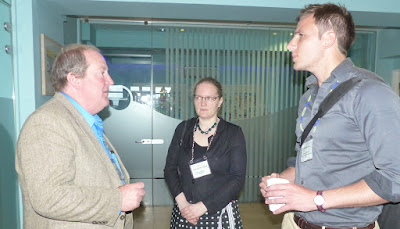
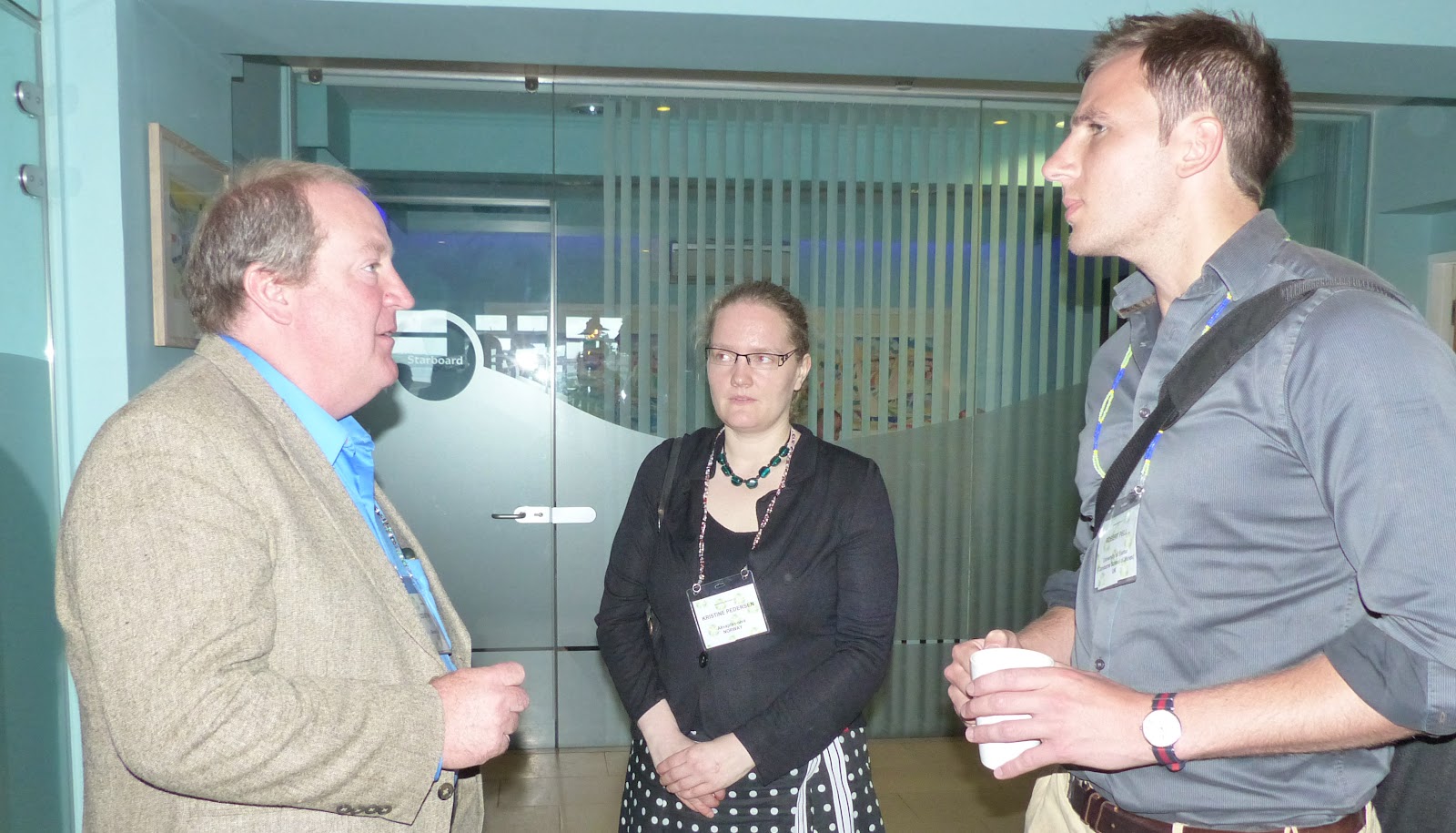
Robert Pell (right) with Courtney Young and Kristine Pedersen
While mineral resources are not given explicit mention in the United Nations` Sustainable Development Goals (SDG), they are important in underpinning many of the targets. Minerals are vital to sustainable development, as both providers of the material infrastructure of society and as an important sector of the economy in many resource-rich nations. Ben McLellan, of Kyoto University, Japan, examined the historical and future mineral requirements and implications for sustainable development in scenarios that aim to achieve the SDG`s targets.
Ben McLellan with Guzide Kalyoncu Erguler and Eleonore Lebre
Genesys International Ltd, UK is a new entry into the MEI fold, and we welcome their sponsorship of the conference. Genesys is an industry leader in the development and manufacture of speciality antiscalant and cleaning chemicals for Reverse Osmosis, Nano-Filtration and Ultra-Filtration membrane systems (posting of 14th March). Membrane technology has become widely used in various industries in recent years, but has been slow to be adopted in the ever conservative mining industry. One of the main advantages of membrane technology is that it works without the addition of chemicals and with relatively low energy use. Stephen Chesters of Genesys identified over 300 mines with potential to use membrane technology. There are sixty-one operational membrane plants and fifty-one of these have been commissioned in the last ten years, 65% of which are in gold and copper mines. In precious metal mines, waste water can be concentrated using membrane plant so additional metals can be recovered from barren liquor. Acid mine drainage is increasingly treated and then reused or sent off site as a potable supply to the surrounding communities.
Waste electrical and electronic equipment (WEEE), including spent batteries, contain significant quantities of metals that can be recycled. Naomi Boxall, of Australia's CSIRO, described a study aimed at developing a novel process for recovering metals from spent lithium ion batteries using electrochemically produced acidic anolyte.
Acid mine drainage (AMD) is often treated using active lime treatment, which generates a significant amount of sludge that contains mainly metal hydroxide precipitates, gypsum, and unreacted lime. Previous work has shown that sludge may have interesting geotechnical and geochemical properties, to be used, in combination with a silty soil, as a part of covers (oxygen barriers) to prevent AMD generation from waste rocks and tailings impoundments. In the final paper of the day Isabelle Demers, of Université du Québec en Abitibi-Témiscamingue, Canada, showed that the reuse of sludge can reduce the volume of natural soil required for site reclamation and that the soil-sludge mixture is an efficient oxygen barrier.
Isabelle Demers with Tobias Braun and Mostafa Benzaazoua
Following coffee, the usual coast path walk took us to a special evening at the Chain Locker pub in old Falmouth, where we were joined by the regulars of the monthly Cornish Mining Sundowner (more photos on posting of 23rd June).

Overlooking the Fal estuary

At the gates of the 16th century Pendennis Castle


Relaxing at the Chain Locker pub
Friday June 24th
We awoke this morning to a country polarised by the EU Referendum result, and there was a sombre mood at the conference, as most scientists appreciated the advantages of remaining in Europe. To say that interesting times are ahead is very much an understatement.
Mike Battersby of Maelgwyn Mineral Services Ltd, UK, is a familiar face at MEI Conferences, and as a Director of the Coalition for Eco-Efficient Comminution (CEEC) it was a pleasure to invite him to give a keynote lecture to start off the final day. Mineral processing consumes up to 50% of the electrical energy on a mine site and optimised energy use is crucial to sustainable mineral processing. The CEEC has initiated a global study to benchmark comminution energy consumption across different mine sites that guaranteed anonymity of this comprehensive and previously undocumented mine-specific data. The comminution energy per unit metal produced is benchmarked and presented in a graphical form similar to a cost curve. The energy curve highlights the benefits of efficient energy utilisation as a cost saving by moving “down the curve” into more cost-efficient operating regimes. Application of the curves to sustainability in mineral processing were presented in Mike's talk, together with case studies.
Mike Battersby (centre) with MEI's Amanda and Jon Wills
The end-of-life (EoL) electric and electronic equipment (EEE) or e-waste has been a problem for almost two decades. The global rates for formal e-waste treatment are estimated to be below the 20% mark, with the majority of EoL devices still ending up in landfills or processed in a rudimentary way, causing serious environmental and human health issues. A paper from Glen Corder of the Sustainable Minerals Institute, University of Queensland, Australia, critically reviewed the existing situation with e-waste in Australia. An investigation into material content in e-waste shows that metals account for about 50 wt%, with the major value associated with steel (41%), gold (23%), copper (19%), and aluminium (7%) which is over USD400 million in total.
Glen Corder (right) and Markus Reuter
In Kvalsund, Northern Norway, a permit for submarine mine tailings disposal in the fjord, Repparfjorden was recently issued for a copper mine with expected operation from 2019. A copper mine was active in the same area in the 1970s and also deposited mine tailings in the fjord. Investigations of the metal binding in the historic and new mine tailings (produced from bedrock in the area) has been undertaken in a study described by Kristine Pedersen of Akvaplan-niva AS, Norway, which indicates that there is potential for extracting more Cu from the new mine tailings.
As acid mine drainage is such a severe environmental problem, Guzide Kalyoncu Erguler of the Mineral Research & Exploration General Directorate, Turkey, argued that, in order to provide sufficient representative data for developing restoration techniques, this time-dependent geochemical process should be investigated based on kinetic principles.
The oxidation reactions of some sulphide mineral mixtures can generate self-heating which, if not controlled, can lead to workplace disruptions, creation of hazardous environments, and potential risk to infrastructure and human safety. Effectively reducing or delaying the oxidation process is one approach for dealing with these risks. In the first paper after the coffee break, Frank Rosenblum, of McGill University, Canada, discussed a study which focused on identifying and testing chemical treatments which have the potential to supress or block the chemical reactions which lead to self-heating.
Frank Rosenblum (right) with Dee Bradshaw and Kristian Waters
The use of selective comminution is often an essential requirement for pre-concentration processes, as early upstream separation has proved to be most efficient. Stoyan Gaydardzhiev showed how comparative comminution tests involving classical shredding and Electro Dynamic Fragmentation (EDF) technology have been carried out with the aim of evaluating the liberation degree of EoL printed wiring boards. Grinding by shredder did not bring selective fragmentation in the sense that the fractures induced in the material showed virtually no correlation with the underlying texture. A natural tendency towards liberation along material boundaries is more pronounced when EDF is applied with the purpose of delaminating the multi-level structures.
Movement of raw materials can be one of the most challenging tasks in open pit mining, with truck transportation representing the largest factor in mining costs and resulting in major greenhouse gas (GHG) emissions. In a study presented by Tobias Braun of RWTH Aachen University, Germany, the transportation methods of bulk materials within German hard-rock open pit mines were investigated. The results showed that 90% of the operations use truck-based transportation methods, with the remainder relying partly or completely on continuous conveyor-based systems. The installation of continuous conveyors compared to trucks represents a real alternative because of reduced dead load, increased safety, reduced GHG emissions and in many cases even reduced costs. Thus, sustainable technology substitutions exist for in-pit haulage in quarries that are yet to be adopted by the German quarrying industry.
Slags produced from copper smelting are siliceous containing valuable metals such as Cu and Fe as well as deleterious elements such as As and Sb. Courtney Young, of Montana Tech, USA, described a carbothermal recovery process which has been developed to separate the valuables from the silicates thereby producing value-added products and simultaneously reducing environmental concerns.
Raglan mine ore is treated for beneficiation of Ni using the flotation process. The concentrator produces acid generating tailings containing pyrrhotite closely-coupled to a serpentine gangue. Tailings are filtered before deposition at the surface with the objective of integrating the material in the permafrost. Mostafa Benzaazoua of Université du Québec en Abitibi-Témiscamingue, Canada, showed how partial desulphurization of total tailings produced at the end-circuit was investigated to assess the option of using desulphurized material as a component of a cover to control AMD generation. The effectiveness of the cover was the subject of one of the conference's associated poster presentations.
The mining industry is globally criticized for generating large amounts of solid wastes often with a potential environmental impact. Yassine Taha, of Université du Québec en Abitibi-Témiscamingue, Canada, presented the first paper of the final session, with a study on the recycling into clay bricks of different types of mine wastes, from calamine processing, coal and phosphates industries.
Yassine Taha (right) with Palesa Diale and Naomi Boxall
Process water from mineral processing plants may contain a significant amount of dissolved metal ions, which may be recycled as process water, or discharged into the environment as effluent. If they are discharged into the environment they may cause significant problems for the local flora and fauna. Hao Ma, of McGill University, Canada, described one method of removing metal ions from aqueous systems which has generated considerable interest over recent years, the emulsion liquid membrane technique, which incorporates solvent extraction and stripping.
Gold mining had a prominent place in the South African economy for over 120 years and its fall in production and imminent resource exhaustion has come with extensive environmental problems. The disruption of land to allow for extraction of valuable minerals has caused hydrological pollution side-effects such as acid mine drainage (AMD). Palesa Diale, of the University of the Witwatersrand, showed that iron (Fe (II)) was found to be the most dominant dissolved heavy metal in the West Witwatersrand Basin where extensive gold mining takes place. Effective removal of Fe (II) will be important in controlling the consequence AMD contaminating water streams. Indigenous microalgae is a potential long term, sustainable and environmentally friendly remediation solution, due to its significant influence on AMD. It not only can actively remove toxic heavy metals from contaminated water streams and improve its pH levels, but also non-toxic sludge is not formed. The study therefore looked at the efficacy of using immobilized green microalgae (Desmodesmus sp.) with the key focus on the mechanism, equilibrium and kinetics in achieving the removal of Fe (II) from aqueous solutions.
The most common acid rock drainage (ARD) remediation strategies result in neutralization of the waste water, precipitation of the majority of heavy metals and the reduction of the sulphate load. However, the residual sulphate concentration still exceeds the discharge specifications. In a further paper from South Africa, Rob Huddy, of the University of Cape Town, discussed the biological sulphate reduction process as an alternative and potentially more sustainable option to reduce the high sulphate load, precipitate heavy metals and neutralise the treated ARD effluents.
Rob Huddy (2nd right) with Phil Morton, Danny Procter and Lewis Baker
A significant portion of the electrical and electronic waste (WEEE) generated is disposed into landfill sites or incinerated. Considering the annual 5% increase in global ewaste production projected from 41.8 million tonnes in 2014, the extraction and recovery of valuable metals from WEEE is necessary to contribute to the circular economy while minimizing the environmental burden. In the final paper of the conference, Elaine Govender-Opitz, of the University of Cape Town, showed that biohydrometallurgy can play a key role in the recovery of base metals from WEEE and its preparation for further recovery of gold and PGMs.
Elaine's presentation concluded what has been a fine conference. University of Cape Town's Prof. Dee Bradshaw felt that the quality of young person's presentations had been outstanding, which gave her great hope for the future.
MEI Consultant Markus Reuter summarised what had been achieved over the two days and what should be discussed at the next conference, emphasising the strengthening link between this and the preceding Biohydrometallurgy conference. More details on this will be published in a few weeks' time.
MEI's Amanda Wills then closed the conference, thanking the sponsors, and all delegates, particularly the chairmen and presenters (see timetable), and then invited everyone to Sustainable Minerals '18, which is hoped to be held in Windhoek, Namibia, in June 2018 in conjunction with Biohydromet '18.
The conference draft papers are available from MEI and authors have been invited to submit their final papers to Minerals Engineering, for a special Sustainable Minerals issue which will be published early next year. A full set of conference photos is also available from MEI.

Twitter @barrywills