Showing posts with label General. Show all posts

Thursday, 5 March 2026

New book: The Art and Science of the Flowsheet

In this new book, launched at last month's SME Annual Meeting in Salt lake City, John O. Marsden explores the essential visual language of extractive metallurgy, the flowsheet,and the unique intersection where engineering meets art. From the hand-drawn process diagrams of the 19th century to today’s digital simulations, Marsden traces how these schematic representations have evolved to capture the innovation, precision, and creativity that define mineral processing. 

Richly illustrated with more than 190 historical and modern flowsheets, this volume tells the story of how metallurgists, engineers, and draftsmen have translated complex processes into elegant, functional design. Through examples spanning gold, copper, nickel, lithium, and other key commodities, Marsden reveals how each diagram reflects its era’s technology, challenges, and ingenuity and how flowsheets continue to shape the efficiency and sustainability of modern operations.  

Part history, part technical guide, and part visual tribute, The Art and Science of the Flowsheet invites readers to appreciate the discipline as both a craft and a cornerstone of process design.  With more than 200 full color flowsheets and diagrams, this book is a definitive reference for metallurgists, process engineers, and students - those who still sketch ideas on napkins, seek clarity in complexity, and understand that every good flowsheet tells a story.

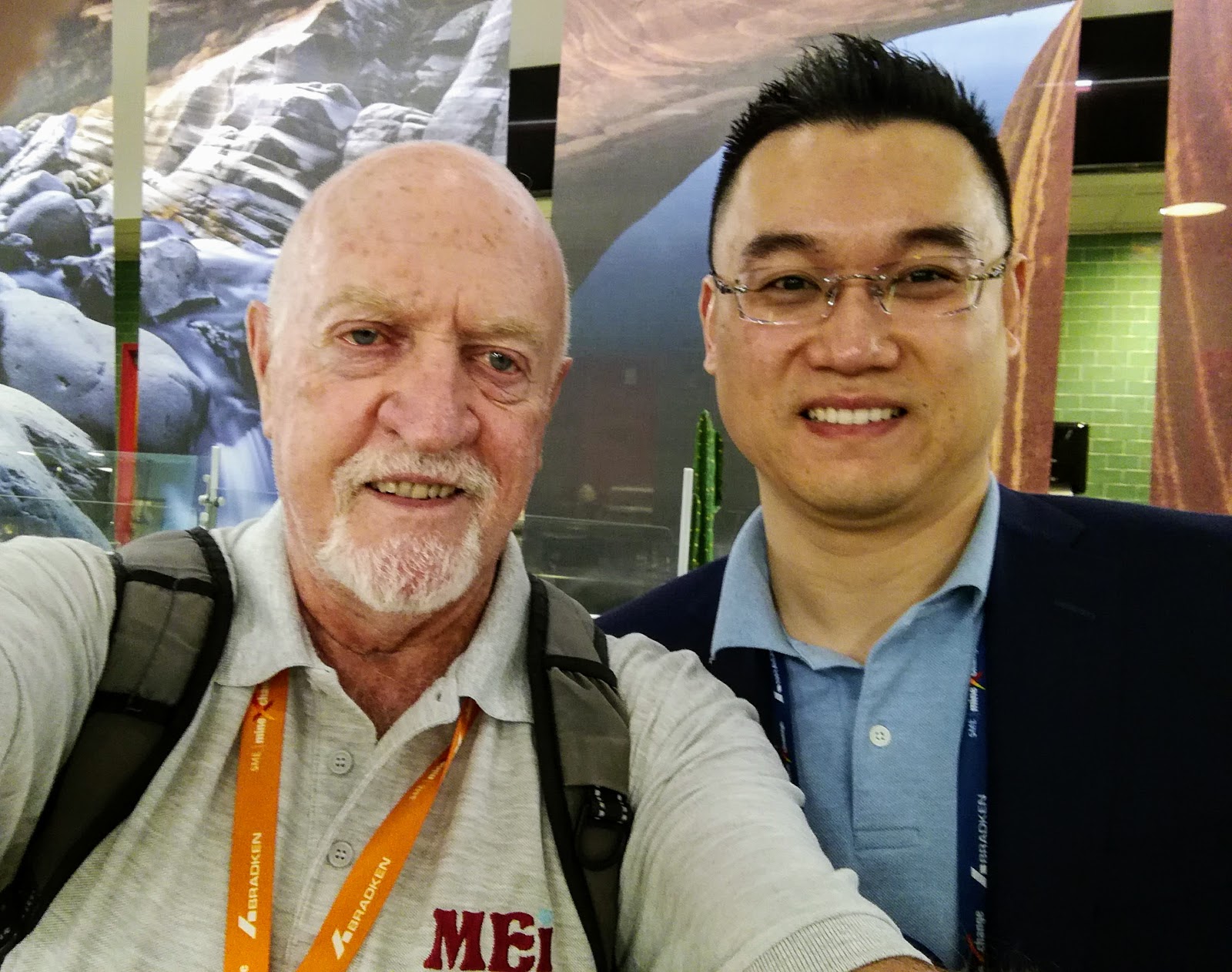
John Marsden (left) at the SME Bookstore in Salt Lake City

#MEIBlog

Monday, 11 August 2025

A New Paradigm for Mineral Processing Circuits: What might Underpin the Philosophy?

When I began my career in mineral processing in the 1970s mineral processing circuits had changed little since the 1930s but there was a paradigm shift in the early 1980s, the computer revolution leading to the development of innovative flotation and comminution machines, the evolution of automatic control strategies and improvements in design and optimisation via the new field of mathematical modelling.

Prof. Kevin Galvin is the inventor of two of the recent innovative systems, the Reflux Classifier used in gravity separation and the Reflux Flotation Cell and we are honoured to have him as a keynote speaker at next year's Mineral Processing Circuits '26 in Cape Town. Kevin is a Laureate Professor at the University of Newcastle, Australia. He is a Fellow of the Australian Academy of Science and Australian Academy of Technology and Engineering and previous recipient of numerous awards including the Ian Wark Medal, ATSE Clunies Ross Award, and Antoine Gaudin Award in mineral processing. He is Director of the ARC Centre of Excellence for Enabling Eco-Efficient Beneficiation of Minerals.

His presentation will be something to look forward to, as he will argue that mineral processing is entering a paradigm shift, implying that there is a current paradigm, and that something new will ultimately emerge - the alternative might be a continuation of incremental improvements for the next 100 years!

He will confine his discussion to mineral beneficiation, arguing that if beneficiation had a purely technical objective we could ignore the need for a new paradigm, just use what is on the shelf, apply the templates of the past and keep going. We could continue to produce metals. But the industry needs to be sustainable, economically, environmentally and socially. It is that thread which will underpin his keynote, the exercise being one of producing and sorting the particles to deliver a sustainable outcome, guided by the mineral grade and recovery. 

He will identify the existing paradigm, an approach forged on the back of 20th century technology and will look to understand why it persists. But in moving forward we need to consider the possibilities that arise from the emergence of new technologies, and what that might look like. Up until now we have tended to consider new technologies and how they fit within the old paradigm, but the real innovation emerges when we let go of the past. Complex, inefficient, large-scale plants should give way to simpler, efficient, smaller, more purposeful units or modules, that can be formally controlled to address variability and in turn facilitate more complex forms of decision making.

The keynote will provide a great introduction to the conference, as with the demand for resources continuing to increase, and amidst growing challenges of processing complex ores, while minimising energy and environmental impact, we are entering an exciting time for innovation in mineral processing. Innovation in individual unit operations is complemented by innovative approaches to the entire mineral processing flowsheet, from rearrangement of an existing circuit to a new approach for a greenfield development.

Mineral Processing Circuits '26 invites papers on new approaches to mineral processing circuits, whether through design, modelling, optimisation or operation. This includes integration of unit operations (e.g. comminution and flotation), novel flowsheets that incorporate new equipment and new approaches to optimising circuit design.

Abstract submission is now open, and short abstracts should be submitted by the end of October.

#MineralProcessingCircuits26

Tuesday, 21 November 2023

New Book: The Engineering Science of Mineral Processing

I am pleased to announce a new book, which will be published in 2024, authored by the late Fernando Concha (posting of 11 August 2022) and Osvaldo A. Bascur (posting of 3 July 2017).


The Engineering Science of Mineral Processing: A Fundamental and Practical Approach emphasizes the fundamentals of mineral processing to provide readers with a deep understanding of the science and phenomena that occur during the processing of ores. It also offers guidance on contemporary process implementation through practical industry applications. It includes examples of dynamic simulations and practical execution of advanced software to guide operating plans to ensure optimal conditions that predict process constraints. The book:

• Focuses on the science of mineral processing, including particulate systems, hydrodynamics, and physical chemistry.

• Discusses modeling, rheology, comminution, classification, flotation, and solid-liquid separation.

• Includes practical examples from real-world industrial applications.

• Provides information on dynamic process simulations and the application of digital twins in mineral processing plants to improve management and efficiency

• Details the future of mineral processing in the digital era.

Offering a balance between fundamentals and applications, this book will be of interest to researchers and industry professionals working to optimise mining, mineral and chemical processing plants. It will also be of value to advanced students taking mineral processing and chemical engineering courses.

Thursday, 7 July 2022

New book: Dry Mineral Processing


This new book, by Saeed Chehreh Chelgani, of the LuleĆ„ University of Technology, Sweden and Ali Asimi Neisiani of Yazd University, Iran, introduces and explains all existing dry processing methods, drawing from larges studies on these techniques in both the academia and industrial sectors. 

Reducing water consumption and pollution in all industrial sectors is an essential issue globally and is one of the critical issues in the mining industry. Mineral processing plants are highly dependent on water, and water scarcity poses a significant risk to the industry. 

In selecting dry or wet processing, an in-depth understanding of the various possible methods is required and this book should be of interest to professionals and researchers.

Tuesday, 14 June 2022

Report on IntegratedMinPro '22

Integration, Optimisation & Design of Mineral Processing Circuits ’22 was MEI’s first conference on this theme and was sponsored by Promet101 and Hudbay Minerals. Our Media Partner was International Mining, and our Industry Advocates were the Coalition for Eco-Efficient Comminution (CEEC), Cornwall Mining Alliance and the Critical Minerals Association.

Following is a brief summary of this two day online event. The recordings of the 17 presentations will be available on demand for 6 months, so it is not too late to register.

Monday June 13th

MEI’s Amanda and Jon Wills welcomed the 27 delegates from 12 countries to this small conference, noting that as we enter the 4th industrial revolution, the 'green' revolution, mineral processing is recognised as one of the most important technologies in satisfying the increasing demand for all metals, particularly those that are critical in the manufacture of renewable energy sources, and for electric vehicles. 

There are tremendous challenges facing mineral processors, and at last month's Physical Separation '22 panel discussion, it was noted that processes such as gravity, flotation and magnetic separation will need to be integrated more in future as ores become more complex, and how mineral processing will evolve in the future will be the subject of the papers at this conference and at the final day’s panel discussion. 

As the demand for resources continues to increase, and amidst growing challenges of processing complex ores while minimising energy and environmental impact, we are entering an exciting time for innovation in mineral processing and in this morning's keynote lecture, Elizabeth Lewis-Gray of Gekko Systems Integrated Mineral Processing, Australia, discussed the critical need for accelerating innovation in the mining sector, highlighting  the difficulties involved in  getting permits and the social licence to operate especially given climate change and the energy intensity of the mining industry.

Elizabeth said that Gekko Systems has always had a particular focus on reducing energy intensity and increasing energy efficiency. This has resulted in a focus on new flowsheets, pre-concentration, reducing treatment of gangue/waste, utilising low energy technologies as well as being instrumental in the establishment of one of our industry advocates, CEEC International. Increasingly, mining companies are looking to reduce their energy footprint and to utilise renewable / low carbon energy sources which will place further pressure on designing low energy and flexible mineral processing facilities. 

The capacity to successfully deliver new innovation is still problematic for the mineral processing sector and the mining industry, which still has many barriers including high capital investment risk, low risk profile of engineers by nature, influence of investors, etc. Many mineral processing flowsheets  are designed to minimise risk not energy. Timelines/budgets no longer allow for pilot studies. The sector must find new pathways to accelerate collaboration, knowledge sharing and innovation and a number of new pathways to market are being trialled and established. However, it is also critical for the innovation to take place across the whole value chain of mining to eliminate waste and maximise efficiency – including accessing and sharing data across the pillars of geology, mining and metallurgy.

Elizabeth’s keynote provided the perfect base for the 9 presentations that followed. Authors from Australia, Chile and Iran discussed wide ranging topics, including reducing water and energy consumption, the integration of mineral processing skill sets and processes, and process simulation and automation.

The presentations and the associated abstracts can be viewed on the conference website.

Tuesday June 14th

The presentations on the final day had the general theme of computer methods to optimise and simulate mineral processing operations.  The day began with a keynote presentation by Dr. Osvaldo Bascur, Principal of OSB Digital, and consultant Fellow to SEEQ, USA.

Ores are becoming extremely variable with mineralogy and hardness disturbing the integrated crushing, grinding, flotation, and thickening processes. The current mining, comminution and flotation sensors provide large amounts of data for process optimization. To augment the operational knowledge for proactive actions for improving the performance of the integrated rock processing complexes, Dr. Bascur showed how the right process knowledge context and operational modes need to be added. Without these proper operational contexts in place, the results are unmanaged downtime, process troubles, maintenance interruptions, and unmet production schedules. By measuring operational modes and managing these unproductive times (trouble times), new ways of improving profitability and efficiency of the plant can be found. He explained how real-time analytics enables calculation of metal recovery in real time and how predictive analytic models to secure the best operating conditions based on the type of ore currently mined have been developed. Using the latest advanced analytics, machine learning, big data analytics tools and cloud computing enables the creation of new workflows and collaboration between mining, concentrator plants, and the enterprise, including services providers.

Following Osvaldo’s keynote were 6 presentations from Australia, Morocco and the USA, describing machine learning algorithms for flotation and blending; a new flowsheet-based simulation system; optimisation to reduce water and energy consumption; and optimisation to improve circuit performance.

Prior to the afternoon break, Stuart Saich, of conference sponsor Promet101, chaired a live panel discussion on the continuing evolution of mineral processing. Delegates submitted questions to the panelists, today’s keynote speaker Osvaldo Bascur, Dr. Stephen Rayward of MIDAS Tech International, Australia and Dr. Diego Mesa of Imperial College, UK, and Aminpro, Chile.

Unfortunately Stuart was not able to initially connect, but Stephen kindly took over at the last minute as chairman, until Stuart jumped in 15 minutes into the session, which promoted some active debate over a range of topics.

In winding up the conference Jon thanked everyone involved, the sponsors, presenters and delegates, and invited everyone to attend the next conference in the series, which is planned to be held in Falmouth, back to back with Physical Separation ’24, in June 2024.

Finally a reminder that the recordings of the presentations and the panel discussion are available on demand, so it is not too late to register for the conference.

Monday, 30 May 2022

The continuing evolution of mineral processing

In the middle of the 19th century mineral processing as a professional discipline did not exist. Simple upgrading of ore by hand sorting and gravity concentration was handled by lowly paid mine workers, often women, and it wasn't until the early 20th century, with the introduction of froth flotation, that mineral processing became a recognised profession, with chairs in the subject springing up in universities around the world. 

There were some significant innovations at this time, such as the introduction of tumbling mills to replace stamp mills, but evolution in the first half of the century was slow, and by the 1970s little had changed in the design and operation of mills since the 1930s.

Typical mid 20th century ball mill classifier layout

Evolution was given a boost in the 1980s with the rapid development of computers, and the pioneering of mathematical modelling and automatic control, which led to the trend to increasingly larger flotation machines and grinding mills, and the widespread use of SAG mills.

The 21st century has seen a rapid increase in innovation, with the introduction of novel flotation machines, such as the Jameson Cell and the Hydrofloat, and grinding circuits incorporating high pressure grinding rolls and stirred mills. Enhanced gravity concentrators and high intensity magnetic separators have also played their part and there is now an increase in the use of sensor-based electronic sorters to pre-concentrate ores and reduce energy and water costs.

Now, as we enter the 4th industrial revolution, the 'green' revolution, mineral processing is recognised as one of the most important technologies in satisfying the increasing demand for all metals, particularly those that are critical in the manufacture of renewable energy sources, and for electric vehicles. There are tremendous challenges facing mineral processors, particularly in the need to recycle as much of these metals as possible from end of life resources, such as electronic waste, which will be a focus of July's Sustainable Minerals '22. At last month's Physical Separation '22 panel discussion, it was noted that processes such as gravity, flotation and magnetic separation will need to be integrated more in future as ores become more complex, and how mineral processing will evolve in the future will be the subject of the 2 hour panel discussion at IntegratedMinPro '22 which begins online in 2 weeks' time.

The panel will be chaired by Stuart Saich, of conference sponsor Promet 101. The conference's keynote speaker, Osvaldo Bascur, will be joined on the panel by Stephen Rayward, of MIDAS Tech International, Australia and Diego Mesa, representing Imperial College, UK, and Aminpro, Chile. The discussion will be live streamed and delegates will be invited to submit questions to the panel.

The conference will be held online over two days, June 13-14 and recordings of all the presentations and the panel discussion will be available on demand to registered delegates for a period of 6 months.

#IntegratedMinPro22

Monday, 7 September 2020

The Crucial Importance of Mineral Processing

A few weeks ago I was approached by Prof. Jan Cilliers, of Imperial College, UK, with a request to provide a short video on the importance of mineral processing to modern society. Jan is CFO of the Governance team for Metcelerate, the other members being Diana Drinkwater (CEO), Australia, Brian Flintoff (Consultant), Canada and Robert Seitz (Director) USA.

Metcelerate is a two year Professional Formation programme for mineral processing engineers. It is online and requires a few hours of learning each week.

I was pleased to comply with Jan's request to have my video included in the introduction to the programme as I have always felt that many universities, while providing a good grounding in the science and technology of mineral processing, cannot deliver the practical experience that allows graduates  to translate theoretical knowledge and skills in to professional practice, and nor do they highlight how crucial it is, and will be in the quest for a circular economy.


Having prepared a 10 minute PowerPoint video, it is now available for viewing on YouTube. If you feel that you can make use of this for educational purposes, I would greatly appreciate you doing so.

@barrywills

Wednesday, 1 July 2020

Announcing Metso Outotec, a major new company in the minerals industry

Metso and Outotec have been two of the most well known major international companies serving the equipment and services needs of the minerals industry. They have represented MEI Conferences over the years, both as sponsors and exhibitors.
Jimmy Loucas and Angie Voges (right) of Outotec, with MEI's Amanda Wills at Comminution '18
Pauline Choshane and MEI's Jon seal agreement on Metso's sponsorship of Comminution '21 at Flotation'19
After a partial demerger Metso Outotec, a unique new company with leadership in sustainable minerals and metals processing and recycling technologies begins its operations today. Headquartered in Finland, Metso Outotec employs over 15,000 professionals in more than 50 countries. After the partial demerger Metso Flow Control becomes a focused standalone flow control company, Neles Corporation.
More details on the merger can be found here, and we look forward to welcoming Metso Outotec to future MEI Conferences.

Monday, 29 June 2020

Calls for Abstracts: Physical Separation '21 and Integration, Optimisation & Design of Mineral Processing Circuits '21

This is now postponed to June 2022

Beautiful Falmouth

We look forward to welcoming you to beautiful Falmouth next June, for two conferences running back to back, one a popular established event, the other a brand new exciting conference. Both will be held at Falmouth's National Maritime Museum.
The National Maritime Museum by Falmouth harbour

Physical Separation '19 was the first event to be held in the Maritime Museum, and was so successful that Physical Separation '21 has been assigned three days, June 7-9, to include a conference dinner at the Greenbank Hotel, with its stunning views over the Penryn River and Falmouth harbour. I also look forward to showing delegates some of the historic mining sites of Cornwall on the final afternoon.

The Greenbank Hotel on the bank of the Penryn River
Camborne mining district, a UNESCO World Heritage Site
Physical Separation '21 will be MEI's 7th physical separation conference and abstracts are invited from those with interests in 
  • Gravity concentration methods - single and multi-G separators and dense medium separation
  • Classification techniques - hydrocyclones, air classifiers etc.
  • Solid-Liquid Separation - thickeners, clarifiers etc.
  • Electronic Sorting
  • Magnetic and electrostatic separation
  • Microwave technology. There are many aspects of mineral processing where the use of microwaves has potential and papers dealing with the enhancement of physical processes by microwaves are encouraged.

We are please to announce our early sponsor, Bunting, media partners International Mining and Imformed, and industry associates the Coalition for Eco-Efficient Comminution (CEEC) and the Cornwall Mining Alliance.
International Mining and Cornwall Mining Alliance are also media partner and industry associate respectively for our new conference, IntegratedMinPro '21, and we welcome as our first sponsor Promet 101.
As the demand for resources continues to increase, and amidst growing challenges of processing complex ores while minimising energy and environmental impact, we are entering an exciting time for innovation in mineral processing. Innovation in individual unit operations is complemented by innovative approaches to the entire mineral processing flowsheet, from rearrangement of an existing circuit to a new approach for a greenfield development.
This two-day conference (June 10-11) invites papers on new approaches to mineral processing circuits, whether through design, modelling, optimisation or operation. This includes optimisation and integration of unit operations (e.g. comminution and flotation), novel flowsheets that incorporate new equipment and new approaches to optimising circuit design.
As with all MEI Conferences, the first day at both events will end with a chance to unwind with a guided walk along the coast path via Henry VIII's 16th century Tudor Castle, for refreshments in Falmouth's 16th century Chain Locker pub.
Physical Separation '17 delegates on the Falmouth coastal path
The famous Chain Locker pub
If you would like to present papers at either, or both, of these events, please submit your short abstracts by the end of December (full details on the conference websites). If accepted, draft papers will be required. These will form the unrefereed Proceedings, which will be available to delegates at the conference. Copyright on these papers belongs to the individual authors, and not to MEI.
Authors will be invited to submit final papers as soon as possible after the conference. These will be refereed, and, if accepted, published immediately in the first available regular issue of Minerals Engineering, and included in the Virtual Special Issue of the conference on ScienceDirect. This is an ideal opportunity to present your work to an international audience and have your paper published in a refereed journal of high repute.
Updates on each conference can be found at #PhysicalSeparation21 and #IntegratedMinPro21.

Sunday, 1 March 2020

SME Annual Meeting 2020: mineral processing snapshots

Last week I was in Phoenix for the Annual Meeting of the Society for Mining, Metallurgy and Exploration (SME), a huge event which was last held in Phoenix four years ago, and last year in Denver, where there were over 6,600 delegates. It is a great networking event and one at which I have no set agenda but to wander the giant exhibition hall and see what transpires. As always I forsook the technical sessions with their multitude of parallel sessions.
Mineral processing is but a small part of the SME meeting, but is the area that I will concentrate on, and I really would appreciate the personal views of all who read this and attended the meeting.
Sunday February 23rd
After a late lunch in my favourite Phoenix eating place, Seamus McCaffrey's Irish pub, I sauntered over to the opening of the exhibition, a 2-hour reception at which the exhibitors are always at their most alert.

It was a fairly quiet start, as the majority of delegates will probably arrive tomorrow, but as I strolled around I managed to talk to a few people.
The first familiar faces were John and Donna Starkey of Starkey & Associates Inc, Canada. The company is a sponsor for April's Comminution '20 in Cape Town, and has been a long term sponsor of this series. Starkey & Associates offers the industry accurate and effective technology for designing grinding circuits, and John will be presenting a paper on the key to best practice comminution in Cape Town.
With John and Donna Starkey
I had a long talk with Mark Oles and Ryan Dodd of Eirich Machines, USA, who were discussing their mixing and fine grinding capabilities with Mike Mohle of Louisville Dryer Company. As richer ores become exhausted finer-grained resources need to be economically processed and Eirich offers the TowerMill, a vertically agitated media mill, as an economical solution.
Mark, Mike and Ryan
Eirich will be represented at Comminution '20 by Sam Palaniandy of Nippon Eirich, Australia, who will present work on the modelling of the gravity stirred mill.
The Derrick Corporation, also a Comminution '20 sponsor, is a leader in the field of high-capacity fine screening, now a serious option to hydrocyclone classification in grinding circuits. On display was a section of their SuperStack 8-deck, the highest capacity fine wet screening machine in the world, which will be highlighted at Comminution '20 in a presentation by Baojie Zhang, seen right in the photo below with some of his colleagues.
It was nice to spot David Miller, who I first met at the SAIMM Base Metals conference in Zambia in 2012. David is Worldwide Sales Manager with Mining Chemicals, who with Performance Pipe are divisions of Chevron Phillips Chemical Company, which provides a complete range of Orfom reagents for the minerals industry. At last year's Flotation '19 conference Courtney Young of Montana Tech presented work on the use of Orfom D8 as a chalcopyrite depressant in the flotation of Cu-Mo bulk concentrates.
David (right) is photographed with his metallurgical manager Debbie Laney and Performance Pipe's sales manager, Mike Mohar.
It is always good to catch up with MEI's major media partner, the UK's International Mining, represented this year by Editor Paul Moore, and his colleagues Daniel Gleeson and Kevin Lapham.
Kevin, Paul and Daniel
Finally on leaving the hall, it was a pleasure to spot Roe-Hoan Yoon and his Virginia Tech Research Associate Kaiwu Huang who were pleased to have a paper on  Control  of Bubble ζ-Potentials to Improve the Kinetics of Bubble-Particle Interactions accepted for publication in Minerals Engineering only a couple of days ago.
With Kaiwu and Roe-Hoan
Monday February 24th
The exhibition opened at 11am today, but the conference got underway with a long keynote session to discuss the increasing number of tailings dam failures which is causing significant global reactions that will have a lasting impact on how the mining industry manages its mineral processing wastes. 
The Keynote session titled The Executives Role in Tailings Management Preserving our Social License to Operate introduced the topic from the perspective of mining industry leadership. Executives from Consol Energy, Freeport-McMoRan, Mosaic, and Newmont Gold provided a perspective spanning several commodity interests. The session explored the changes in leadership tack that are needed to prevent future failures and what executive leadership can do to reduce reputational risk and preserve social license to operate for the entire industry.

While waiting for the exhibition to open up I called in at the SME Bookshop to see some of my favourite SME persons, Jane Oliver, and her colleagues Theo Warrior and Kendra Elrod, pictured below with this year's featured book SME Mining Reference Handbook, and of course Mineral Processing Technology, which is apparently still generating much interest!
Theo, Jane and Kendra
Also in the bookshop it was great to see my old friend Guven Onal, from Istanbul Technical University, a regular at SME events.


Then outside the bookstore was one of my past Camborne students, Dave Meadows (1985), Manager of Technology with Bechtel Mining & Metals, Chile, with his colleagues Paul Tucker from Canada, Daniela Munoz and Joshua Concha from Chile.  
Paul, Daniela, Dave and Joshua
Also nice to see Yongjun Peng, a regular at MEI's flotation conferences, with his University of Queensland colleague Xumeng Chen and Weiping Liu of Freeport-McMoRan Mining , USA.
Xumeng, Yongjun and Weiping

And finally before entering the exhibit hall, I met Pengbo Chu, an assistant professor at the University of Nevada, Reno. He was interested to learn that I was involved with his department 26 years ago when I collaborated with Prof. Ross Smith on Minerals Engineering '94 at nearby Lake Tahoe.

I had a busy morning in the exhibition and met many people as I snaked my way around the booths.

Three of the major mineral processing equipment manufacturers, Outotec, Metso and FLSmidth are serial sponsors of MEI Conferences and are always well represented at SMEs, Metso and FLSmidth with giant displays, this year Outotec relatively small.
Metso and Outotec have jointly announced the combination of Metso Minerals and Outotec to create a company, Metso Outotec, providing process technology, equipment and services. Metso Flow Control will become a separately listed independent flow control equipment and services company under the name of Neles.
There were many familiar faces in the FLSmidth booth, including flotation conference regular Dariusz Lelinski. I was surprised to see that Swadhin Saurabh, MEI's Young Person's Award winner in 2016 is back with FLSmidth after a brief spell with Millcreek  Engineering Company.

Our marketing contact Starla Jackson has also moved on and it was good to meet the new marketing manager Sylvia Rodrigues. In the picture below are Swadhin, Sylvia, Phil Thompson and Dariusz.
The world's largest supplier of specialty mining chemicals, Solvay, was a sponsor of Flotation '19 and we look forward to their next involvement at Flotation '21 in Cape Town. As always they had a big group representing the company at SME, and some of them are photographed below.
I have not seen Sarah Schwarz since the IMPC in Santiago in 2014, when she was with Australia's JKMRC. She is now with Rio Tinto Kennecott, and was with her colleague Ryan Walton, and Ausenco's Grant Ballantyne, who is one of Minerals Engineering's assistant editors, and recipient of the 2017 MEI Young Person's Award. 
Sarah, Ryan and Grant

Grant, until fairly recently with the University of Queensland (UQ), told me a lovely story of a young post-doc researcher at UQ who was asked to present a lecture on gravity concentration on a short course. 
During his intensive search of the literature he found that the centrifugal force in a spiral can be enhanced by that produced by the spin of the earth, and that the orientation of the spiral pitch has an effect on performance, an anti-clockwise flow performing better in the UK than a spiral with a clockwise flow. Spirals can therefore be classified as northern hemisphere and southern hemisphere devices respectively. Having included this observation in his lecture, a member of the audience later pointed out that this information, found on the MEI Blog, had been posted on April 1st, and judging by some of the comments on the posting, the hapless researcher was not the only one who had been fooled by it.
On a more serious note, Grant and I talked about the problems in finding suitable reviewers for Minerals Engineering papers (Is the peer-review system creaking?). We have a core of dedicated reviewers but many researchers are reluctant to review manuscripts, although they are the first to complain if their work is not assessed on time.
These thoughts were echoed by Komar Kawatra of Michigan Technological University, who I last met in Changsha, China in 2017 (MEI Blog 27 September 2017). Komar is Editor of the journal Mineral Processing and Extractive Metallurgy Review, and experiences the same problems with reviewers - everyone is so busy these days!
And then a delightful surprise. Passing the CIM booth I caught sight of legendary Graeme Jameson, who was passing through Phoenix on his way to London. A keynote on Graeme's life and work is already scheduled for Flotation '21. In the picture below Graeme and I are with Marilou Reboulis, of CIM, and Ryan Bergen, Editor-in-Chief of CIM Magazine.

The Jameson Cell is now over 30 years old, and there are over 350 installations around the world. During the past few years Graeme has been developing a new cell, the NovaCell, for coarse particle flotation (MEI Blog August 5th 2019).

The Eriez Flotation Division, a sponsor of Flotation '19, is also involved with coarse particle flotation, the Eriez HydroFloat™ achieving improved coarse particle recovery through a fluidised bed region that acts as a barrier to sparger-induced turbulence in the upper part of the cell.
Eriez also manufactures StackCell flotation technology, the industrial application of which was described by Jaisen Kohmuench at Flotation '19. This staged method is said to ensure that the energy is focused only on contacting and suspending particles and not wasted on pumping or creating turbulence.
Jaisen (left below) and other Eriez representatives were talking to Jayson Ripke and John Uhrie (seated) of Doe Run Exploration and Development Company.

I called by to see my old friend Chris Martin, of RSG Inc, USA, who will be exhibiting at Comminution '20. He was talking to Rob Roberts of Houston International Insurance Group. Chris established RSG in 1992, and the company manufactures  dry ultrafine grinding mills and air classification equipment.
Chris and Rob
After saying farewell to Chris I rushed to the next floor for a photo call with the Mineral Processing Division's major award winners, this year all being from USA.
The Milton E. Wadsworth Award was to William P. Imrie for his extensive experience in the three pillars of the mining business: technology, operations, and engineering/construction.
The Robert H. Richards Award was to James L. Vanderbeek for leading the application of HPGR and other innovative comminution technologies in large-scale hard-rock processing.
The Antoine M. Gaudin Award was to John C. Gathje for his wide-ranging contributions to science and engineering in the field of mineral processing and extractive metallurgy.
William, James and John
After an intense and exhausting 6 hours, I then adjourned to the Irish pub for a very late lunch and a couple of pints of very welcome ale.
Tuesday February 25th
The SME informs me that over 6000 people have registered, but today was fairly quiet and the general impression is that there are far fewer here this year than last year in Denver.
While waiting for the exhibition to open I took a look at some of the excellent photos in the SME photographic competition.
The winning photo, by Richard Bishop was an impressive underground picture:
As a bit of a photographer myself, I know how difficult underground photography is, so I wonder how the photo below would have fared, taken deep underground in a Cornish tin mine?
OK, it is black and white, but what is remarkable is that it was taken in the 1890s by one of the great Cornish mining photographers JC Burrow. Photographers might like to see some of his amazing work and how he captured his photos in this article.
And talking of Cornwall, I caught up with another of my old students from Camborne School of Mines, Tim Casten, who graduated in mining engineering in 1989 and is now with Freeport-McMoRan in Phoenix.
In the exhibition I congratulated 2019 CEEC Medal - Operations winners Rob McIvor and Omar Arafat of Metcom Technologies, USA, for their AusIMM Mill Ops publication A guide to maximising ball mill circuit classification system efficiency for operators and equipment designers. Rob presented a paper in one of this week's technical sessions explaining population balance modelling origins in the pre-computer age, technical development, worthy attributes as well as exposing falsehoods and misconceptions. 
With Omar and Rob
After another late lunch in the Irish pub, this time with Erik Spiller of Colorado School of Mines, I attended the late afternoon International Reception at the Sheraton Hotel. 
Attended only by non-USA delegates it was noticeable that many of the regular European mineral processors were missing this year, probably due to there being no dedicated mineral processing symposium, as there was last year in Denver. 
However it was good to relax with UK delegates Peter Darling, and International Mining's Paul Moore and Daniel Gleeson, and to meet two of Camborne's fairly recent mining engineering graduates, Samantha Hinks (2015) and Chris Mumford (2014), who are evidently enjoying their life in the mining industry, with Glencore in Chile.
Samantha, Chris, BW, Daniel, Paul and Peter
Peter Darling left Camborne in 1979 with a CSM Diploma and spent 9 years in the oil and gas industry before returning to UK and graduating from Royal School of Mines in 1988 with a mining degree. He has worked with mining companies around the world, in South Africa, Brazil, DRC and Guinea, and as an RAF reservist undertook several tours in the Gulf and Afghanistan. For many years he has been in mining and technical journalism. He was the managing editor of the SME Mining Engineering Handbook (3rd Edition, published 2011) and has just been commissioned by the SME to produce two more books “Underground Mining” and “Surface Mining”. Peter is currently looking for authors and can be contacted on peter@peterdarling.co.uk
Wednesday February 26th
The last morning of the exhibition is always a good time for a last leisurely walk, hoping for a few chance encounters.
ME Elecmetal, which produces mill liners, grinding media and crusher wear parts, is a sponsor of Comminution '20 and it was good to meet the American team in their booth.
At the Metso booth I listened to Alan Boylston giving a presentation on the design, construction and operating experience of the SAG-Vertimill circuit at the Boungou mine in Burkina Faso.
Finally, stopping by the Mining Media International (MMI) booth, I had a long chat with Dan Fitts and Carly Leonida.
Dan is the Production Manager for MMI which publishes E&MJ, Coal Age and Equipo Minero. Carly is a mining journalist from UK and has an interesting mining blog The Intelligent Miner, and spends roughly half her time writing for E&MJ.
And that brought an end to my SME experience this year. All that remained was a final lunch at Seamus McCaffrey's and a long wait for my evening flight back to London.
Although I have put in the hours this week, I realise that this report merely scratches the surface of this mammoth event, but I hope it captures the flavour.
I will hopefully be back again next year at my favourite SME venue, Denver.