Monday, 29 November 2021

MEI Conferences 2022


It is now over 2 years since MEI's last face-to-face conference, Flotation '19 in Cape Town.  All our conferences were postponed in 2020 and this year we have adapted to the era of the pandemic and this month completed our 4th on-line event of the year, Flotation '21, recently summarised by Prof. Jim Finch.

Coronavirus is still very much with us so there is still much uncertainty about what awaits us in 2022. Our feelings are that we should stay online for a while, so MEI's next 3 conferences, scheduled for Falmouth, will be virtual events.

From May 9-11 MEI's 7th Physical Separation conference (Physical Separation '22) will will bring together researchers and operators who have common interests in:

  • Gravity concentration methods - single and multi-G separators and dense medium separation
  • Classification techniques - hydrocyclones, air classifiers etc.
  • Solid-Liquid Separation - thickeners, clarifiers etc.
  • Electronic Sorting
  • Magnetic and electrostatic separation
  • Microwave technology. 

This event is currently sponsored by Hudbay Minerals, with media partners International Mining and Imformed, and our industry advocates are the Coalition for Eco-Efficient Comminution (CEEC), the Cornwall Mining Alliance and the Critical Minerals Association. Prof. Neil Rowson will present a keynote lecture on the role of magnetic separation in the development of critical and strategic metal recovery flowsheets.

A month later, from June 13-15, Integration, Optimisation & Design of Mineral Processing Circuits (IntegratedMinPro '22) is a brand new conference which invites papers on new approaches to mineral processing circuits, whether through design, modelling, optimisation or operation. This includes integration of unit operations (e.g. comminution and flotation), novel flowsheets that incorporate new equipment and new approaches to optimising circuit design.

This first conference in what we hope will be a series, is sponsored by Promet101 and Hudbay Minerals, with media partner International Mining, and industry advocates the Cornwall Mining Alliance and the Critical Minerals Association. Dr. Osvaldo Bascur will present a keynote lecture on digital disruption: a sustainability approach.

The 7th International Symposium on Sustainable Minerals (Sustainable Minerals '22), organised in consultation with Prof Markus Reuter, will be online from July 11-14 and is sponsored by Zeiss, Metso:Outotec Weir Minerals and Hudbay Minerals, with media partner International Mining, and industry advocates the Coalition for Eco-Efficient Comminution (CEEC), the Cornwall Mining Alliance and the Critical Minerals Association.


The rapid growth of the world economy is straining the sustainable use of the Earth’s natural resources due to modern society’s extensive use of metals, materials and products. An astute and conscious application and use of metals, materials and products supported by the reuse and recycling of these materials and end-of-life products is imperative to the preservation of the Earth’s resources. The realisation of the ambitions of sustainable use of metals, materials and resources demands that the different disciplines of the material and consumer product system are connected and harmonised. Sustainable Minerals '22  will discuss all aspects of material and metal usage and will include a keynote lecture from Prof. Selo Ndlovu on the complexities and opportunities for gold processing in a changing environment.

Looking further ahead, we are hoping that there will be some semblance of normality by the end of next year, and, very provisionally, Process Mineralogy '22, currently sponsored by Zeiss and Bruker, will be a hybrid event, with the possibility of a new venue, in Sitjes, Spain. 

Fingers crossed for 2022!

Friday, 26 November 2021

A quiet November sundowner, and encouraging news of an undergraduate mining degree in UK

For the first time since February last year we were back indoors in the Chain Locker, Falmouth, last night for the monthly mining sundowner. I arrived at 5.30 pm to find Dr. Tony Batchelor, Chairman of Geoscience, sitting on his own. We were soon joined by Dean Eastbury, former Elsevier, and Minerals Engineering, Publications Manager, after which Nick and Flee Wilshaw, of Grinding Solutions, arrived with their newly recruited Operations & Commercial Manager, Dan Abraham, to swell the numbers to a cosy six!  Although Covid restrictions in bars and restaurants were removed 4 months ago many are still wary about meeting in pubs, considering that the Covid infection rate in Cornwall is still 468 in 100,000, slightly higher than the figure of 432 for England.

Dan, Flee, Tony, Dean, me and Nick

The sundowner was a week later than planned, as last week there was a Cornish Institute of Engineers lecture in Penryn, the 18th Annual Vic Philips Memorial Lecture, in memory of my old Camborne School of Mines friend and colleague.

Vic Phillips with CSM mineral processing students, 1984

Unfortunately I was unable to make it to the lecture "Mining is essential and the world needs to know about it" delivered by Tim Biggs, formerly Head of Mining at Deloitte, UK. The pre-lecture announcement covered basically the ground that I, and many others, have been saying for some time, that mining is essential and the sustainability agenda, and particularly the energy transition, makes mining even more essential.

Tim said that we need to change this. The industry needs the support and understanding of society so miners can most effectively get on with the task of developing and running mines and producing all the metals the world needs. Very true but it is not too easy to get the message across to the wider society. I have always felt that I am preaching to the converted on the blog, and the media is not too interested in the positive aspects of mining, while relishing its negative aspects.

The lecture also covered the need to ensure an accurate understanding of mining if we are to attract the next generation of mining professionals to this most essential of industries. This is also very true, but since the University of Exeter "paused" the mining degree at CSM (posting of 15 September 2020) there is now nowhere in the UK where a school leaver can study mining engineering.

But there is a glimmer of hope! Throughout this year an Industry Advisory Panel, which includes several CSM Association members, has been working alongside the University to develop a pioneering new Mining Engineering program at CSM.

The Degree Apprenticeship (DA) model represents an innovative new partnership between employers and universities. Apprentices will be employed throughout the programme, spending part of their time studying (through access to online material and attendance at residentials) and the rest working. On successful completion of the program candidates will be awarded a BEng (Hons) degree in Mining Engineering from the University of Exeter. The program will be aimed at both the UK mining sector and the international mining industry through a blended learning offering.

To industry the DA represents both a completely different early talent recruitment model, and a novel opportunity for existing employees to gain a degree-level qualification. A recent industry survey around the DA provided very encouraging results and CSM and University Staff have agreed to develop the course. The Industry Advisory Panel will continue working with the University to develop a cutting edge curriculum and it is hoped that this will be delivered in partnership with the mining industry in September of next year.

Hopefully we will have a better attendance at the popular Christmas sundowner at Tyacks Hotel, Camborne, from 5.30 pm on December 16th.

@barrywills

Monday, 22 November 2021

Prof. Jim Finch summarises Flotation '21

We are fortunate to have Prof. Jim Finch as a consultant to the MEI series of conferences. Jim is Emeritus Professor of Metallurgical Engineering at McGill University, Canada, and a recent recipient of the IMPC's Lifetime Achievement Award, among many other honours.

Jim presented an admirable opening keynote lecture at this month's Flotation '21 on the life and work of Prof. Graeme Jameson and has now kindly provided us with a 15 minute summary of the conference, which is now available on YouTube.

If you did not register for this 5 day conference, it is not too late. as the 105 presentations, covering the whole field of flotation, and the two panel discussions, are available on demand, as are the discussions on each presentation. 

The full programme and registration details can be viewed on the conference website. Prof Finch's breakdown of the presentations into subject areas can be seen below.

A breakdown of the presentations in the fundamentals (left) and applications (right)
areas of the conference

#Flotation21

Thursday, 18 November 2021

Innovative company Hudbay to sponsor 4 forthcoming MEI conferences

Canada's Hudbay is one of the most progressive mining companies, not afraid to bring new innovations into its operations. It is a diversified mining company primarily producing copper concentrate (containing copper, gold and silver) and zinc metal. Directly and through its subsidiaries, Hudbay owns three polymetallic mines, three operating ore concentrators and a zinc production facility in northern Manitoba and Saskatchewan, Canada, and Cusco, Peru, and copper projects in Arizona and Nevada, USA.

In 2015 Hudbay purchased the Snow Lake Project in Manitoba, which included the New Britannia gold concentrator. In August this year gold production commenced at the New Britannia mill after refurbishment, commissioning and start-up activities were completed earlier in the summer. 

The construction of a new copper flotation facility was completed last month and consists of an innovative and first-of-its-kind flotation circuit based entirely on Jameson Cells. First production of copper concentrate was achieved last month and ramp-up of the copper circuit is now underway.

Peter Amelunxen, Vice-President of Technical Services at Hudbay told me that the idea for all-Jameson cells came about before MEI's Flotation '19 conference (see posting of 7 April 2020) but the conference gave them an opportunity to discuss results, share ideas, and build relationships with Prof. Graeme Jameson and the Glencore Technology team and "even the guys from other flotation companies, who also provide very good technology that I would consider for other applications that may be less appropriate to pneumatic cells.  That’s the value of the flotation conferences and why we sponsor the events!", Peter said.

In choosing to sponsor four of MEI's upcoming conferences, Physical Separation '22 and Sustainable Minerals '22 next year, and our, as yet not formally unannounced, Comminution '23 and Flotation'23, Peter said "It has been Hudbay's pleasure to sponsor MEI and we are proud to continue supporting your mission to foster the sharing of valuable scientific and technical knowledge in the minerals industry.  As you well know, it is more imperative than ever for our industry to adopt more efficient and more environmentally and socially sustainable methods and practices, and this can only be done quickly by bringing together the best and brightest minds in our field to promote the sharing of knowledge.  For Hudbay, sponsoring MEI's mission isn't just about improving the operation of our mines and concentrators. It's about good corporate citizenship and it is perfectly aligned with our own vision and ESG principles".

Thanks Peter and Hudbay Minerals, we greatly value your support and your confidence in us.

Monday, 15 November 2021

COP26: was it just blah-blah-blah?

The 26th UN Climate Change Conference of the Parties (COP26) was hosted by the UK in Glasgow from 31 October to 13 November. This international summit was seen as crucial to bringing climate change under control. The host, Prime Minister Boris Johnson, said the challenge is huge but there are no compelling reasons for procrastination. The goal is to keep warming limited to 1.5C above pre-industrial levels by 2100 but we are on track for 2.7C, which the UN says would result in "climate catastrophe". 

Around 40,000 people descended on the Scottish city of Glasgow for the two-week event, amidst cries of hypocrisy, as around 400 private jets flew into the country's airports. USA President Biden is estimated to have generated almost 1000 tonnes of CO2 in reaching the conference, his entourage consisting of a fleet of four planes, his Marine One helicopter and a vast motorcade. World leaders were present for only two days, leaving negotiators to deal with business, before flying off home in their jets, President Biden remarking that it was a great mistake that the Chinese leader, Xi Jinping, had not been at the event, nor had the Russian president, Vladimir Putin.

The perhaps unachievable Paris Agreement goal of net zero by 2050 (posting of 21 July 2019) took a bit of a knock on the first day when Indian prime minister Narendra Modi announced that the Indian target would be 2 decades later, 2070. India has the 3rd largest overall emissions after China and USA.

Not sure what they had to celebrate!
Source: Free Press Journal
The first major deal of the summit was the promise by over 130 world leaders to end and reverse deforestation by 2030. The commitment was supported by nations covering about 90% of the world's forests, including Canada, Brazil, Russia, Indonesia and the DRC. Let's hope this will happen, as analysts have warned that a deal struck in 2014 failed to slow deforestation at all. 

Maybe we should also be wary of the 2nd day agreement between nearly 90 countries who have joined a US and EU-led effort to cut emissions of the potent greenhouse gas methane by 30% by 2030. Methane is the major greenhouse gas after CO2 and it breaks down in the atmosphere faster, meaning that cutting its emissions can have a rapid impact on reducing global warming. However, this agreement is only voluntary, and three of the top five methane emitters, China, Russia and India, have not signed up to the pledge.

I also hope that the world will finally honour its agreement, three years behind its original promise, to give $100bn to the developing world to help it absorb the impacts of climate change. Some of this will be used for adaptation including improvements to sea defences and weather forecast systems. We should perhaps be more confident in the pledges from billionaire philanthropists who have vowed to make up any shortfalls.

Research from the University of Melbourne suggests that pledges to limit greenhouse gas emissions could keep world temperature rises to below 2C, but only if the promises were followed through.  What might be needed to force these pledges from governments is action by Greta Thunberg and other young climate activists, who strike fear in politicians; she told an event by the Fridays for Future youth movement near the COP26 campus that politicians were merely pretending to take our future seriously. 

Greta Thunberg in Glasgow
Source: CNN

Speaking at COP26, former US President Barack Obama called on such young people to "stay angry" in the fight against climate change, urging them to apply political pressure to make a change. He said the world is "nowhere near where we need to be" to avoid a future climate catastrophe.

Although Miss Thunberg, and other activists who were out in force in Glasgow, may be naive when it comes to understanding the science (see posting of 14 January 2021) she would probably admit this. She sees her role as keeping the pressure on world leaders, who I fear are also naive regarding the science, into policy decisions and providing funds to those who can provide the technology and engineering skills to build the renewables and electric vehicles of the future. But alas this is where the bottleneck is likely to kick in- do we have the raw materials to produce this green new world? I have seen many activists demonstrating against mining, whereas what is needed is protests against the lack of investment in mining! Environmentalists are often against mining because it is a dirty business, which it can be, but many major mining companies now have net zero carbon targets, with realistic plans to achieve them.

Although the need to ramp up mining of critical metals is crucial, there was little, if any, mention of this at COP26, although coal mining was on everyone's agenda. More than 40 countries signed up to a statement to quit the use of coal and the UK government said that 190 nations and organisations had pledged to stop using it, in the 2030s for major economies and 2040s for the rest of the world. However the final wording of the deal is far weaker than the UK government first claimed, as it has the words "or as soon as possible thereafter" to the 2030s and 2040s deadline.

Some of the world's biggest coal-dependent countries, including Australia, China, India and the USA didn't sign up at all. China now accounts for almost a third of the world's CO2 emissions, burning almost half of the world's coal, with more than 1000 plants supplying 58% of its power. South Africa is also a major emitter of greenhouse gases and sulphur dioxide  as a result of its addiction to coal, and the country is set to receive US$8.5bn to help its reliance on coal, and a move to wind and solar power, in a deal funded by wealthier nations.

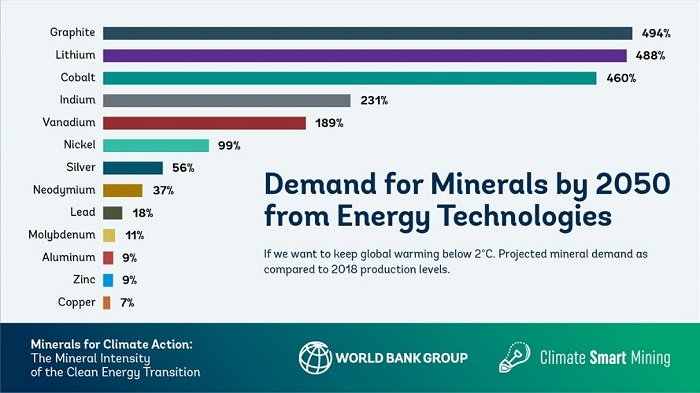
Although activists and politicians were demanding replacing fossil fuels, mainly coal, with renewables, there is little appreciation that building renewables, and providing the necessary raw materials requires vast amounts of energy, which, during the transition to all-renewables, will require energy from non-renewable sources. China mines and processes over 85% of the world's rare earth metals, including neodymium, an essential alloying element in the powerful magnets used to generate electricity. Processing of rare earth metals is extremely energy intensive and in China that energy is produced mainly from coal. The great irony is that fossil fuels will be needed for some time in order to phase out fossil fuels!

Nuclear energy is the other option, of course. It is essentially zero-carbon but has been removed as an option by many countries due to the problems of disposing of waste, and reaction to the disasters at Chernobyl and Fukushima. Rather than huge fission reactors, such as that being built at Hinkley Point in UK, there may be a case for small modular reactors, which can be built and put into service relatively quickly. And looking to the future, and 2050, maybe we will be zero carbon if fusion can be made a viable option. The engineering problems are immense, but never underestimate the ingenuity of man in solving apparently insurmountable problems.

The long negotiations ended on Saturday evening, with nearly 200 countries agreeing the Glasgow Climate Pact to keep 1.5C alive and finalise the outstanding elements of the Paris Agreement, but it will only survive if promises are kept and commitments translate into rapid action.

The Glasgow Climate Pact will speed up the pace of climate action. All countries agreed to revisit and strengthen their current emissions targets to 2030, in 2022. This will be combined with a yearly political round table to consider a global progress report and a Leaders summit in 2023.

The pact was notable for naming coal as a root cause of the climate problem, for the first time in 30 years of UN diplomacy. The final text included the need to reduce the use of fossil fuels, phase out subsidies for fossil fuels and transition countries to using more renewable energy. The pact does not, however, hold wealthy countries to specific financial commitments to help poorer countries, the most devastated by climate change.

While the Glasgow Climate Pact is an ambitious attempt to rein in rising temperatures, the last-minute row over coal has undoubtedly cast a shadow over the deal. India was joined by China in pushing for a watering down of this key commitment, insisting on "phasing down" rather than "phasing out".  COP26 President, the tireless Alok Sharma, said that they would have to "explain themselves" to vulnerable nations.

The new deal comes just a few days after another notable Chinese achievement. Last Wednesday, the Xinhua news agency trumpeted the fact that the country produced more coal than ever before on a single day. When consumed for energy the one day of coal will produce carbon dioxide emissions roughly equivalent to Ireland's output for an entire year!

There are also vague clauses that will allow some countries to avoid updating their plans to cut emissions, depending on "differing national circumstances". There are real worries that some bigger developing economies like India and China will use that clause to skip updating their plans next year.

There are growing fears that the goal of limiting global warming to 1.5C is unlikely to be met. UN Secretary General António Guterres said the summit would probably not see governments make the pledges needed to cut CO2 emissions by enough. However there was a glimmer of hope when activists and politicians gave a cautious welcome to the unexpected announcement that the US and China would work together to tackle climate change. The US-China declaration sees the two countries, the two biggest CO2 emitters in the world, vow to boost climate co-operation over the next decade, working together to achieve the 1.5C temperature goal set out in the 2015 Paris Agreement.

Ultimately, this controversial pact does keep hope alive that temperatures may be held in check, somewhere between 1.8C and 2.4C this century.  However this is a frightening prospect in a world that has warmed by just over half that amount already, with massive impacts around the globe.

According to an analysis by the Climate Action Tracker, the world is still nowhere near its goals on limiting global temperature rise, despite the pledges made at COP26. It calculates that the world is heading for 2.4C of warming, far more than the 1.5C limit nations committed to. COP26 "has a massive credibility, action and commitment gap", according to the analysis.

There have been lots of promises but only time will tell if COP26 was a success, or merely more 'hot air'.

@barrywills


Friday, 12 November 2021

Flotation '21: Day 5 update

Friday 12th November

And so on to the last day of what has been a fine conference, attended by 267 delegates.  Continuing from yesterday, the day opened with 9 presentations on Flotation Circuits and Plant Practice, from Australia, Chile, China, Finland, Mexico and South Africa.

Following the mid-day break and networking session the final session on Flotation Machines contained 15 presentations from Australia, Peru, South Africa, UK and USA, commencing with three papers from Australia on the Reflux Flotation Cell, including its first full-scale trial at a coal preparation plant and its potential in processing other commodities. It could possibly become a generic solution for effectively floating both coarse and ultra-fine particles while maintaining a high throughput.

FLSmidth has, over the years, been one of the most prolific of MEI Conferences sponsors, and Dr. Dariusz Lelinski, one of yesterday's panelists, has been a familiar face at the flotation series of conferences. He co-authored all 3 of FLSmidth's presentations today.

Dariusz Lelinski (2nd left) at Flotation '19

Flotation product line manager Steve Merrill presented 2 of these papers, the first showing how FLSmidth has created and implemented Adjustable Radial Froth Crowders that allow customers to have more control over froth recovery and optimize the process for the variability of froth conditions.

FLSmidth has two main product lines for mechanical flotation machines: the forced-air nextSTEP™ and the self-aspirated WEMCO®. Thousands of these machines have been installed and continue to operate throughout the world and in his second presentation Steve showed how FLSmidth has implemented a row configuration called mixedROW that takes advantage of the benefits of each machine type to increase overall yield in flotation circuits. The new generation of Wemco flotation machines were described in a further FLSmidth presentation by Dr. Ronney Rodrigues Silva.

Maelgwyn Mineral Services, UK is also a long-term sponsor of MEI Conferences, and it was good to see a recent recruit Dr. Huu Duong Hoang present a paper on MMS's Imhoflot pneumatic flotation cell, and its performance in recovering fine gold losses to tailings. I met Huu for the first time 2 years ago at the Helmholtz Institute Freiberg for Resource Technology, Germany, where he was one of Dr. Martin Rudolph's team of researchers. Martin was one of the panel members on Monday and many of those in the photo below, taken at Freiberg, have been involved with presentations this week.

Dinner in Freiberg with (L-R) Edgar Schach (Germany), Bruno Michaux (Belgium),
Martin Rudolph, Anna Vanderbruggen (France), Nathalie Kupka (France),
Ahmad Hassanzadeh (Iran) and Duong Hoang (Vietnam)

In search of sustainability, the mining industry faces various environmental, social, and economic challenges, which will be highlighted at next year's Sustainable Minerals '22. Therefore, it is necessary to implement innovative technologies that improve the use of natural resources. One important technology addressing this challenge is the HydroFloat® Coarse Particle Flotation (CPF). As discussed by Jose Concha, products manager for HydroFloat at Eriez Flotation, USA, there has been a growing industrial implementation and acceptance of the CPF technology in tailings scavenging applications, and the next step in the development of this technology is implementation in pre-concentration applications (Coarse Gangue Rejection). Adam Johnston, of sponsor Transmin Metallurgical Consultants, Peru, presented a methodology to make an initial assessment of the cost benefit of introducing the HydroFloat® technology in a flotation circuit in early-stage projects by computer simulation. 

Jose Concha (right) in the Eriez Flotation booth at Flotation '19.
2nd left is Eric Wasmund, co-author of both HydroFloat presentations

Conference sponsor Eriez also manufactures the StackCell® SC-50 High-Rate Flotation Machine, whose industrial application was described at Flotation '19. This afternoon Dr. Erich Dohm presented the results of extensive field testing conducted by Rio Tinto and Eriez to evaluate the operability and performance of a StackCell® SC-50 high-rate flotation machine for recovery of copper and molybdenum from flotation tailings. The field test was conducted at Rio Tinto’s state-of-the-art tailings demonstration plant located within Kennecott Utah Copper’s tailings facility.

It was good to have GoldOre Pty Ltd back for the second time as a sponsor of the flotation series. Adrian Singh, founder and CEO, described the GoldOre Mach reactor, a hydrodynamic cavitation device, and  detailed the results of tests to quantify the impact of the Mach reactor on the recovery of the fine (-25 micron) fraction in floating a platinum-bearing UG2 ore from the Bushveld complex, South Africa. 

Adrian Singh (left) at Flotation '19

In winding up the conference, Jon Wills thanked the sponsors, exhibitors, presenters and all others for their interaction over the 5 days. Prof. Jim Finch will be summarising the conference soon, and this will be available on demand, as will all the presentations and panel discussions, until the end of May 2022.

Jon also announced the winner of the Cancha prize draw. This was a raffle prize of a 12 month subscription to Cancha Geometallurgy Software, worth US$ 2900. Peruvian company Cancha is a first time sponsor of MEI's flotation series, but sponsored Comminution '21 back in April. Cancha is used by geologists, miners, metallurgists and geometallurgists to accurately, efficiently and transparently project metallurgical performance for mineral resources, the geometallurgy software bridging the gap between orebody knowledge and plant simulators. 

Students and academics were not eligible for the draw, as free academic licenses are available any time. The prize came with free introductory training and support, and was won by Maxwell Norris, of Oktedi Mining, Papua New Guinea.

Following all this, we all adjourned to the Vineyard Hotel Gardens for farewell drinks. I wish!  Hopefully we will be doing this at Flotation '23, provisionally scheduled for November 2023.

Sundowner in the Vineyard Hotel gardens at Flotation '19

I would now like to invite all who attended to submit their views on Flotation '21. To those who didn't register, it is not too late. Nineteen delegates have registered during the last few days, to take advantage of all the presentations and panel discussions being available on demand until May 31st next year. So take your time and digest all that has taken place over the past 5 days at your leisure.

Thanks again to all our sponsors:

#Flotation21
@barrywills