Wednesday, 7 December 2022

Derek Barratt: 1939-2022

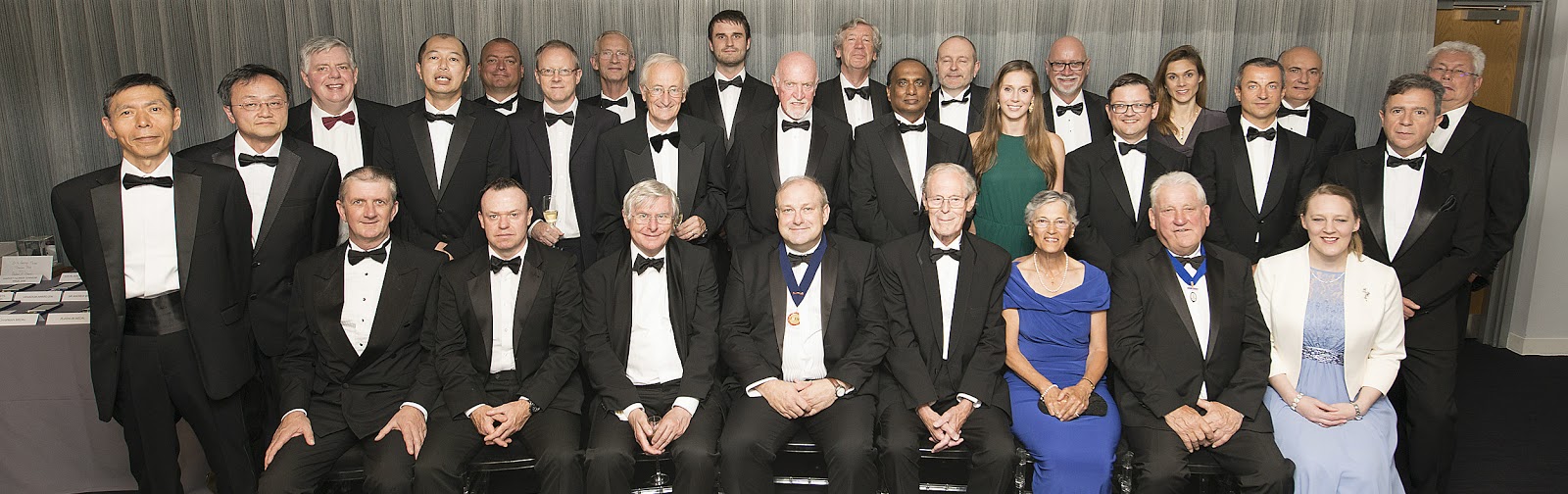
Sad news from Canada of the death, on 15 November, of a well known and respected comminution expert, Derek Barratt, who I met twice, the first time in Cambridge in 2015 at the IOM3 conference Minerals and Metals Production from Mine to Market, and again in London in 2017 for the IOM3 Awards, where Derek was awarded the Futers Gold Medal.

Derek Barratt in Cambridge in 2015
with David Meadows of Bechtel Mining & Metals, USA
The IOM3 Awards in 2017. Derek is 4th from the right on the front row

The following appreciation has been provided by David Meadows of Bechtel and the IOM3's Tony Francis:

The passing of Derek Barratt, FIMMM is reported with great sadness. Derek was a highly regarded Metallurgical Engineer and Minerals Processor known throughout the mining industry for his ground breaking (!) work on comminution circuit design and modelling. He was a world leader in the development of comminution circuit sizing methodology using the multiple Bond work index tests. He was frequently called upon by mining companies and engineering contractors to carry out due diligence reviews of comminution circuits design and expansions. He was particularly known for his expertise in high capacity SABC circuits in Latin America.

Derek was a graduate of the Royal School of Mines, London and ran his consultancy, DJB Consultants Inc, from his adopted home in Vancouver. He was a principal speaker at many international conferences and published nearly 50 technical papers during his 60 years in the minerals industry. In addition, he has served as lead lecturer for a SAIMM Comminution School in 1991, as co-editor and Vice-Chair for the SAG 1996 and co-editor and Chair of the SAG 2001 Conferences, and Committee Secretary/Technical Advisor/Editor to the SME Mineral Processing Plant Design, Practice, and Control Symposium in 2002. 

Derek received the 2003 INCO Medal from the CIMM, the 2006 Art MacPherson Award from the Canadian Mineral Processors of CIMM and the 2017 Futers Gold Medal from the Institute of Materials, Minerals & Mining.

Derek was a registered Professional Engineer in B.C., a Chartered Engineer in the U.K., a Life Member of CIMM, a Legion of Honour Member of SME, a Fellow of the Institute of Materials, Minerals and Mining and an Associate of the Royal School of Mines.

Derek was liked and respected by all who met him and will be greatly missed. Condolences go to his family, friends and colleagues.

David Meadows & Tony Francis, December 2022.

Monday, 5 December 2022

The supply of critical minerals becomes increasingly critical

There was much talk of critical metals and minerals at Process Mineralogy '22 in Sitges last month, and in planning Process Mineralogy '24, which will be back in Cape Town, we are likely to run back to back with a 2-day conference on the recycling of these metals and minerals and the challenges imposed on mineral processing.

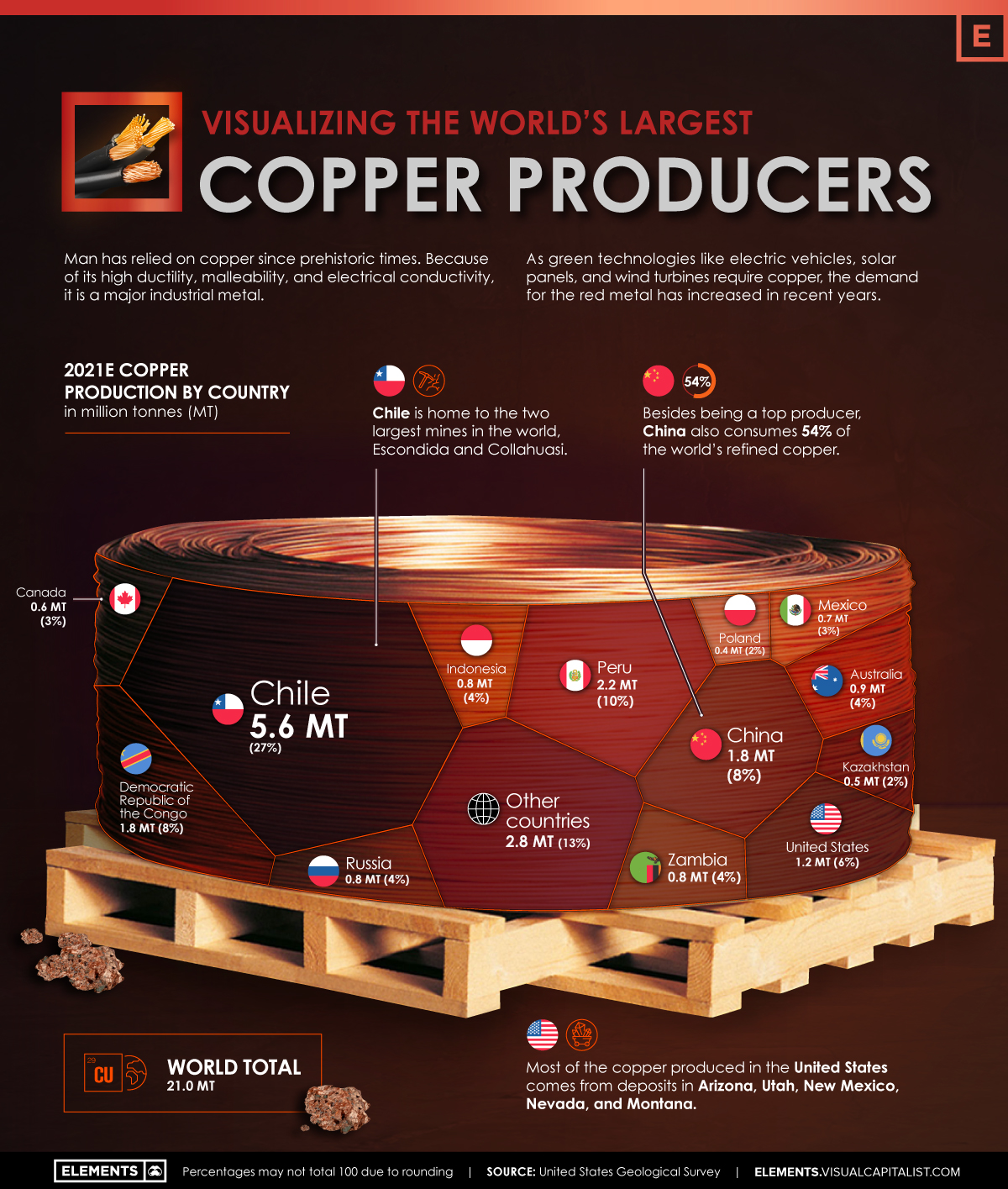
The list of 'critical minerals' is slowly expanding; until fairly recently copper was not classed as a critical metal, but it is one of the most important metals in the green transition, with more than 20 million tonnes consumed each year across a variety of industries. A recent report from S&P Global predicts the world’s appetite for copper will reach 53 million tonnes, on an annual basis, by mid-century. This is more than double current global mine production, according to the US Geological Survey.

Notably, growth in new copper supply capacity, from new mines, or expansions of existing projects, would unlikely be able to keep pace with the surge in demand, the study says. The International Energy Agency has estimated that it currently takes 16 years, on average, to develop a new mine, meaning that a new mine seeking permission today would not become productive in time to accommodate the demand spike. That leaves increases in capacity utilisation (output as a percentage of an existing mine's total capacity) and recycling as the main sources of additional supply, according to the study.

The world's biggest copper producer, Codelco in Chile, was well represented at Process Mineralogy '22 and a recent statement from the company warns that global shortages of the metal may reach eight million tonnes by 2032, as soaring demand continues to offset new project numbers. Maximo Pacheco, chairman of the board of Codelco, said at an industry conference that while a surplus is expected in the short term due to new projects in Chile, Peru, the DRC and China’s Tibet region, medium to long-term demand will eclipse supply further down the line.

Codelco delegates in Sitges

“Considering that some copper deposits are in the process of stopping production and that other projects are in the process of starting operations, it is estimated that the deficit will be almost eight million tonnes in 10 years,” Pacheco said at the Asia Copper Week conference in Singapore.

Based on studies conducted by Codelco, Pacheco said the world’s energy transition to stop climate change will take copper demand from the current 25 million tonnes per year to just over 31 million tonnes in 2032. This means the world would need to build eight projects the size of BHP’s Escondida in Chile, the world’s largest copper mine, over the next eight years. 

Source: elements.visualcapitalist.com

The World Bank estimates that to meet the Paris Accord goal of keeping global warming below 2 degrees will require 3 billion tonnes of new critical minerals, something which was hardly mentioned at last month's chaotic COP27 in Egypt, where the final text mentions emissions reductions through "low-emission" energy alongside renewable energy, raising concerns this will allow for more continued use of gas, which often has lower emissions than coal and oil, but still releases carbon dioxide when burned. Despite all the warnings, the world did not prepare itself for the complexity of supplying the transition to a green economy. For instance, for the growing lithium-ion battery requirements the world will need to bring into operation another 300 lithium mines, the equivalent of a 965% increase in lithium demand by 2050.

World population reached 8 billion last month, and a staggering statistic is that this year 5.3 billion mobile phones will be thrown away, according to the International Waste Electrical and Electronic Equipment (WEEE) forum. "People tend not to realise that all these seemingly insignificant items have a lot of value and together at a global level represent massive volumes," WEEE director general Pascal Leroy said. Most smartphones carry roughly 80% of the stable elements on the periodic table.

Breakdown of critical metals in a smartphone
Source: University of Birmingham

Another staggering statistic- there are an estimated 16 billion mobile phones worldwide, and in Europe almost a third are no longer in use. The WEEE says its research shows the "mountain" of electrical and electronic waste - from washing machines and toasters to tablet computers and global positioning system (GPS) devices - will grow to 74 million tonnes a year by 2030. Magdalena Charytanowicz, of the WEEE, said: "These devices offer many important resources that can be used in the production of new electronic devices or other equipment, such as wind turbines, electric car batteries or solar panels - all crucial for the green, digital transition to low-carbon societies."

Just over 17% of the world's e-waste is properly recycled - but the United Nations International Telecommunication Union has set a target to raise that to 30% by next year. However there are enormous challenges in recycling the tiny amounts of critical metals in WEEE and mineral processing will be at the forefront of these efforts, with the aim of achieving a totally circular economy.

There will be much to discuss next June in Falmouth at Sustainable Minerals '23 and if you are involved in any aspects of the processing of critical minerals we would certainly like your input.

#SustainableMinerals23
@barrywills


Thursday, 1 December 2022

November summary: a return to normality; encouraging news of young mineral processors

After three years in the doldrums it was great to be in Sitges, Spain, during the first week of the month, for Process Mineralogy '22, MEI's first face to face conference since Flotation '19 in Cape Town. Apart from getting back to proper social interaction, sadly lacking with online and hybrid conferences, it gave me, Amanda and Jon the opportunity of visiting Catalonia for the first time. Sitges certainly didn't disappoint, but I must confess to being slighly underwhelmed by nearby Barcelona.

Sitges and Barcelona

What I found particularly encouraging about Process Mineralogy '22 was the number of young researchers presenting their work. The industry desperately needs diversity and new blood as mineral processing is at the forefront of the quest for a zero carbon world by 2050. 

Young Chilean women in Sitges

There was encouraging news of the achievements of young people last month.  It was good to hear that Anna Vanderbruggen, a familiar face at many MEI Conferences, won first place in the European Institute of Innovation and Technology CHANGE Award category for developing a revolutionary new way to extract graphite from lithium-ion batteries. Her method, the first of its kind, separates the fine powder from crushed lithium-ion batteries in order to obtain two valuable products instead of one. This process enables the efficient and highly selective recycling of both graphite and metals from used lithium-ion batteries. It could lead to a truly circular battery supply chain and decrease the environmental footprint of battery production as well as reliance on raw material imports from outside the EU. I am hoping we will hear more of this at next year's Sustainable Minerals '23 in Falmouth.

Anna is a researcher at Helmholtz Institute Freiberg (HIF) for Resource Technology, Germany, and last month was awarded a PhD. Three years ago I visited HIF and met Martin Rudolph's mineral processing research team, a very impressive group of young people.

Dinner in Freiberg in 2019 with (L-R) Edgar Schach (Germany), Bruno Michaux (Belgium),
Martin Rudolph, Anna Vanderbruggen (France), Nathalie Kupka (France),
Ahmad Hassanzadeh (Iran) and Duong Hoang (Vietnam)

Apart from Anna there were two other recipients in the above photo of prestigious awards last month. Bruno Michaux, now a process engineer with Omya in Switzerland, received the “Heinrich Schubert-Prize 2022” last month, which since 2019 has been awarded by the TU Bergakademie Freiberg to commemorate Prof. Heinrich Schubert, an IMPC Lifetime Achievement Award recipient. Bruno also won the best poster prize in the Applications Symposium of Flotation '19. And last month I was pleased to present Ahmad Hassanzadeh, now with the Norwegian University of Science & Technology and Maelgwyn Mineral Services, UK, with the 2020 MEI Young Person's Award in Sitges.

We are certainly getting back to our pre-pandemic mode, and ten days after leaving Spain Amanda was travelling again, to Australia for the International Biohydrometallurgy Symposium, IBS 2022, in Perth. Her daily updates can be found on this thread.

Amanda with Dr. Anna Kaksonen, chair of the International Organising Committee

We now look forward to the next MEI event, Comminution '23 in Cape Town in April.

@barrywills

Monday, 28 November 2022

Flotation '23: Clariant is the latest sponsor, and news of an award to Metcelerate

People often ask why flotation, which has been around for more than a century, is still so intensively researched. A major reason is that it is crucial to the economic production of many critical metals and minerals, and handles vast tonnages, so even modest increases in recoveries have a marked effect on overall production, which is why flotation has always been MEI's most important conference series.

Flotation '23, which will be held next November in Cape Town,  has already attracted major corporate sponsors, and the latest to join us is Clariant, one of the world’s leading specialty chemical companies, providing a wide range of flotation collectors for specific duties such as the flotation of industrial minerals, iron ore, and molybdenite. 

Current Flotation '23 sponsors

Due to difficulties with storage, handling and disposal of xanthate collectors, sulfide mining companies are facing increasingly difficult xanthate logistics challenges. Through collaboration with customers, Clariant has developed alternatives with high copper flotation performance and safer handling and disposal solution for mines, lowering capital expenditure and providing a longer shelf life than solid xanthate. The Clariant xanthate replacement collectors allow operators to discontinue the use of sodium isopropyl xanthate and potassium amyl xanthate. 

Having the support of a major company such as Clariant, which employs over 13,000 people worldwide, is good news, as is news of one of our other sponsors, Metcelerate Limited, whose training solution builds technical competence in the mineral processing workplace for metallurgists and engineers. Metcelerate recently won the annual IChemE 2022 Global Award for Business Start-Up companies. Prof. Jan Cilliers, CFO of Metcelerate, said “We are very proud and humbled to have been acknowledged in this way by an esteemed organisation such as IChemE. We started Metcelerate to assist mining companies to close the skills gap in mineral processing, one of the most important elements of mining profitability. Our experience, backed by published data, tells us that this is a serious gap for mining companies. Graduates from our program have skills and ability to produce better results, and this is supported by feedback from learners and their supervisors.”

Jan Cilliers with the IChemE award

Metcelerate is delivered by a team of global academic experts and practitioners, and is now into its third intake of learners, with a fourth intake scheduled for mid-2023. To date it has trained learners across four continents. The 20-month program consists of a mixture of online course material, live tutorials and practical in-plant exercises. Learning is built around the real problems mineral process engineers face daily. The Metcelerate course is especially valuable for high-performing chemical, mechanical and other engineers transferring into the minerals industry. “This award will inspire us to work even harder to make the Metcelerate Course the industry standard” says the CEO, Diana Drinkwater, who will be at Flotation '23 next year to deliver a keynote lecture on management of the "People Asset".

@barrywills

Saturday, 26 November 2022

Leonard George Austin, 1929-2022

Five days ago the minerals community lost another 20th century legend in the field of comminution, one year after the death of Prof. Alban Lynch

Leonard (Len) G. Austin, who died at the age of 93, was Professor Emeritus of the department of Fuel and Mineral Engineering at the Pennsylvania State University, USA, from where he retired in 1996.

Born in England his achievements include international reputation in the field of crushing and grinding for the power, mining and chemical industries. He was a recipient of the Gaudin Award from the SME in 1983 and the Nicholls Award of the Joint Engineering Society in 1987.

Prof. Austin is survived by his wife Sofia, his ex-wife Ann, and his three children, Mark, Timothy, and Stuart. He also leaves his grandchildren: Thomas, Charlotte, and Joseph. 

Unfortunately, although I was aware of his reputation, I never met Prof. Austin, but I am sure that many of you did, and I invite you to share your memories of him below.

Thursday, 24 November 2022

The final day at the International Biohydrometallurgy Symposium

 Amanda reports on the final day of IBS 2022:

Delegates preparing for the final day

Mario Vera (Pontifical Catholic University of Chile, Chile) began the final day of the conference, with his keynote presentation on "Biofilm lifestyle of bioleaching microorganisms".

Next, we heard from Catherine Joulian (BRGM, France) with her presentation on "Bioleaching community dynamics during adaptation and process upscaling of a secondary polysulfidic ore".

Following Catherine, Robert Braun (Helmholtz-Institut Freiburg für Ressourcetechnologie (HIF) HZDR, Germany) gave a recorded presentation on "Directed evolution biology in resource technology - from the identification of novel inorganic-binding biomolecules to their provision in future".

Then we heard from Maria Dabrowska (University of Warsaw, Poland) with "Sporosarcina globispora and Glutamicibacter protophormiae - two ureolytic strains with high potential in revalorisation of heavy-metals".

In the last presentation before morning coffee, Ishaaq Hajee (University of Cape Town, South Africa) asked, in a recorded presentation, "Can microbially-induced calcite precipitation alleviate the traditional shortcomings of the Co-disposal method?".

Coffee with Zygmunt Sadowski of Wroclaw University of Science
and Technology, Poland
Sadia Ilyas (Hanyang University, Republic of Korea) and
Siti Chaerun (Bandong Institute of Technology, Indonesia

The parallel sessions after coffee were Session 5A, Biomining Microbiology, Molecular Biology, Systems Biology and Synthetic Biology and Session 5B, Biostabilisation, Bioremediation and Ecological Restoration and Biological Mineral Formation and Minerals Exploration, Biogeochemistry and Biosensors. The full programme can be viewed here.

After lunch, as with the previous two days, we were given 1.5 hours to view the posters and exhibition. 

Then, after an afternoon coffee break, it was time to decide on a venue for  IBS 2026 (the 2024 event will be held in Halifax, Canada, in conjunction with COM 2024). The choice was between France and Chile and, as ever, it was up to the delegates to choose. And the winner was... France!

Next up, Axel Schippers (BRG, Germany) gave the closing presentation, entitled "Future prospects for biohydrometallurgy".

Then came the award presentations.

Congratulations to the poster award winners: Douglas Pino Herrera (BRGM, France), Daniela Rios (Linnaeus University, Sweden), Reinier Egas (Wageningen University, The Netherlands), Maria Dąbrowska (University of Warsaw, Poland), Benjamin Monneron-Enaud (Technische Universität Bergakademie Freiberg, Germany) and Anna Cozzolino (University of Cagliari, Italy).

And congratulations to the oral presentation award winners: Klemens Kremser (University of Natural Resources and Life Science, Austria), Sophie Ullrich (TU Bergakademie Freiberg, Germany), Reinier Egas (Wageningen University, The Netherlands), Babatunde Oladipo (Cape Peninsula University of Technology, South Africa), Anne-Gwénaëlle Guezennec (BRGM, France), Anna Cozzolino (University of Cagliari, Italy), Melissa  Corbett (Curtin University, Australia), Chiamaka Belsonia Opara (Helmholtz Institute Freiberg for Resource Technology, Germany) and Jonovan Van Yken (CSIRO Land and Water / Murdoch University, Australia).

All that was left then was for Elizabeth Watkin to deliver the closing remarks, including thanking Anna Kaksonen for all her efforts in finally bringing this event to fruition. Thanks to Covid it has been 7 years in the planning!

I would like to also offer my thanks to Anna and her team. You all did a fantastic job and it was wonderful to be back with the IBS 'family'. I hope to see as many of you as possible in the UK next June for Biomining '23, and in Canada the year after! There is an album of photos from the conference, so please feel free to download any that you like.