Friday, 17 June 2022

A warm welcome to old and new faces at the June Mining Sundowner

The Chain Locker was busy last night, on the warmest evening of the year so far. Crowds have been flocking into Falmouth for the annual 3-day Sea Shanty Festival, the largest nautical music and song festival in Europe, which starts tomorrow. Falmouth has a long history as a first safe port of call for deep-water sailing ships and sailors filled the waterside taverns, such as the 17th century Chain Locker, and their shanties and stories are kept alive to this day. 

There was an unusually high turnout for the sundowner, with a few surprise guests among the regulars. It was great to welcome back Linda and Mark Shimmield. Linda has always been a regular at the summer sundowners, but this was her first in three years. Linda and Mark are based in Adelaide and have been effectively locked in Australia during the worst of the pandemic. Mark, a CSM alumnus, travels a great deal but Linda will now, as in past years, spend the summer in their apartment by the harbour so we look forward to her presence over the next few months.

A welcome back to Linda Shimmield

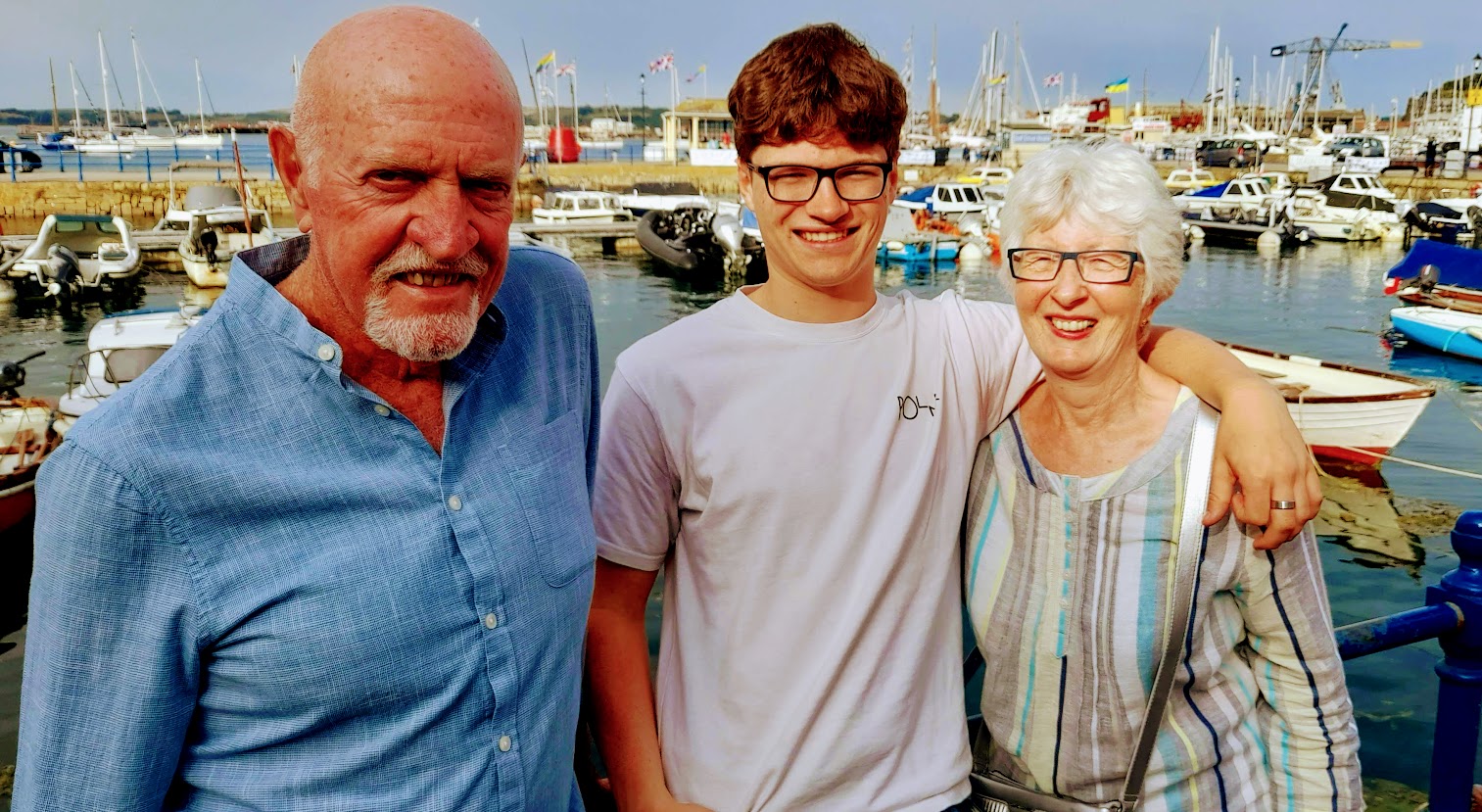
It was also good to welcome a number of youngsters, mostly current CSM students, and Barbara and I were particularly pleased to see our grandson, 17-year old William Collins, the elder son of Amanda, at his first sundowner. Maybe he will be the next generation of the MEI dynasty!  He has played a significant role in MEI's recent online conferences, filming and editing Jon and Amanda's opening addresses.

William with his grandparents.......
......and directing his Uncle Jon at an online conference
Regulars with CSM students

Last night was a pleasant occasion for renewing old acquaintances, and we look forward to doing the same at the next sundowner at the Chain Locker, which will be on Thursday July 21st from 5.30pm.

@barrywills

Tuesday, 14 June 2022

Report on IntegratedMinPro '22

Integration, Optimisation & Design of Mineral Processing Circuits ’22 was MEI’s first conference on this theme and was sponsored by Promet101 and Hudbay Minerals. Our Media Partner was International Mining, and our Industry Advocates were the Coalition for Eco-Efficient Comminution (CEEC), Cornwall Mining Alliance and the Critical Minerals Association.

Following is a brief summary of this two day online event. The recordings of the 17 presentations will be available on demand for 6 months, so it is not too late to register.

Monday June 13th

MEI’s Amanda and Jon Wills welcomed the 27 delegates from 12 countries to this small conference, noting that as we enter the 4th industrial revolution, the 'green' revolution, mineral processing is recognised as one of the most important technologies in satisfying the increasing demand for all metals, particularly those that are critical in the manufacture of renewable energy sources, and for electric vehicles. 

There are tremendous challenges facing mineral processors, and at last month's Physical Separation '22 panel discussion, it was noted that processes such as gravity, flotation and magnetic separation will need to be integrated more in future as ores become more complex, and how mineral processing will evolve in the future will be the subject of the papers at this conference and at the final day’s panel discussion. 

As the demand for resources continues to increase, and amidst growing challenges of processing complex ores while minimising energy and environmental impact, we are entering an exciting time for innovation in mineral processing and in this morning's keynote lecture, Elizabeth Lewis-Gray of Gekko Systems Integrated Mineral Processing, Australia, discussed the critical need for accelerating innovation in the mining sector, highlighting  the difficulties involved in  getting permits and the social licence to operate especially given climate change and the energy intensity of the mining industry.

Elizabeth said that Gekko Systems has always had a particular focus on reducing energy intensity and increasing energy efficiency. This has resulted in a focus on new flowsheets, pre-concentration, reducing treatment of gangue/waste, utilising low energy technologies as well as being instrumental in the establishment of one of our industry advocates, CEEC International. Increasingly, mining companies are looking to reduce their energy footprint and to utilise renewable / low carbon energy sources which will place further pressure on designing low energy and flexible mineral processing facilities. 

The capacity to successfully deliver new innovation is still problematic for the mineral processing sector and the mining industry, which still has many barriers including high capital investment risk, low risk profile of engineers by nature, influence of investors, etc. Many mineral processing flowsheets  are designed to minimise risk not energy. Timelines/budgets no longer allow for pilot studies. The sector must find new pathways to accelerate collaboration, knowledge sharing and innovation and a number of new pathways to market are being trialled and established. However, it is also critical for the innovation to take place across the whole value chain of mining to eliminate waste and maximise efficiency – including accessing and sharing data across the pillars of geology, mining and metallurgy.

Elizabeth’s keynote provided the perfect base for the 9 presentations that followed. Authors from Australia, Chile and Iran discussed wide ranging topics, including reducing water and energy consumption, the integration of mineral processing skill sets and processes, and process simulation and automation.

The presentations and the associated abstracts can be viewed on the conference website.

Tuesday June 14th

The presentations on the final day had the general theme of computer methods to optimise and simulate mineral processing operations.  The day began with a keynote presentation by Dr. Osvaldo Bascur, Principal of OSB Digital, and consultant Fellow to SEEQ, USA.

Ores are becoming extremely variable with mineralogy and hardness disturbing the integrated crushing, grinding, flotation, and thickening processes. The current mining, comminution and flotation sensors provide large amounts of data for process optimization. To augment the operational knowledge for proactive actions for improving the performance of the integrated rock processing complexes, Dr. Bascur showed how the right process knowledge context and operational modes need to be added. Without these proper operational contexts in place, the results are unmanaged downtime, process troubles, maintenance interruptions, and unmet production schedules. By measuring operational modes and managing these unproductive times (trouble times), new ways of improving profitability and efficiency of the plant can be found. He explained how real-time analytics enables calculation of metal recovery in real time and how predictive analytic models to secure the best operating conditions based on the type of ore currently mined have been developed. Using the latest advanced analytics, machine learning, big data analytics tools and cloud computing enables the creation of new workflows and collaboration between mining, concentrator plants, and the enterprise, including services providers.

Following Osvaldo’s keynote were 6 presentations from Australia, Morocco and the USA, describing machine learning algorithms for flotation and blending; a new flowsheet-based simulation system; optimisation to reduce water and energy consumption; and optimisation to improve circuit performance.

Prior to the afternoon break, Stuart Saich, of conference sponsor Promet101, chaired a live panel discussion on the continuing evolution of mineral processing. Delegates submitted questions to the panelists, today’s keynote speaker Osvaldo Bascur, Dr. Stephen Rayward of MIDAS Tech International, Australia and Dr. Diego Mesa of Imperial College, UK, and Aminpro, Chile.

Unfortunately Stuart was not able to initially connect, but Stephen kindly took over at the last minute as chairman, until Stuart jumped in 15 minutes into the session, which promoted some active debate over a range of topics.

In winding up the conference Jon thanked everyone involved, the sponsors, presenters and delegates, and invited everyone to attend the next conference in the series, which is planned to be held in Falmouth, back to back with Physical Separation ’24, in June 2024.

Finally a reminder that the recordings of the presentations and the panel discussion are available on demand, so it is not too late to register for the conference.

Sunday, 12 June 2022

Recent comments

There have been comments on the following postings since the last update:
  
We welcome and encourage your comments on blog postings (see also the posting of 2nd April 2019). If you do not have a Google account, the simplest way to add a comment is by selecting 'anonymous' as your profile, but please leave your name and affiliation in the comment. Alternatively, email your comment directly to bwills@min-eng.com.

Over the last 12 months there were over 167,000 page views, so interacting with the blog enhances your international presence by providing you, and your company or Institute, with valuable exposure.

 If you are in Web View (mobile users can access this by scrolling down to the bottom of the screen) you can also check various things in the right hand column:
  • The latest MEI tweets from @barrywills
  • The most viewed posts in the last 7 days, month and year
  • Dates of blog posts (click on the black arrows to open up individual months and postings)
  • Labels, or categories
You can also access MEI's Facebook page and MEI Online via links in this column.
If you would like a weekly email alert to comments on the blog, please let me know via bwills@min-eng.com.

Thursday, 9 June 2022

Is Direct Lithium Extraction the answer to satisfying the growing demand for lithium?

Global demand for lithium is growing as it is needed to produce virtually all batteries currently used in electric vehicles (EVs) as well as consumer electronics. Lithium-ion batteries are widely used in many other applications as well, but will supply keep pace with demand? The International Energy Agency is projecting a 15-fold increase in lithium demand by 2040 based on what would happen if governments made rapid progress towards reducing emissions by mid-century.

Despite expectations that lithium demand will rise from approximately 500,000 metric tons of lithium carbonate equivalent in 2021 to some three million to four million metric tons in 2030, apart from increasing the conventional lithium supply, which is expected to expand by over 300% between 2021 and 2030, direct lithium extraction (DLE) and direct lithium to product (DLP) may be the driving forces behind the industry’s ability to respond more swiftly to soaring demand, as well as reducing the industry’s environmental, social, and governance (ESG) foot­print, and lowering costs (McKinsey & Co).

Currently, around 98% of production is from lithium mining in Australia, Latin America, and China. New technologies expected to boost recovery and capacity include conventional brines with concentrations of between 200 and 2,000 parts per million (ppm), as well as hard-rock assets, where grades of 0.4 to 1.0 percent lithium are common.

Additional potential could come from unconventional deposits: geothermal and oilfield brines with grades of 100 to 200 ppm. The first option focuses on providing both clean geothermal energy and lithium supply and many EV companies have been signing agreements with geothermal lithium projects in Europe and North America.

There are a number of companies testing various DLE approaches. While their ideas differ, the concept remains the same: letting the brine flow through a lithium-bonding material using adsorption, ion-exchange, membrane-separation, or solvent-extraction processes, followed by a polishing solution to obtain lithium carbonate or lithium hydroxide. DLE technology is currently being considered not only by unconventional players but also by companies that traditionally develop “typical” brine assets, as DLE has several potential benefits. 

Evaporative processes common in South America are typically used to recover lithium from brines. The brine is pumped to the surface to evaporation ponds that are 5–10 km across, where it remains for around two years. DLE removes the need for an evaporation pond and the process takes 1–3 hours rather than years, at higher lithium recovery.

Image: Milennial Lithium

DLE is being tested at a pilot plant only 7 miles from the home of MEI in Falmouth, and I was pleased to be invited to see the operation by  Project Manager Richard Thompson, one of my former Camborne School of Mines students, who graduated in mineral processing in 1986.

Geocubed is a subsidiary company of Cornish Lithium and the pilot plant uses DLE ion-exchange technology to produce lithium chloride from geothermal waters. The intention is to extract heat from the geothermal waters to power local industries, as at the depth of the current borehole of 5.2 km the waters are at a temperature of 190C. Cornish Lithium will be drilling to more moderate depths, however, and the geothermal water will be returned once the heat and lithium have been extracted. No water will be lost, unlike in South America where water is lost in a water-scarce environment.

With Richard Thompson at the Geocubed pilot plant

The company’s pilot plant, which has received £2.9m of Government funding, has been built at its geothermal water test site at United Downs and is trialing a DLE technology provided by French firm GeoLith.

Richard said “The commissioned pilot plant has a pre-treatment process for the geothermal water, which includes filtering, pH adjustment and temperature control. Thereafter, the water is passed through the DLE Li-Capt process provided by GeoLith, where lithium is absorbed onto fine filaments, using a selective surface chemical. Once saturated, the filaments are desorbed using hydrochloric acid, rinsed and brought back into operation. The DLE absorption, desorption and rinsing is operated as a continuous process, in a series of vessels. The concentrated lithium chloride eluate will be stored for additional refining testwork, whilst the depleted brine is disposed of in an environmentally safe manner. The pilot plant has been designed to be as flexible as possible and is contained in standard containers, so that it can be located at different sites, as additional boreholes are trialed across Cornwall, for lithium recovery.”

The Geocubed team will test various DLE technologies at the plant throughout 2022, aiming to commercialise production within two years. The company is confident that the operations will not impact surface groundwaters due to the depths they are drilling, and that the reagents added to remove lithium will not be an environmental issue.  The company is working with relevant authorities to ensure they are complying with necessary environmental and safety requirements. From a process engineering perspective, Richard says the key challenges are ensuring the technology they pick can cope with other components of the groundwater, including silicates, and scaling the technology for higher throughput.

I really appreciate Richard's invitation and I will be following developments very closely over the next few year. Much is happening in Cornwall!

@barrywills

Monday, 6 June 2022

High steel load in SAG mills and the implications on energy efficiency of this growing design trend

Semi-autogenous grinding (SAG) mills are commonly used in mineral processing plants to reduce ore particles so that the minerals of value can be extracted by downstream recovery processes. Ore introduced to SAG mills requires minimal processing after the mining stage, resulting in circuits with low capital and maintenance costs due to the absence of elaborate crusher plants. 

SAG mills can be operated as primary mills in multiple grinding stages or as single stage mills in closed circuit with classifiers to produce the final product for the recovery processes downstream. SAG mills are designed to operate with ball loads ranging from 4 to 15% volumetric filling, but high steel load SAG mills or Run of Mine ball mill designs have provision to accommodate ball loads in the range from 16 to 36%. 

The ball load in SAG mills plays a significant role in defining the throughput and product size for the circuit. For SAG mills operated at lower ball filling, the coarse component of the ore and its breakage characteristics play a significant role in establishing the energy efficiency that can be attained by the circuit while for SAG mills operated with a higher ball filling, the contribution from the steel media dominates. The rock/ball ratio is an important parameter in determining the energy efficiency of the SAG mills. Low energy efficiencies have been observed for mills that are operated with low ore/ball ratio. 

The significant role of ball filling in SAG mill operations for different feed attributes will be discussed by Prof. Aubrey Mainza in his keynote lecture at Comminution '23 in Cape Town next year. Opportunities to enhance circuit performance and reduce detrimental consequences that the ball filling degree can impose on the circuit will be explored and the paper will provide insights on the importance of considering implications of energy efficiency when designing plants to avoid oversizing the mills. If most mills draw only 70% of the motor power, what are the implications of this growing trend of using high steel load SAG mills? This should lead to an interesting discussion among the many experts on SAG milling from around the world who we expect to have in attendance at our first face-to-face comminution conference since Comminution '18. Any views you have now I am sure Aubrey would appreciate.

Aubrey heads comminution research at the Centre for Minerals Research of the University of Cape Town, and participates extensively in collaborative research with international universities, mining companies, and comminution and classification equipment manufacturers. For many years he has been a comminution consultant to MEI.

There is now a call for abstracts for Comminution '23, and we would like to thanks our current sponsors for their support.

#Comminution23

Thursday, 2 June 2022

May summary: the continuing energy and cost of living crisis, and the end of "partygate"?

The war in Ukraine continues to dominate the news, as does its consequences, the ongoing energy crisis, due to embargoes on gas and oil from Russia and a serious shortage of grain, as Ukraine and Russia supplied around a quarter of the world's wheat. This, and other factors, including Brexit, have led to soaring inflation in UK and a severe cost of living crisis. Another worrying consequence of Brexit is that Britain risks being cut out of the  Horizon Research programme, a critical European research collaboration which has brought many institutions together and has seen collaborative work presented at many recent MEI Conferences.

In the middle of the month the Metropolitan Police inquiry into Downing Street parties finally came to an end, resulting in 126 fines. Boris Johnson was fined only once for his birthday party but not for the bigger BYOB drinks party in No. 10 garden, while many junior staff were, causing many to ask why he could have legally been at so many illegal lockdown gatherings. Publication of photos last week showing conclusively that Johnson attended a party in November 2020 put more pressure on him to resign, and a few days later the long-awaited Sue Gray report on 'partygate' was published, which was damning in its findings. But despite stating to MPs in the commons that he took full responsibility for what happened in Downing Street during lockdown, he still believed at the time that the parties were 'work functions' and that he must now be allowed to 'get on with the job'. What will it take to remove from office this disgraceful excuse for a prime minister and his sycophantic ministers, who are wheeled out each day to morning TV to make fools of themselves by trying to defend the indefensible? Hoping to appease the populace, with impeccable timing, a day after the publication of the 'partygate' report Chancellor Rishi Sunak announced a temporary windfall tax on oil and gas companies to ease the burden of massive increases in household energy bills.

The Times, 26 May

Living in UK we could be forgiven for thinking that the pandemic is over, as social distancing has basically been abandoned and very few people are now wearing face coverings. Reports from other countries belie this however, many major Chinese cities for instance being in strict lockdown.

MEI's Physical Separation '22, originally scheduled for Falmouth, was held online in May and Amanda opened an MEI conference for the first time. The conference included a 2-hour panel discussion on the future of physical separation, which was brilliantly chaired by Dr. Erin Bobicki of the University of Alberta. The panel discussion and all the presentations are now available on demand, so it is not too late to register.

We have been nervous about reinstating the Falmouth conferences due to the great uncertainties with Covid, so this month's IntegratedMinPro '22 and next month's Sustainable Minerals '22 are online, but hopefully in next month's update we should have news of Falmouth 2023.

#MonthlyUpdates