Friday, 18 January 2019

Pleasant surprises at the first Cornish Mining Sundowner of the year

There was a great attendance last night for the first Cornish Mining Sundowner of the year, at Falmouth's Chain Locker pub.
A group of sundowner regulars
I was surprised and pleased to see Mike Battersby and Steve Flatman, of Flotation '19 sponsor Maelgwyn Mineral Services (MMS), who had travelled down from Wales to visit local companies Cornish Lithium, Petrolab and Comminution '20 sponsor Grinding Solutions Ltd (GSL). MMS is considering coming down here again in June for Physical Separation '19.
With GSL's Nick Wilshaw, Alan Matthews and MMS's Mike Battersby and Steve Flatman
It was good to see representatives from Cornish Lithium, celebrating the fact that yesterday the company raised a further £1 million from existing investors to explore for lithium brines in Cornwall and to drill exploratory boreholes to extract samples of lithium-bearing brines from key locations. Lithium-bearing brines continue to be the focus of the company but recent research has demonstrated potential for the company to extend its activities to include hard-rock sources of lithium and other metals.
Exploratory drilling was also on the mind of Tony Batchelor, of GeoScience Ltd, based in Falmouth. Tony, the "father of Cornish geothermal energy" is a consultant to the United Downs Deep Geothermal Power Project, which commenced drilling in November (posting of 1st November 2018), and has now reached a depth of 1645 metres.
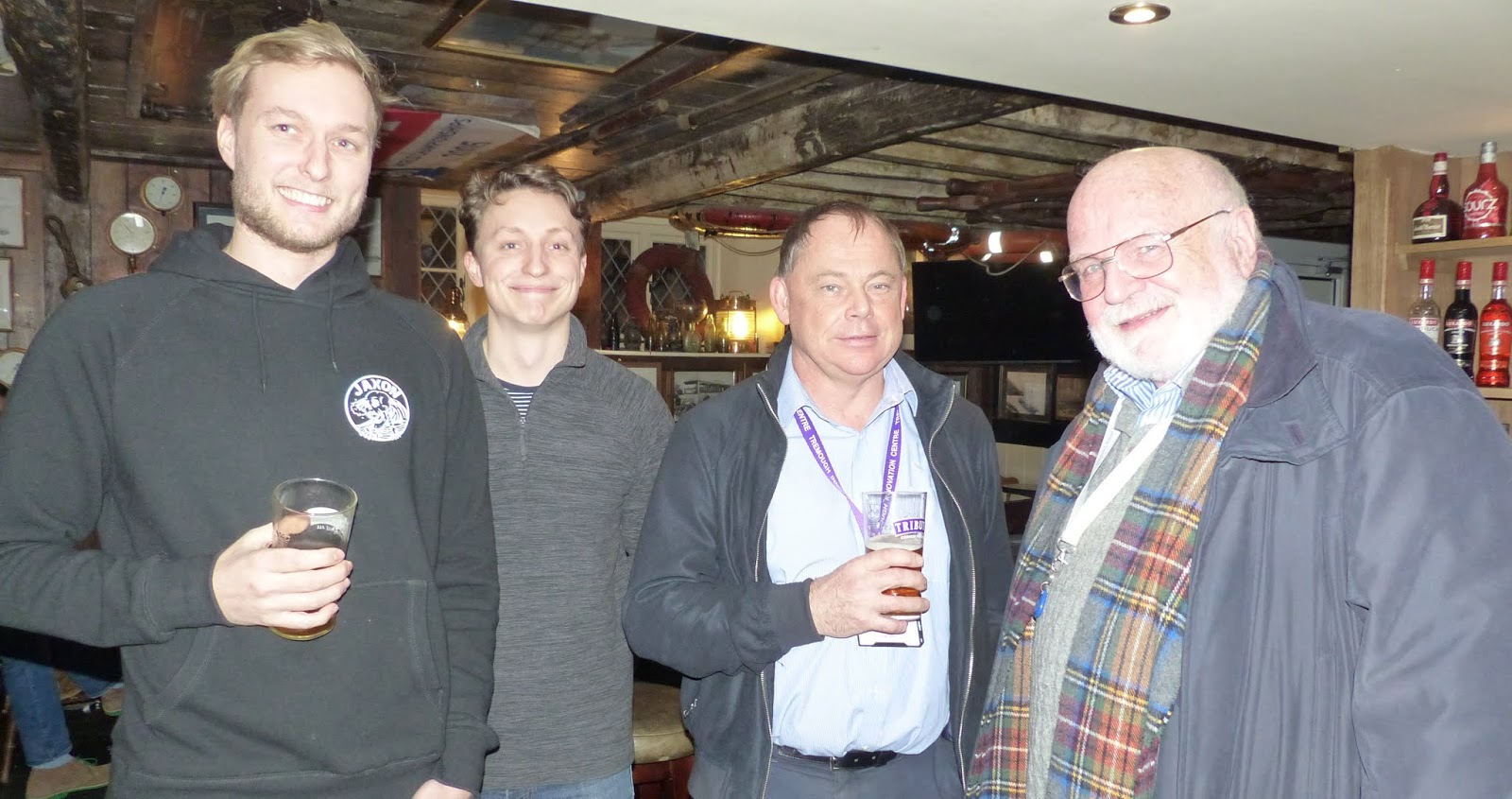
Tony (right) with Cornish Lithium staff
As always the sundowner proved immensely enjoyable, as well as a great opportunity for networking. The next sundowner will be held in the Stannary Bar on the University of Exeter's Tremough Campus, on Thursday 21st February, following a progress report at 6pm on Cornwall's major mining projects, Cornish Lithium, South Crofty Mine, and Redmoor.
Twitter @barrywills

Thursday, 17 January 2019

Two important MEI deadlines fast approaching

The end of this month is the deadline for abstracts for Computational Modelling '19 and Physical Separation '19, which will be held in Falmouth, Cornwall in June. More information is on the posting of 24th November 2018.
If you would like to nominate a young person for the MEI Young Person's Award, then please submit your nomination by the end of the month. Full details are on the posting of 13th December 2018.
Twitter @barrywills

Wednesday, 16 January 2019

Five more companies confirm support of MEI Conferences

We are pleased to announce that during the past few weeks five more companies have committed to sponsorship of upcoming MEI Conferences.
Hudbay Minerals is a Canadian integrated mining company with operations, development properties and exploration activities across the Americas, principally focused on the discovery, production and marketing of base and precious metals. Hudbay's properties include the Flin Flon copper and zinc facilities and Lalor mine in Manitoba, Canada; the Constancia copper and molybdenum facilities in southern Peru; and the Rosemont copper/molybdenum project in Arizona, United States, which is currently in the permitting phase.
The company has had no previous involvement with MEI Conferences, but its new Vice-President of Technical Services certainly has. Dr. Peter Amelunxen was the first recipient of the MEI Young Person's Award. Prior to joining Hudbay he was a consultant to the company and also served as President of Aminpro Peru’s metallurgical laboratory and engineering team.
Aminpro sponsored the previous 3 MEI flotation conferences, and Hudbay has now committed to sponsoring not only Flotation '19, but also Physical Separation '19 and Comminution '20. Peter says "...over the past years I have participated and presented in various MEI Flotation and Process Mineralogy conferences, all in Cape Town.  I always look forward to these conferences for the excellent organization and the great socializing and networking opportunities that they present, but in particular the concentration of high quality papers and presentations is second to none in our field". 
 
ZEISS has become, in recent years, one of MEI's most dedicated followers. With its Mineralogic Systems solutions it is a world leader in automated mineralogy. The company has now confirmed its sponsorship of Flotation '19, and Comminution '20, the 3rd time it has sponsored these series. ZEISS has also committed to Process Mineralogy '20, the 5th time it has sponsored the series, and is also sponsoring Hi-Tech Metals '20, the first sponsor of this new series. The company will also be running a free workshop immediately following Process Mineralogy '20, addressing the mining value chain with 2D, 3D and 4D microscopy solutions.
 
Nouryon may be an unfamiliar name, but the well-known former AkzoNobel Specialty Chemicals, a sponsor of Flotation '15, was relaunched as Nouryon a few months ago. The move follows the acquisition of the business by The Carlyle Group and marks the company’s transition to becoming an independent, global specialty chemicals leader. We welcome Nouryon as a sponsor of Flotation '19.
 
The advanced materials and specialty chemicals company Solvay, is once more sponsoring a flotation conference, having supported Flotation '17. Prior to that US-based Cytec was a regular sponsor of the flotation series of conferences, but at the end of 2015 the company was acquired by Solvay.
 
Finally we welcome Senmin who will be sponsoring Flotation '19, the 7th time they have sponsored the series. Senmin is a South African manufacturer and supplier of mining chemicals used in the beneficiation of a wide range of ores such as platinum, copper, zinc, coal etc, as well as polyacrylamides used for tailings treatment. The company has recently invested in state-of-the-art technology to meet expanding mining requirements and deliver new specialty products, complementing its existing product range to meet the growing demands of mines throughout South and Southern Africa, Australasia and Chile.
 
The latest updates on all the conferences can be found at #PhysicalSeparation19, #Flotation19, #Comminution20, #HiTechMetals20 and #ProcessMineralogy20.
The latest 5 sponsors of MEI Conferences
 

Sunday, 13 January 2019

The advantages of publishing your paper in a Minerals Engineering Virtual Special Issue

Minerals Engineering came into being in 1988 (posting of 8th January 2013) and for the first 27 years I was the sole editor. In November 2014 Elsevier appointed Dr. Pablo Brito-Parada, of Imperial College, as my very able and professional associate editor, and the two of us worked together until the merger of International Journal of Mineral Processing (IJMP) into Minerals Engineering at the beginning of this year.
The merger also involved the merger of the Editorial Boards of the two journals, with Dr. Kristian Waters, of McGill University, one of the previous IJMP editors, being appointed as a co-editor with Pablo, and I remaining as Editor-in-Chief. In a move to bring young researchers into the journal structure, Elsevier appointed 6 assistant editors, to work directly with Pablo and Kristian.
The route from receipt of a paper to final decision on publication is therefore markedly different from that of a few years ago.
If you wish to have a paper considered for Minerals Engineering, you submit your manuscript online via the journal website. Elsevier technical staff then make checks, mainly on format, and if approved the paper is then passed on to me. My main role is to assess the potential of the paper for the journal, mainly to ensure that it falls within the scope, it is sufficiently innovative and the science and English are sound.
If your paper passes my 'first filter' I then pass it on to one of the Editors, who then takes full responsibility for the paper. If the handling editor feels, after further reviews of the content, that the paper is worthy he will send the work off for review to two specialists from our +275 strong data base. Or he may appoint an Assistant Editor to look after the peer-review process, requesting revisions where necessary until the time comes for a final decision.
This new system is certainly more time consuming than the previous, and may appear cumbersome, but I fully approve of it as it is bringing 'new blood' into the journal and fresh ideas.
However, papers submitted to a Virtual Special Issue (VSI) move through a very different route, and are essentially 'fast-tracked'. The Editors and Assistant Editors play no part in the review process, authors dealing solely with me.
Let's take a look at the route to publication of a VSI paper to see why your paper is handled so differently:
VSIs are ScienceDirect compilations of papers presented at MEI Conferences. In order to present your work at such a conference, you will have submitted a short abstract to me for assessment. If approved you will have the opportunity of presenting your work either orally or by poster, and you will be required to submit a draft paper prior to the conference. This draft paper will not be refereed, but will be made available to all conference delegates as part of the Proceedings, and will essentially be a discussion document at the meeting. MEI Conferences provide ample time for discussions with other delegates, and we regard the conference as the first peer-review of your paper. 
 After the conference, as a result of discussions, you are asked to amend your draft if necessary, and then to submit online to Minerals Engineering. The paper, identified as a VSI submission, will then be handled directly by me and two reviewers. I always stress, however, that even by this 'fast-track' route there is no guarantee of publication. Many good conference papers are not ideal journal papers (posting of 21 January 2010), but even so, there is a higher chance of publication after your conference experience, and in 2017 the rejection rate of VSI submissions was 53% compared with 82% for non-VSI papers.  
Another great advantage of the VSI system is that there is no hard copy of the special issue. This means that once your paper has been accepted for publication it will be immediately allocated to the next available regular issue of the journal (which does appear in hard copy), and the paper also compiled into its appropriate VSI (click here for an example).
If you are considering submitting your work to an MEI Conference, and then to a VSI, and need any clarification on the above, please do contact me directly.
Twitter @barrywills

Friday, 11 January 2019

The launching of the latest SME Mineral Processing Handbook

The SME Mineral Processing Handbook was first published in 1985 and rapidly became a standard reference, providing comprehensive coverage of all the unit operations in mineral processing, descriptions of process plants for more than 26 minerals and materials, and small sections on hydrometallurgy and pyrometallurgy. The authors of its many chapters contributed their collective expertise unselfishly to provide a handbook that was truly useful to all the practitioners of mineral processing—students, engineers, mill managers, and operators.
The search for an editor to take on the task of producing an updated handbook began in 2012, as the previous handbook went out of print in 2003 and there was a steady and undeniable demand for a new version. Professors S. Komar Kawatra and Courtney A. Young from Michigan Technological University and Montana Tech, respectively, submitted a joint handbook proposal that incorporated both mineral processing and extractive metallurgy. The proposal was unanimously approved by the SME Information Publishing Committee in 2013.
After six years of intense work by the authors, reviewers, editors, and SME book publishing team, the new SME Mineral Processing and Extractive Metallurgy Handbook is now here, comprising two volumes of 2,312 pages, with 128 chapters.
Once again, each chapter is authored by an acknowledged expert. These selfless experts, recruited by the editors, have each made an invaluable contribution. The chapters were skilfully organized and refined by the managing editor, Dr. Rob Dunne, of Rob Dunne Consulting, Australia, with the incomparable assistance of SME’s book publishing team, led by Jane Olivier, manager of book publishing, who initiated the project.
The new SME Mineral Processing and Extractive Metallurgy Handbook, which will be launched at the SME Annual Conference in Denver in February, provides up-to-date coverage of all mineral processing unit operations, but it also has much larger sections on hydrometallurgy and pyrometallurgy as well as a section on management and reporting, which discusses such topics as health and safety, community and social issues, and project management.  The new SME handbook is truly a timely document, addressing the new technologies and important cultural and social issues that are important to today’s minerals community.
Twitter @barrywills
 

Tuesday, 8 January 2019

Mountains and Battlefields in KwaZulu-Natal

KwaZulu-Natal (courtesy Natal Tourism)
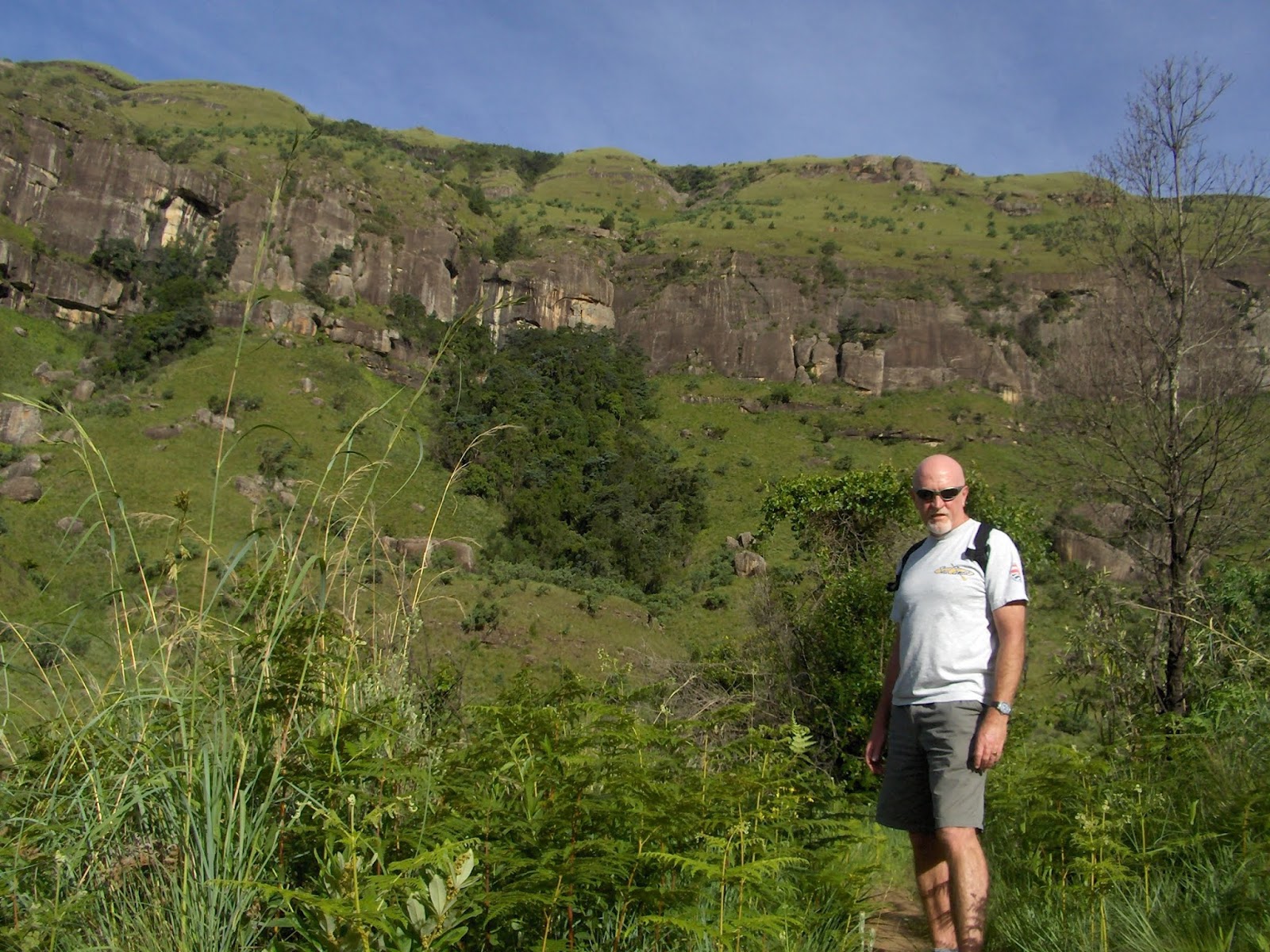
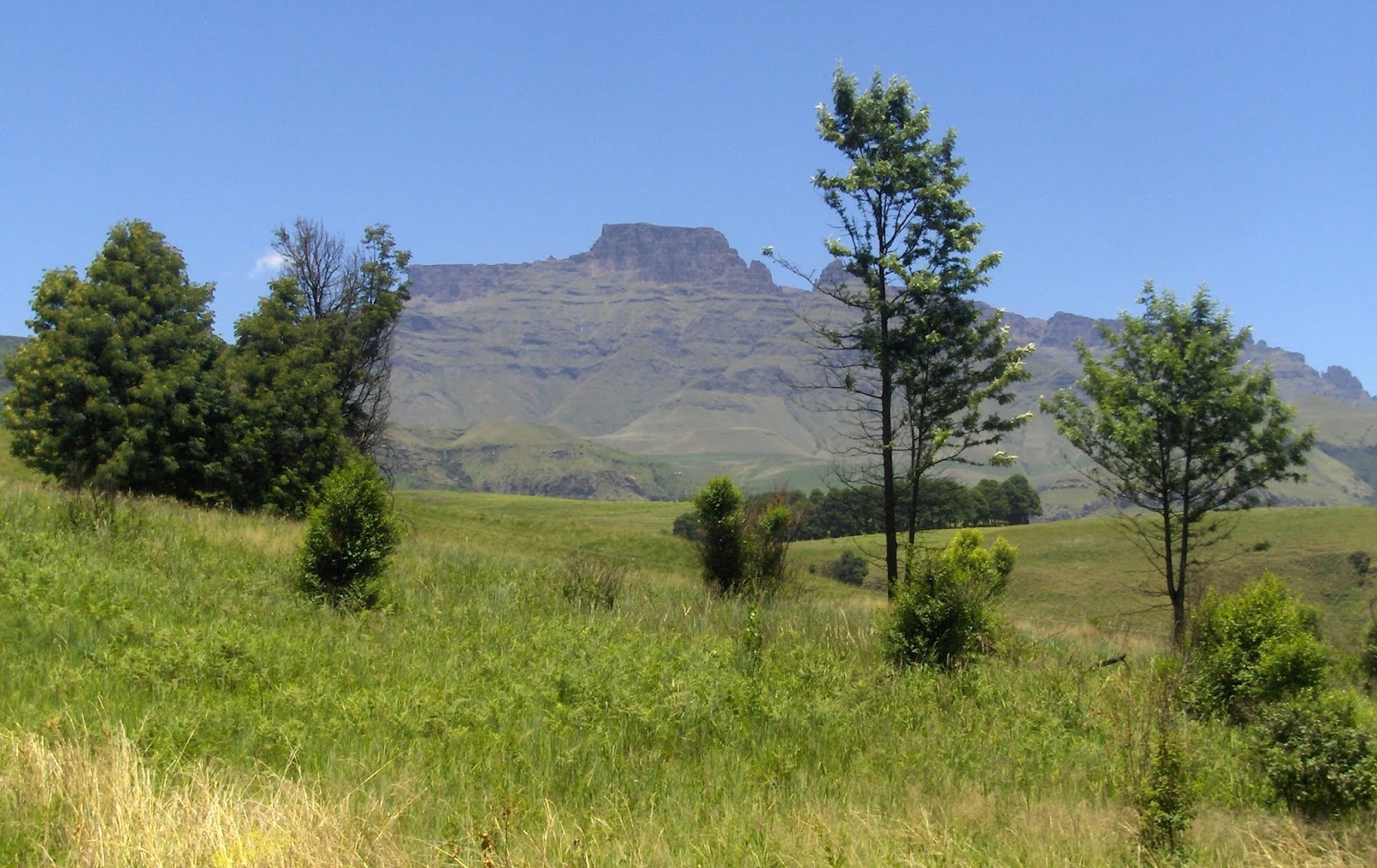
If you are travelling to Cape Town for an MEI Conference, it is a great opportunity to stay on and explore the diverse and beautiful regions of South Africa. We at MEI have travelled extensively in South Africa, and have shared our experiences on the blog. Cape Town is in one of the most beautiful provinces, the Western Cape, but there are equally beautiful areas, and one of the most interesting is KwaZulu-Natal, not only for its wonderful coastline, but for the impressive Drakensberg Mountains and its fascinating Battlefields area.
Barbara and I spent a week there in 2006, pre-blog days, so rather belatedly I am sharing our experiences now, as I would highly recommend this visit after a Cape Town conference.
We flew from Cape Town to Durban, rented a car and drove to the Southern Drakensberg mountains, where we based ourselves near the town of Underberg. In retrospect we maybe should have based ourselves at the stunning Cathedral Peak Hotel in the heart of the Drakensberg, a hiker's paradise, and close to the Battlefields.
 
Cathedral Peak Hotel
From Cathedral Peak it is an easy drive down into the heart of Zululand, which saw some bloody battles in the Anglo-Boer War, and of course during the Anglo-Zulu war, but prior to these wars, the Boers, trekking from British oppression in the Cape, encountered Zulu armies when trying to head towards the coast.
En route to Zululand
At Blood River a replica laager of 64 life-size bronze wagons stands on the site where on December 16th, 1838, a 464 man-strong Boer commando defeated a Zulu army of between 15,000 and 20,000. The Boers made a solemn vow to God that should they survive the battle, Afrikaners would hold the day sacred in perpetuity. 3000 Zulu, armed only with spears, were killed, and no Boers died, leading to the myth that the Afrikaners were God’s chosen people.
Blood River
The most humiliating defeat in British military history took place on January 22nd 1879, when virtually an entire force of 1700 men was obliterated at Isandlwana by Zulu warriors armed with spears.
Approaching Isandlwana
The battlefield remains unspoiled and unchanged, apart from the graves of those who died.
Inspired by their victory, 4000 Zulus, part of a reserve force, launched an attack on the mission station at Rorke’s Drift, across the Buffalo River in Natal. Of the contingent of 139 men at Rorke’s Drift, 35 were seriously ill. The battle raged through the night, until the Zulus retreated at dawn. Only 17 British soldiers died, and 11 VCs were awarded, more than any other battle in history.
The Mission Station at Rorke's Drift
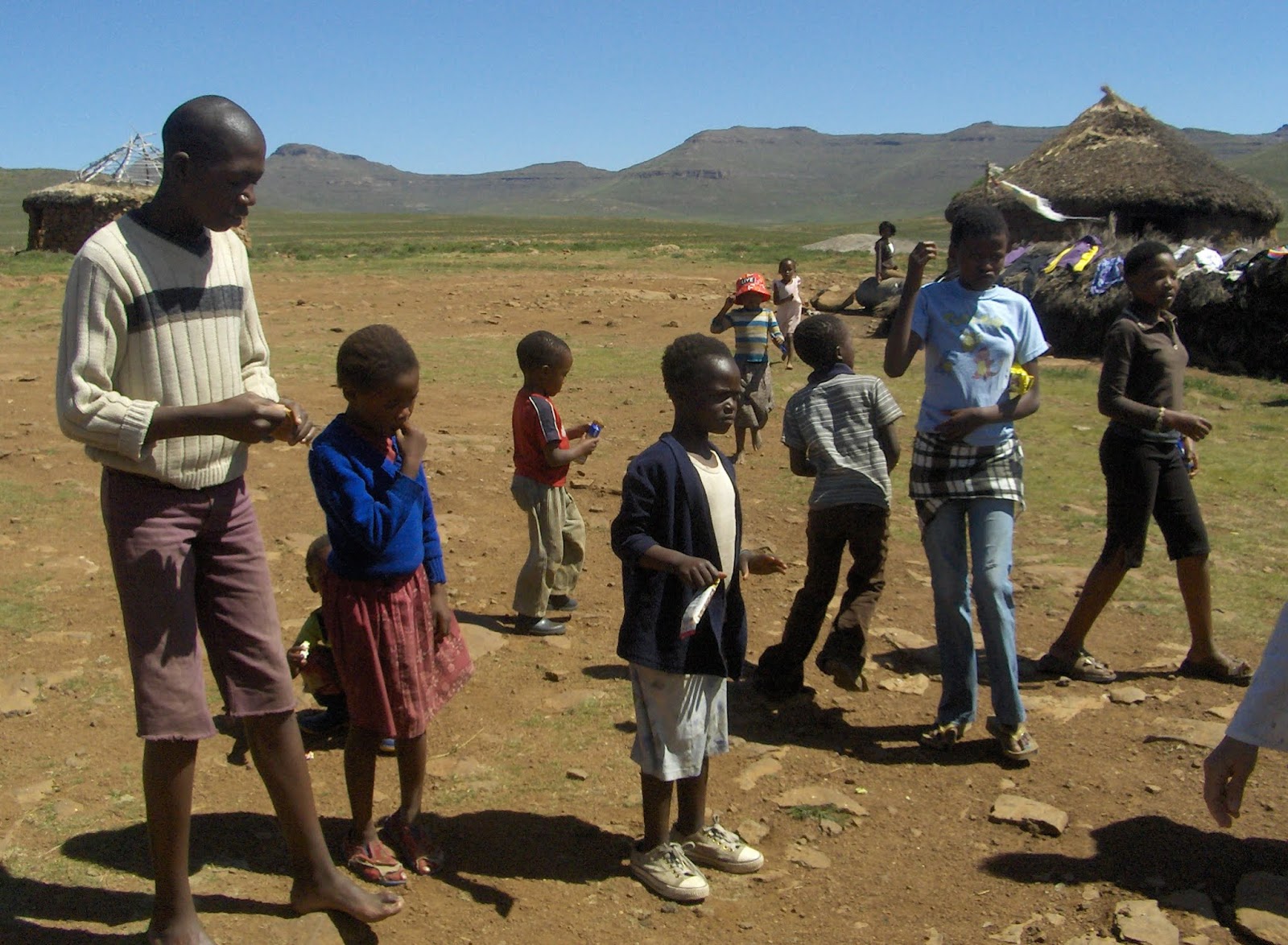
Perhaps the highlight of our visit to KwaZulu-Natal was the journey into Lesotho from Underberg, via the Sani Pass, the only road from KwaZulu-Natal into Lesotho, which twists to the top of the escarpment up to the highest point on Southern Africa reachable on wheels. We were in a convoy, with an experienced driver and guide, the road being negotiable only by 4-wheel drive vehicles.
The stark scenery at the South Africa-Lesotho border
The final hairpins
Returning to Underberg
So, another trip for you to think about, just one of many unique experiences to enjoy in this amazing country.
 
Twitter @barrywills