Friday, 29 March 2013

How photography has changed!

Here's a blast from the past. We were doing a little spring-cleaning today and came across this 1969 press cutting from a local Manchester newspaper.

B.A. Wills 1969

From the age of 16 I worked as a part-time freelance photographer, and during my time at University spent my weekends supplementing my meagre grant by covering sports events for the local paper.

A few weeks after this photo was taken, Barbara and I were off on our great adventure, and the start of a wonderful life in the minerals industry.

B.A. Wills 1969
Approaching the Rhodesian border, September 1969
The camera that I used in the 1960s was a Rolleicord V. The more expensive Rolleiflex was out of my league then, although I now own one despite it being redundant. The twin-lens Rolleis used roll-film, with 12 photos on each roll, so after an afternoon at the football ground I returned to the darkroom to develop the rolls and then make prints from the negatives.

It was a slow and laborious process, and how things have changed with the advent of modern digital cameras. But I have to admit that I still miss the black and white images slowly emerging from the developing solution under the warm orange glow of the darkroom lamp!

Wednesday, 27 March 2013

Flotation research - does advancement require a paradigm shift?


Flotation has been a technology success story in providing metals and industrial minerals for mankind. Much of the technology development has taken place by industrial experience and trial and error. As the ore-base keeps changing, new challenges are arising. Lower grades require high volume throughput flotation technology for economy; more complex ores require the capability to handle finer feeds efficiently. Faster development will be needed as issues of material efficiency, use of water and tailings quality are becoming crucial for the acceptance of the industry.

After a century of research we are still struggling to fully understand flotation. There are several reasons for this, which will be discussed by Prof. Kari Heiskanen, of Aalto University, Finland, in his keynote lecture at Flotation ’13 in November.

The combination of two discrete phases in a turbulent continuum has proven to be full of challenges. Phenomenological models, embodied in the first order rate model and all derivatives thereof have, in Prof. Heiskanen’s view, come to the limits of their usefulness. We can and should use them to solve many practical issues where work can be based on laboratory experiments, but they will not give us any further understanding of the underlying physico-chemical phenomena involved. This understanding is needed, if we wish to develop new generations of effective flotation cells and processes.

Prof. Heiskanen will discuss the need to span research over several decades of scale, instead of working mostly on continuum scales. The momentum effects are multidimensional already in the continuum scale. The crucial point discussed will be the transfer of continuum momentum effects via the boundary layers to the molecular scale at these boundaries and the effects of boundary molecular structure to the continuum behaviour. This will be discussed in the light of a frother and bubble system. He will also refer to ideas of creating true multi-physics models for flotation. In doing so, some areas needing a deeper understanding will be identified and discussed.

What are your views on the future of flotation research?

Monday, 25 March 2013

A mining pilgrimage for Physical Separation ’13 delegates


The birthplace of modern mining. This is what I have often called the Camborne-Redruth area of Cornwall. In the 19th century this was the world's largest producer of copper and tin. With the decline of the mines, due to the discovery of large deposits of tin in Malaysia and copper in the Americas, Cornish miners took their expertise to all corners of the world, leaving behind a heritage and industrial archaeological landscape second to none.


Everyone in the mining industry should make a pilgrimage to this fascinating part of the world, and delegates at this year’s Physical Separation ‘13 conference will have the opportunity to do just that.

Last Friday Barbara and I attended a Camborne School of Mines (CSM) reunion at the King Edward Mine Museum near Camborne. This is without doubt one of the best mining museums in the world, particularly as far as mineral processing is concerned, and this is in no small way due to the dedication of Tony Brooks, ex-CSM mining lecturer and Tony Clarke ex-experimental officer at CSM. I worked closely with Tony Clarke in the 1970s to develop the CSM Pilot Plant and his enthusiasm for that project has obviously carried over to the KEM Mill, which simulates a late 19th century processing circuit, complete with working stamp mills, buddles, round frames, rag frames, Frue vanners and shaking tables.

Tony Clarke explains the principle of the rag frame
Preparing a vanning assay
Delegates at Physical Separation ’13, and accompanying partners, are invited to a tour of the historic Camborne-Redruth mining area in the late afternoon of June 21st. After a coach drive to Camborne, passing the South Crofty Mine, the last of the tin mines to close, we will commence the tour with a visit to the KEM Mill, to see the old gravity devices in action, before driving to the Basset Mines in the heart of the district (see posting of 12 June 2011 for a full description of the Basset Mines).

West Wheal Basset
Don’t miss this trip if you are attending the conference! Take a look at photos from the Physical Separation ’11 tour.

Wednesday, 20 March 2013

An invitation to a workshop for journal authors at Flotation ‘13


Flotation ’13 in November is the conference not to miss if you are involved in any way with flotation. Already all the exhibition booths have been sold, and companies from around the world are supporting the event.


The deadline for abstract submission is the end of June, and we look forward to a very full 4-day programme of papers from leading international specialists. We also expect, and encourage, papers from young researchers just starting out on their careers in this, arguably the most important unit operation in the minerals industry.

Authors of all papers will be invited to submit their manuscripts to Elsevier’s Minerals Engineering after the conference, for review and possible publication in a special flotation issue of the journal in 2014.

Preparing a good journal article is very much an art, and on 17 November from 14.00 to 16.30, the publishing company Elsevier will run an author workshop as part of Flotation ’13 at the conference venue, the Vineyard Hotel in Cape Town.

There will be two modules:

(1) How to get Published in a Research Journal and

(2) Author’s Rights and Responsibilities.

The first module will take around 90 minutes including questions and answers and will be presented by Dean Eastbury, Executive Publisher for Chemical Engineering at Elsevier and Professor Jochen Petersen, Department of Chemical Engineering, University of Cape Town and Editor-in-Chief of the Elsevier journal Hydrometallurgy. The second module takes about 45 minutes and will be presented by Dean Eastbury, who will also show a short video explaining The Article of the Future.

The workshop is aimed at people who are relatively inexperienced with publishing in research journals but expect to do so frequently in the future. If you are either a postgraduate student or young lecturer working in physical science research and would like to attend, please contact Dean directly at d.eastbury@elsevier.com. The workshop is entirely free of charge.

Immediately following the workshop is pre-registration for Flotation ’13 and a chance to relax and meet other delegates at the opening wine reception.

Wine reception at Flotation '11

Monday, 18 March 2013

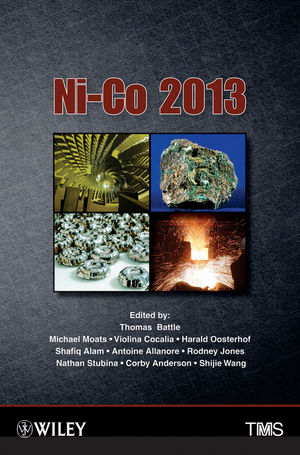
New E-Book: Ni-Co 2013


With both nickel and cobalt featuring heavily in modern industry, there is an ongoing and intense interest in ore supplies and processing, applications development, and recycling. This e-book presents a collection of authoritative papers covering the latest advances in all aspects of nickel and cobalt processing, including fundamentals, technology, operating practices, and related areas of Platinum-Group Metals (PGM) processing. Special emphasis is given to the treatment of sulphide and laterite ores, concentrates, and secondary materials for the production of nickel and cobalt.

Ni-Co 2013 is edited by Thomas P. Battle, Michael Moats, Violina Cocalia, Harald Oosterhof, Shafiq Alam, Antoine Allanore, Rodney Jones, Nathan Stubina, Corby Anderson, Shijie Wang and is published by Wiley. It can be ordered directly from the publisher.

Thursday, 14 March 2013

Where is comminution going?

Last year at Comminution ’12 I opened the conference by discussing the quiet revolution which has taken place in comminution.

For most of last century there had been little development in comminution machines and circuits, cone crushing being followed by ball milling, rod mills sometimes acting as tertiary crushers. In the latter part of the century, however, autogenous and semi-autogenous milling became more prominent, and then high-pressure grinding rolls began to play an ever increasing role, as did stirred mills, the latter allowing the exploitation of ultra-fine grained ores which had hitherto been impossible to economically treat.

This revolution continues, so that comminution circuits today are very much different to those of the mid-20th century with their parallel lines of small ball mill-cyclones.

Typical 20th century ball mill circuit
The rod mill is almost an obsolete device, and I asked the question at Comminution ’12 whether ball mills would play a significant role in comminution circuits, or would they be superseded by SAG mills. Chris Rule, of Anglo Platinum felt that rod mills will play an insignificant role, as they are severely limited in terms of size, and ball mills may play a diminishing role as the upper feed size range of stirred mills increases.

This is interesting as last month at the SME Meeting in Denver I was discussing this with someone, I can’t recall who it was, who had heard that many operations were having to increase the proportion of steel balls in their SAG mills in order to improve performance, effectively converting them slowly back to ball mills.

So what are your opinions on this? How do you see future comminution machines and circuits evolving. Does the future lie with HPGR and stirred mills? These are all subjects which I hope will be discussed further at next year’s Comminution ’14.