Saturday, 16 June 2012

New Book- Electrometallurgy 2012

News of this new book has been kindly submitted by Prof. Fathi Habashi, of Laval University, Canada:

Electrometallurgy 2012, edited by Michael L Free, Michael Moats, Georges Houlachi, Edouard Asselin, Antoine Allanore, James Yurko, and Shijie Wang,  ISBN: 978-1-1182-9117-7, published by Wiley, $ 138. 111 River Street, Hoboken, NJ 07030-5774, USA.

This is the proceedings of a symposium sponsored by TMS Extraction and Processing Division, TMS Hydrometallurgy and Electrometallurgy Committee, and The Metallurgy and Materials Society of CIM and held during the TMS 2012 Annual Meeting & Exhibition Orlando, Florida, USA, March 11-15, 2012. It is focused on fundamental research, development, and/or application of innovative aqueous or molten salt electrometallurgical technologies for the extraction, concentration, refining of metals, and recycling from scrap or waste.

The book starts with an excellent review article written by the editors entitled, “Electrometallurgy - Now and the Future” with 41 references. The remaining 24 papers cover different aspects of electrometallurgy. For example, A Novel Oxygen Evolution Anode for Electrowinning of Non-ferrous Metals, Lead Anodes Performance in Nickel Electrowinning, Electrometallurgy of Enargite, etc. The book is very well produced and is a welcome addition to the metallurgical library. Editor Houlachi is with Hydro-Quebec, Allanore with Massachusetts Institute of Technology Free and Moats with University of Utah, Asselin with University of British Columbia, Wang with Rio Tinto Kennecott Utah Copper, and Yurko with Materion Brush Beryllium and Composites.
Fathi Habashi

Friday, 15 June 2012

New Comments Alert

There are new comments added to the following blog postings since the last comments alert:

Book Review: Biohydrometallurgical processes: a practical approach
Book your seats for New Delhi
How important is collaboration to quality research?
Comminution '12, Conference Diary
Peer-review. Is it outdated?
Jacques Astier, ?-2012
Are journal papers containing advanced mathematics treated fairly?
Book Review: Separation Teechnologies for Minerals, Coal & Earth Resources
Is the text-book obsolete as a source of reference?
A quiet revolution in comminution


We welcome your comments on blog postings. If you do not have a Google account, the simplest way to add a comment is by selecting 'anonymous' as your profile, but please leave your name and affiliation in the comment. Alternatively, email your comment directly to bwills@min-eng.com.

If you would like to be alerted to postings, submit your email address via the box in the right hand column.

Saturday, 9 June 2012

Is biotechnology set to revolutionise the mining industry?

A collaborative paper from the University of Adelaide, CSIRO and the South Australian Museum suggests that advances in biotechnology will revolutionise the gold mining industry, leading to greener, more efficient extraction of gold.

Currently the role of biological agents in the mining industry is limited to the use of microorganisms in bioleaching and bioremediation. However, there are a number of ways in which biotechnology will be used in the near future to aid the mining industry, and some of these will be discussed at Biohydromet '12, which starts in 9 days time.

According to the paper, development of these innovative biotechnologies has been enabled by advances in the understanding of the role that microorganisms play in the solubilisation, dispersion and precipitation of gold, brought upon by the rapid development of molecular genetic techniques over the past decade.

An understanding of microbial species in soils overlying mineralisation can be utilised to develop bioindicator systems that assist with gold exploration. An in-depth knowledge of how microorganisms interact with gold complexes is being used to develop biosensors, further supporting exploration.

Processing technologies are being improved based upon advances in our understanding of the interactions between microorganisms, cyanide and gold. For instance, cyanide-producing microorganisms are being investigated for use in in situ leaching of gold. In turn, the use of cyanide-utilising microorganisms for the degradation of cyanide is being explored.

So is biotechnology really set now to come alive and revolutionise the processing of gold, and of other ores?

Thursday, 7 June 2012

Report on the ALTA 2012 nickel/cobalt/copper, uranium & gold conference

ALTA 2012 was held at the Burswood Convention Centre, Perth, Western Australia from May 26 to June 2 2012.

Alan and Joan Taylor of ALTA
The annual ALTA conferences have been run for the past 16 years by Alan Taylor and his wife Joan. MEI was represented at last year’s event, which we found very impressive, and I am pleased to hear from Alan that this year’s conference was very well attended with about 280 attendees from over 25 countries. The parallel 34 booth exhibition attracted exhibitors from 8 countries.

The conference was officially opened by Richard Matheson representing the Nickel Institute in Australasia and South-East Asia who focused on “Promoting Nickel Use and Re-use”.

The keynote address at the Nickel-Cobalt Dinner was given by David Dreisinger, Professor and Chairholder, Industrial Research Chair in Hydrometallurgy, the University of British Columbia, Vancouver, Canada and President, Dreisinger Consulting Inc. who spoke on "Hydroprocessing of Sulphides - Where Are We and Where Are We Heading”. The Nickel-Cobalt-Copper Sessions included a Forum and Panel Discussion on “Hydroprocessing of Sulphides” which included papers on bio, pressure, galvanic and chloride leaching. Other topics included processing of laterites, laterite projects, process technology, electrowinning, SX/IX, cobalt recovery and equipment and materials. A highlight was Eramet’s paper on their Weda Bay Project, Indonesia, for which they have developed an atmospheric leaching based process.

The featured Forum and Panel Discussion in the uranium sessions focused on “Uranium Heap Leaching”. Other topics presented included SX/IX, uranium ore leaching, and project development. A number of developing projects were presented including UraniumSA’s Samphire Project in South Australia, Toro Energy’s Wiluna Project in Western Australia, Greenland Minerals and Energy’s Kvanefjeld Project in Greenland, Aura Energy’s Häggån Project in Sweden and A-Cap Resources’ Letlhakane Project in Botswana.

Rob Dunne
Robert Dunne, of Newmont Mining Corporation, Denver, USA, who will be presenting a keynote lecture at Precious Metals ’12 in November, gave a keynote address in the Gold Sessions on “Challenges and Opportunities in the Treatment of Refractory Gold Ores”. A Forum and panel discussion on the same topic was also included with papers on diagnostic leaching, copper-gold ores, thiosulphate systems, Maelgwyn technology, roasting, bio-oxidation and the Albion Process. Other topics included AMIRA’s research and development for the gold industry, treatment of antimonial ores, cyanide detox and the use of computational fluid dynamics in mixing applications.

Practically oriented short courses on “SX and Its Application to Copper, Uranium and Nickel Cobalt” and “Uranium Ore Processing” were presented by Alan Taylor, Principal of ALTA.

The conference proceedings and short course manuals are now available from ALTA Metallurgical Services.

ALTA is now planning and receiving abstracts for the ALTA 2013 Nickel-Cobalt-Copper, Uranium and Gold Conference to be held in Perth, Western Australia, during May 25 – June 1 2013. It will feature Forums and Panel Discussions on “PAL of Laterites”, “Uranium IX” and “Cyanide Recovery, Recycle, Detox and Alternative Reagents”.

If you attended ALTA ’12, we would welcome your comments on the event.

Monday, 4 June 2012

Final Calls for Abstracts for Cape Town 2012

MEI is holding 3 consecutive conferences at Cape Town’s Vineyard Hotel in November.

 Process Mineralogy ’12 will run from November 7th-9th and current sponsors are FEI, Anglo American Technical Solutions, FLSmidth and Bruker AXS.
Papers are invited on all aspects of process mineralogy, including: 
  • Quantitative mineralogy, including both X-ray and Electron Beam Techniques
  • Geometallurgy
  • Ore characterisation
  • Mineral Liberation and Textural Analysis
  • Application of process mineralogy on site
  • Sampling and Statistics
  • Advanced Process Control
Keynote lectures will be given by Dr. Wolfgang Baum, of FLSmidth, USA and Prof. Jan Miller, of the University of Utah, USA.

 
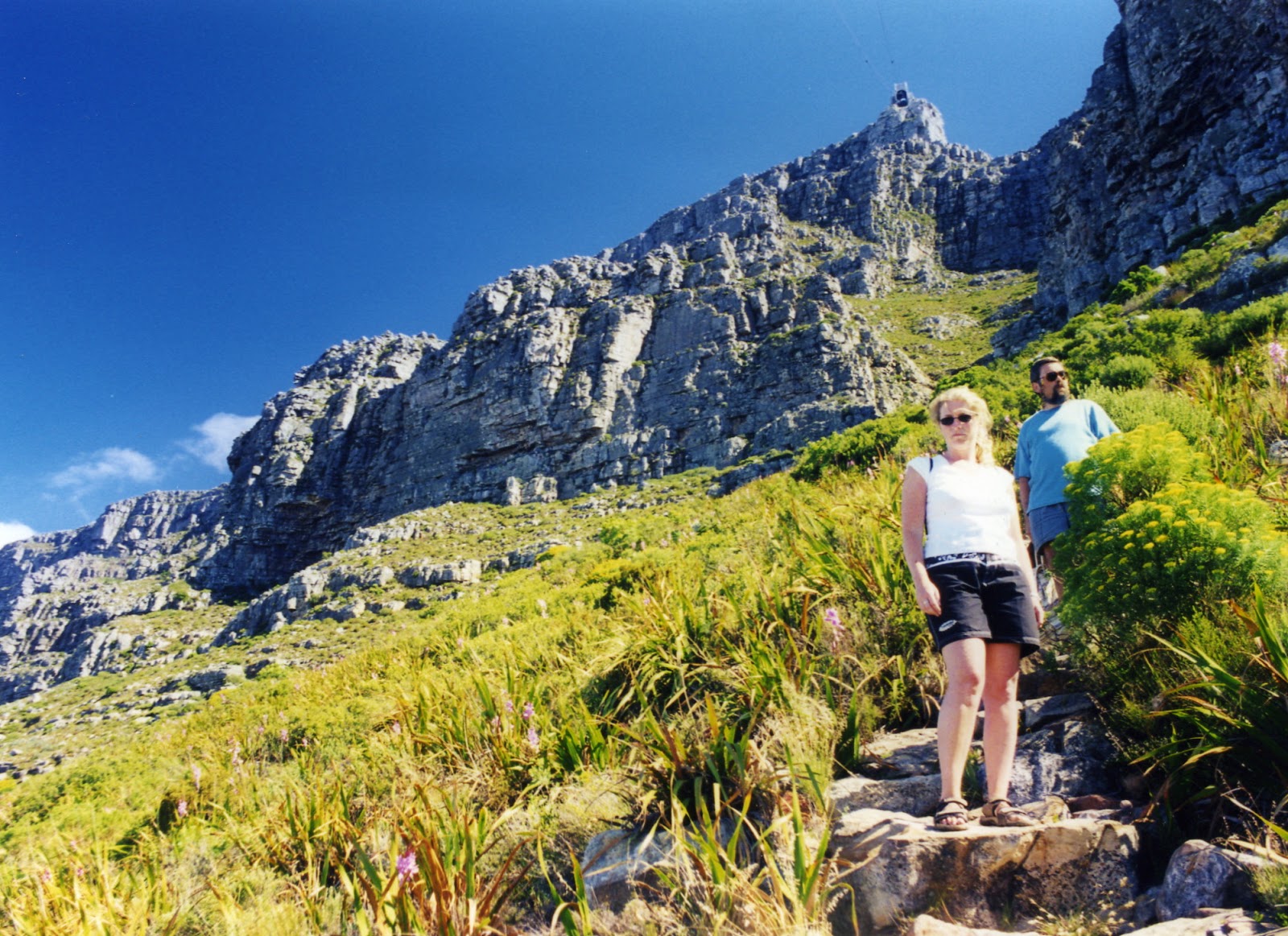
On the Saturday following the conference, MEI will be leading a hike to the top of Table Mountain, prior to the start of two further conferences running back to back:

Precious Metals ’12, from November 12th-13th is currently sponsored by Implats, Newmont and Barrick Gold and will deal with all aspects of the processing of gold, silver and PGM ores, such as flotation, bio and hydrometallurgy and the associated environmental issues. Keynote lectures will be given by Dr. Rob Dunne, of Newmont Mining Corp, USA and Keith Liddell, of Platmin Ltd, South Africa.

Immediately following Precious Metals ’12, Nickel Processing ’12 will run from November 14th-15th, sponsored by Nalco Africa. The aim of this conference is to bring together researchers and plant operators, to discuss all aspects of the physical and chemical processing of nickel ores, copper-nickel ores and laterites, and nickel concentrates, including froth flotation and other beneficiation methods, bio and hydrometallurgy, pyrometallurgy and environmental aspects of nickel processing and smelting.

If you would like to present papers at any of these conferences, short abstracts should be submitted no later than the end of this month. Papers from all three conferences will be reviewed for possible publication in special issues of Minerals Engineering.

Saturday, 2 June 2012

Falmouth celebrates

Pasties ready for the oven
In fact the whole of Cornwall has been rejoicing this week with the headline news that the Government has performed a U-turn on chancellor George Osborne's tax on food served fresh from the oven 'above ambient temperature'. What this means to delegates arriving in Falmouth for Biohydromet '12 is that there will be no 20% VAT imposed on their Cornish pasties!!

If that wasn't sufficient cause for celebrations, today Falmouth came alive for the central weekend of the Queen's Diamond Jubilee. She became Elizabeth II on 6th February 1952, and was crowned on June 2nd 1953.

June 2nd 1953, with sister Pat


How different it was 59 years ago. On June 2nd 1953 I was seven years old. I watched the flickering images of the Coronation with my family in our council house just outside Manchester. We were the only family in the street with a TV, bought especially for this great event.  It's also hard to believe that, unbeknown to me, Barbara was celebrating the day only a mile away. We met almost 9 years later.
Celebrations, Falmouth Harbour, June 2nd 2012