Sunday, 31 October 2021

October update: are we heading for another lockdown, and will mining be mentioned at COP26?

Is the pandemic over, or are we just living an illusion?  This was the question we asked this month, with further restrictions lifted even though the UK had one of the highest rates of Covid infection in Europe, and the rates in Cornwall were increasing again to over the UK average. Britain has had no Covid restrictions for 3 months, longer than anywhere else in the developed world and hospital admissions are rising steadily, all the more worrying as England's hospitals are struggling to recruit staff, with tens of thousands of posts unfilled, the situation made particularly bad by a drop in recruits from Europe. 

Health Secretary Sajid Javid held firm against calls for immediate restrictions, and the Government is unlikely to consider enforcing its Plan B before mid-November, after the COP26 conference in Glasgow. Plan B involves the return of compulsory facemasks, working from home and the introduction of vaccine passports.

The Times, 21st October

Towards the end of the month Morocco banned flights to and from the UK because of Britain's rising number of Coronavirus cases, but relaxed travel restrictions earlier allowed Amanda and Richard to spend a week in Crete, and Jon and friends met up for a weekend in Dorset. And back in Cornwall, Barbara and I had our first visitors stay with us since the start of the pandemic. Even Boris Johnson managed to take a week off running the country, to holiday in Marbella.

Amanda and Richard in Crete, Jon and friends at Durdle Door, Dorset,
and visitors to Cornwall's submarine mines

Despite the worrying rise in infections, on the 2nd day of the month there was a crowded bar at the CSM Annual Dinner, the first since March 2019, where it was great to see how more and more women are pursuing careers in the mining industry.

Photo: Silje Lovstad

However, Covid has taken a secondary role this month, as other matters have dominated the news, notably the murder of a prominent Member of Parliament, and the acute shortage and high cost of gas, record fuel prices and cuts in benefits. The Business Secretary Kwasi Kwarteng has promised that Britain will not run out of gas this winter, words that may come back to haunt him. Where is fracking when we need it? The north of England has huge reserves of shale gas, which cannot be exploited because of the "earthquake" fear.

The 26th UN Climate Change Conference (COP26) began yesterday in Glasgow, with around 30,000 delegates, but without the attendance of the leaders of 2 of the top emitters of CO2, China (#1) and Russia (#4). Worrying times, as greenhouse gases in the atmosphere are higher than ever despite a drop in emissions due to coronavirus restrictions. Maybe feedback is kicking in, where the oceans release CO2 as the temperature increases?

Ahead of the meeting, the UK Government revealed its latest strategy to make the move to a virtually zero-carbon economy. The trillion pound green gamble includes grants for purchase of electric cars and for replacement of home gas boilers by heat pumps. Considering that, despite these grants, the purchasing costs will still be prohibitive for those with low incomes, it seems that the poor, via their taxes, will be subsidising the rich.

Johnson announced that all Britain's electricity will come from renewables, mainly wind, by 2035, a significant step towards the government's ambition to hit net zero carbon dioxide emissions by 2050, a goal which I have questioned before:

Critical Metals and the UK's "Green Industrial Revolution" 
Just how energy efficient are wind turbines? 
Is Zero Carbon by 2050 attainable?
The real cost of using neodymium in wind turbines 

Last year 43% of the UK's energy was generated by renewables, 40% by fossil fuels, and the rest by nuclear. The new target will require significant growth, not only in offshore wind generation, but also in nuclear capacity and will mean a minimum quadrupling of offshore wind from the present level over the next decade. Considering how much raw material is needed to manufacture a single wind turbine (posting of 25 August 2019) is this all possible with current mining output? The stocks of copper for instance, one of the most critical metals, are at their lowest on the London Metal Exchange since the 1970s, driving the price to record levels by the middle of the month.

I wonder if mining will even be mentioned at COP26. The goals may be laudable but without investment in mining, not only in primary mining, but also in the the processing of secondary deposits, and the biggest challenge, recycling, it is unlikely that set targets will be achieved. I am sure that there will be calls to ban the use of fossil fuels, but the reality is that wind turbines need not only huge amounts of metals, they also require a great deal of energy to build them and to extract the raw materials, so in the transition period to 100% renewables fossil fuels will be needed, in the absence of sufficient nuclear energy.

There are many other potential sources of renewable energy apart from wind, for instance should more emphasis be placed on geothermal energy, a reliable, continuous source, of which there is much potential down here in Cornwall with its hot granite rocks?

November will be another worrying month, and as we now approach winter and infection and death rates continue to rise the future is still very much uncertain. 

"I'm fixing the obesity crisis via food shortages, the climate crisis via
fuel shortages and sorting the pension deficit by killing all the old people.
I just don't know what more I can do, Laura"

"The public are just ungrateful bastards, Prime Minister"

@barrywills

Thursday, 28 October 2021

Flotation '21 is only 10 days away

It would be nice to be looking forward to travelling to Cape Town next week for MEI's 10th flotation conference, and Flotation '19 now seems a lifetime away.

However, going online has enabled many researchers and  operators who would not have been able to travel to South Africa to attend Flotation '21 from the comfort of their own homes and offices, and there are many new faces on the delegate list.

It is certainly not too late to register for this major event, which was recently extended to 5 days due to the high number of abstracts received, and the programme covers the whole field of flotation: physics and chemistry; control and simulation; and machines, circuits and plant practice. 

The presentations will be streamed from November 8-12, but as these are pre-recorded they will also be available to delegates for a further 6 months. These presentations include two high-profile keynotes: Prof. Jim Finch will talk about the life and work of Prof. Graeme Jameson, who will be 85 years old this year. Prof. Jameson is particularly well known for the Jameson Cell and the Novacell, and he will be one of the panelists on the live panel discussion on the future of flotation circuits and machines (posting of 9th August).

Associate Professor Kym Runge, leader of the Separation Research Program at the SMI-JKMRC, Australia will present an associated keynote lecture on developments in flotation circuit diagnostic practice (posting of 15th August).

The programme for Flotation '21 truly reflects the progressive evolution of flotation, the mining industry's most ubiquitous and important technology. As we move into the 4th Industrial Revolution and the era of electric cars and renewable energy, never before has there been such a demand on the supply of finite resources, and flotation will play a very important future role in the quest for a circular economy. The future research needs in flotation will be the subject of a 2nd panel discussion which will be streamed live, giving delegates the opportunity of interacting with the international panel members (posting of 29th August).

Flotation '21 is an event not to be missed, and we hope you will take the opportunity of registering and networking with workers from around the world, browsing the virtual exhibition and entering the MEI and Glencore Technology Flotation 21 Competition with the chance of winning a US$2,000 voucher, good for more than 270,000 hotels around the world! 

Many thanks once more to our loyal sponsors:

#Flotation21

Monday, 25 October 2021

The role of magnetic separation in the development of critical and strategic metal recovery flowsheets

This will be the theme of a keynote lecture at next year's Physical Separation '22, to be given by Prof. Neil Rowson, Emeritus Professor, University of Birmingham and Laboratory Manager at Bunting-Redditch, UK.

Neil will give a brief overview of recent developments in magnetic and electrostatic separation technology available to primary and secondary processors and an overview of current applications for this type of separation in the mineral processing and metal recycling sector. Case studies on the role of physical separation (magnetic, electrostatic and gravity separation) in the recycling of rare earth magnets and lithium ion automotive batteries will be presented, comparing complexity, environmental impact and commercial viability to the equivalent primary processing flowsheets, and the current status of these recycling options in the UK will be discussed.

Neil Rowson worked in the School of Chemical Engineering at the University of Birmingham for over 30 years before retiring in 2018. He now lectures part-time at the University in design studies and project management as well as being Laboratory Manager at Bunting-Redditch – a major global manufacturer of magnetic and electrostatic separation equipment.

In the past decade he has worked on major research projects investigating the technology for recycling rare earth magnets from secondary waste, such as computer hard drives and automotive scrap. He was also took part in the ReLiB  research project funded by the Faraday Institution and led by the University of Birmingham, looking at the physical, chemical and bio-chemical processing options and safety implications of recycling lithium ion automotive batteries.

#PhysicalSeparation22

Friday, 22 October 2021

October Mining Sundowner: a brief glimpse of normality?

Normality at last!  The pandemic is over!  You would have thought so at last night's Cornish Mining Sundowner at Falmouth's Chain Locker, where there was not a facemask in sight and we ordered drinks at the bar as we did in the olden days.

Back to normality at the Chain Locker bar

With no Coronavirus restrictions the dozen or so who attended must have carried out their individual risk assessments, as the virus is still very much with us, Cornwall having one of the highest infection rates in the country, at around 550 per 100,000, compared with the national average of about 450 per 100, 000. It's hard to believe that a month previously the infection rate was 290, and this was 100 times higher than in June, when the sundowner had to be held on the beach as restrictions did not allow indoor mixing!

However, we needn't have worried, as there was no risk, because we all know each other! This reassurance came from the Commons Leader and man of the people, Jacob Rees-Mogg, who explained that Tory MPs do not need to wear masks in the House of Commons as they have a "convivial, fraternal spirit". Looks like the sundowners are safe then.

The mild (11C) evening allowed us to meet outside

It was exactly 5 years ago that I talked to a young Camborne School of Mines graduate, Edward Loye (2nd right in the photo below), who enthused about his acquisition of a hard rock rare earth deposit in Namibia. Ed had graduated from CSM in 2012 with an MSc in Mining Geology, and then spent almost 6 years as Project manager of CSM's SoS RARE consortium. It was great to see him last night and to hear that only this week his company, E-Tech Resources Inc, of which he is Director, announced trading on the TSX-V and presented technical disclosure on its REE focused exploration and development company, with 100% ownership of its flagship Eureka Project in Namibia. The Eureka REE Project is situated in the heart of the Erongo Region of Namibia, the “mining corridor of Namibia”. Neighbouring mines in the region include Rossing Uranium, Navachab Gold, Afritin Tin and Namib Lead Zinc.

As infection rates continue to rise I wonder if this gathering might be the last for some time, dependent on the Government imposing tight restrictions- its Plan B, which I doubt whether they will impose before COP26 in Glasgow. This ends on 12th November, just two weeks before the next scheduled sundowner at the Chain Locker, on Thursday November 25th.

@barrywills

Monday, 18 October 2021

Cornwall at its best for a 50 year reunion

Barbara and I arrived in Zambia in late 1969 and our first of many friends were two single guys, Alan Minty, a mechanical engineer in one of the open pits, a fine squash player who introduced me to the sport, and Pete Love, an exploration geologist.

Barbara with Pete and Alan, Chingola 1969

Like many adventurous young men, Alan, Pete and I aspired to great things, future entrepreneurs who would make their own way in the world. When our contracts in Zambia ended we would no longer have the shackles of employment, and would be masters of our own destinies. 

As I was an "experienced" diver, with 30 dives logged in the UK, and had introduced Alan and Pete to diving in the sunken lakes near Luanshya, it seemed obvious to us that our future lay in running a diving school in Spain and we even registered our company LMW Divers and began to learn Spanish!  A pipe dream of course, and as we settled into Zambian life this was quietly forgotten.

It was not the end of our ambitions to go it alone, however. Pete and I invested in hi-fi equipment and ran a weekly disco, which was soon abandoned as it was obvious that this was not the route to millionaire status.

Saturday Night Fever with Pete, and Brian, the 'security guard'

Alan and I went a different route and invested quite a bit of our savings into a good second-hand Nissan station wagon with the aim of running a successful taxi business, as few of the local Africans owned cars, making full use of buses and taxis. Taxis were everywhere, rickety vehicles carrying inordinate numbers of passengers. Alan had a driver in mind, one of his African workers, who was keen to leave the mine. We planned everything meticulously, possible routes, fares and the commission for the driver, who, having great confidence in us, had given up his mine job. The great day dawned, we gave the driver his final briefing, he proudly took his seat in the taxi, drove away, and that was the last we ever saw of him or the car!! 

Sobering reminders that not everyone becomes a Richard Branson overnight, and after several years in Zambia, Alan, Pete and I moved on along our separate paths, and unfortunately lost touch.

Over thirty years later, however, Barbara and I met Alan and his wife Sheila purely by chance, on a tour bus visiting Robben Island off Cape Town.  We had a great reunion dinner in Cape Town, where we reminisced and caught up on how our careers had developed since our Zambian days. It transpired that Alan had a thriving family business in the oil and gas industry, specialising in, wait for it, risk assessment! Oh, the irony of it! If only we had carried out some form of risk assessment all those years ago our African driver would not have had his early Christmas present.

Lunch in Cape Town with Alan and Sheila Minty, 2006

Over the years I tried unsuccessfully to trace Pete via Google but two years ago I had a message from him on LinkedIn, and we arranged to meet up with him and his wife Pam, who now live in Eastbourne in Sussex. He had left Zambia in 1972 and spent a year at the President Brand Mine, with the Free State Gold Mines in South Africa, before returning to London and working in the Foreign Office for a couple of years.  He married Pam in 1974 and returned to the gold mines, with Vaal Reefs in the Transvaal, then on to the Anglo American Corporation Head Office in Johannesburg. Their daughter Natalie was born in 1979 and Pete then spent 5 years as Chief Geologist on Elandsrand Gold Mine on the Western Rand before returning to the UK in 1984, where he and Pam set up a training business which continued for 16 years, and in which period he dabbled in Management Consultancy and Venture Capital and worked as a geological consultant. 

Unfortunately, due to Covid, our meeting was delayed for two years, but last week Pam and Pete spent four wonderful days with us and we were transported back to days of the young visionaries of half a century ago. Even the weather was reminiscent of Zambia and we were more than pleased to take the opportunity to show them some of our favourite areas in West Cornwall, which seem to be getting steeper each year! Hopefully we might catch up with other friends from the past, via the wonders of social media, and maybe the photos below might whet your appetites to contact us if you are out there.

Maenporth beach, Falmouth
St. Just in Roseland
Levant mine
Crowns Engine Houses, Botallack
Arsenic labyrinth, Botallack
An obligatory visit to Falmouth's Chain Locker
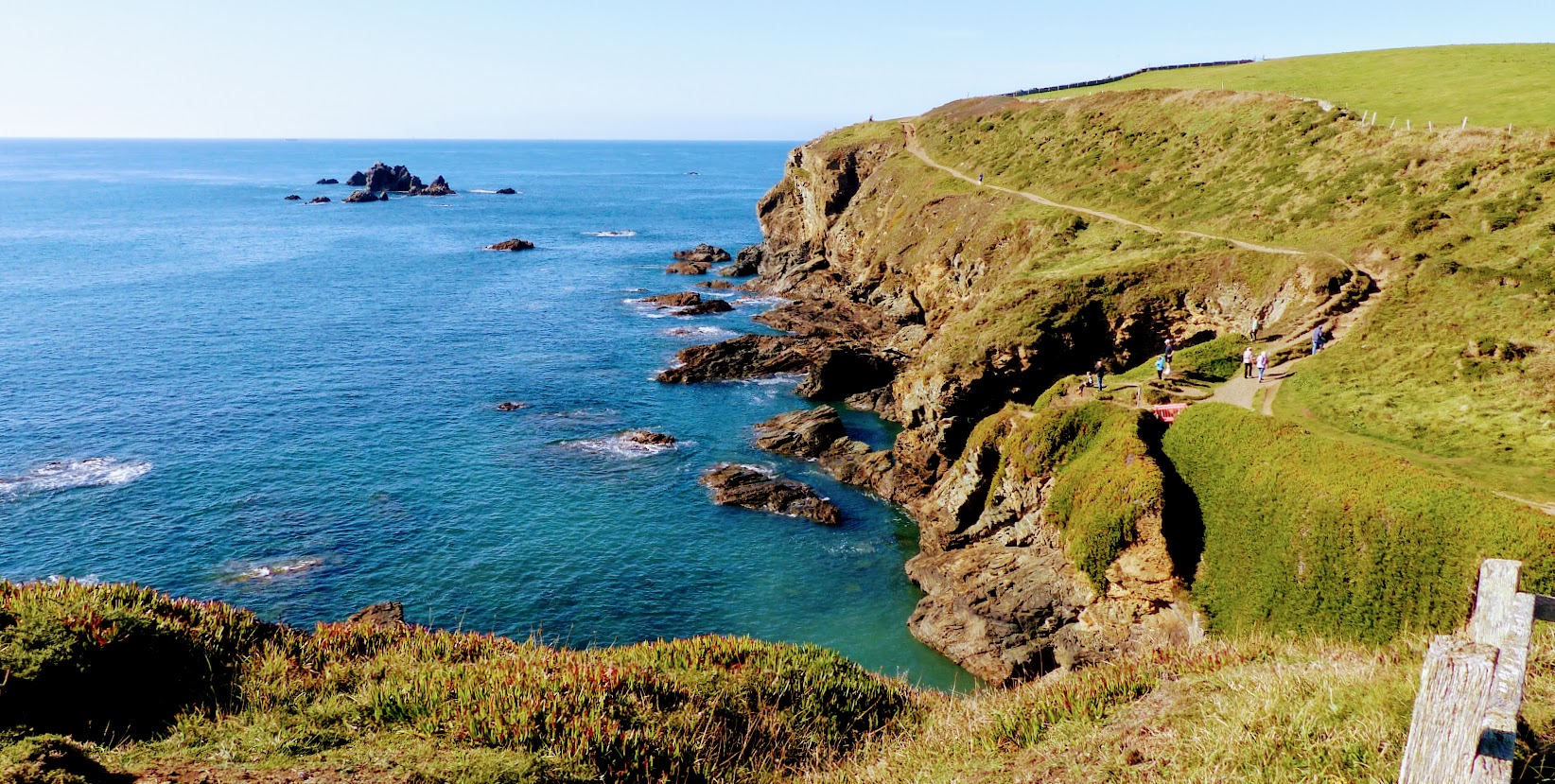
Lizard Point
The Lizard Peninsula
Above Kynance Cove, The Lizard
@barrywills

Thursday, 14 October 2021

Recent comments

There have been comments on the following postings since the last update:

Biomining '21 Day 4
July Cornish Mining Sundowner: more news on lithium
Prof. Akbar Farzanegan
What is the future for journal impact factor?
July update: no end in sight for the pandemic
Major green company Metso Outotec to sponsor Sustainable Minerals '22
Return to Chingola
Future flotation circuits and machines
"Diseases to which Miners of Metals are Exposed": .....
Prof. Raj K. Rajamani, 1948-2021
August update- the pandemic continues; Cornwall becomes the UK's hot-bed for Covid
A stunning walk over southern England's highest cliff, Golden Cap
Prof. Alban Lynch, 1930-2021: the first Director of the JKMRC
Comparing the world's three greatest waterfalls
Malaysia: memories of Penang and the Kinta Valley
September update: More Covid restrictions eased but Covid and Brexit create new problems

We welcome and encourage your comments on blog postings (see also the posting of 2nd April 2019). If you do not have a Google account, the simplest way to add a comment is by selecting 'anonymous' as your profile, but please leave your name and affiliation in the comment. Alternatively, email your comment directly to bwills@min-eng.com.

Last month there were over 18,000 page views, so interacting with the blog enhances your international presence by providing you, and your company or Institute, with valuable exposure.

If you are in Web View (mobile users can access this by scrolling down to the bottom of the screen) you can also check various things in the right hand column:
  • The latest MEI tweets from @barrywills
  • The most viewed posts in the last 7 days, month and year
  • Dates of blog posts (click on the black arrows to open up individual months and postings)
  • Labels, or categories
You can also access MEI's Facebook page and MEI Online via links in this column.
If you would like a weekly email alert to comments on the blog, please let me know via bwills@min-eng.com.

Monday, 11 October 2021

Fellowship of the Royal Academy of Engineers to Prof. Sam Kingman

It is always great to announce that one of our fellow mineral processors has received a prestigious award, and as such it was particularly good to hear that Prof. Sam Kingman, who was a keynote lecturer at MEI's Physical Separation '19 has been awarded Fellowship of the Royal Academy of Engineers.

Professor Kingman, a Pro-Vice-Chancellor at the University of Nottingham, is a gifted academic with a real flair for providing industry with innovative solutions. His research is focused on developing a fundamental understanding of the interaction of microwave and electromagnetic energy with materials and how this can be used to develop energy-efficient, sustainable processes. The development of global partnerships with both academia and industry has been crucial to delivering impact from his work, successfully linking the highest quality research and innovation with an industrial supply chain. 

For over 40 years engineers have explored opportunities for using microwave energy to improve the efficiency of mineral and metallurgical processes.  Given the vast energy consumption of such processes this is not a surprise  as microwave heating has long been assumed to reduce energy consumption in process engineering unit operations.  Selective heating of microwave-absorbent sulphides and metal oxides deported in a microwave-transparent gangue matrix results in differential thermal expansion of the heated phase, yielding micro-fracture around grain margins. Subsequent downstream processing may then yield higher recovery of valuable mineral sulphides and/or lower specific comminution energy, compared to non-microwave treated ore.

But while the mechanistic principles are well established, the scientific and engineering challenges of developing a commercial scale system have been immense. Typical throughputs of a large copper mine can be in excess of 5000 tph of milled ore and a microwave based treatment system would need to handle equivalent throughputs. This is at least an order of magnitude higher than any other microwave process ever built.

Four years ago (posting of 1st June 2017) I reported on two important papers, published in Minerals Engineering, describing how Sam's team from the University of Nottingham and Jenike & Johanson, USA, had detailed the design, commissioning and operation of a system which was the culmination of over fifteen years of research and development activity. This resulted in a pilot-scale high power microwave treatment process, capable of operating continuously at throughputs of up to 150 tph, but crucially scaleable up to several thousand tonnes per hour.

More recent work has shown for the first time that microwave technology can be used in commercial mineral processing plants and that it can be used at significant scale with several of the largest microwave processing plants ever built being applied.  In 2018 a multidisciplinary team of engineers from the University of Nottingham and Teledyne e2v were presented with the Colin Campbell Mitchell Award from the Royal Academy of Engineering for developing MicroHammer, a revolutionary process for extracting copper from its ore by exposing rocks to powerful microwave energy for a fraction of a second. The team combined their skills in microwave technology and engineering to develop the largest microwave processing system ever constructed, capable of processing up to 3000 tonnes of ore per hour.

At Physical Separation '19 Sam's keynote lecture "What's cooking in mining?" examined the steps required to scale up such processes, and the importance of the team involved, presenting a strong case for understanding the value proposition for the technology being developed at the earliest stages of the project and the use of this to drive the research direction. He drew conclusions as to the steps required to see this technology in daily use across our industry - a time which he feels may be sooner than some workers may have previously thought.

Professor Kingman and his group have been recognised through the award of The Engineer Technology and Innovation Prize for Environmental Technology and the Environmental Prize of the Society of Petroleum Engineers and in 2011 he was awarded the Bielby Medal by the Royal Society of Chemistry, Society of Chemical Industries and the Institute of Materials, Minerals and Mining for his work to reduce energy consumption in chemical processing. Other prestigious awards include the Institution of Chemical Engineers Energy Prize in 2012 for work in microwave processing of industrial minerals and the UK Medal for Excellence in Engineering (2001). Microwave processing research at Nottingham has also been recognised by the award of the 2009 Environmental prize by the Society of Petroleum Engineers.

Congratulations Sam, and we look forward to hearing more of progress on this exciting technology.

@barrywills

Thursday, 7 October 2021

The CSM Annual Dinner is back after a long enforced break

After a Coronavirus break of two and a half years (posting of 31 March 2019), the Camborne School of Mines Annual Dinner bounced back last Saturday with a surprisingly good turnout at the Falmouth Hotel, considering that many of the usual alumni from overseas were unable to travel, and the current fuel shortage prevented some travelling from up-country.

Good to be back at the Falmouth Hotel
Photo: Silje Lovstad

One past student who made it all the way from Canada was 1980 mining graduate John Sammut, one of my diving 'buddies' from the late 1970s. John now teaches mineral processing as an Industrial Professor of Mining Engineering at the University of Alberta and he is pictured below with me and his contemporary, mineral processing graduate Nick Wilshaw, managing director and founder of Cornwall-based Grinding Solutions Ltd.

Me, Nick and John

It was planned to have two alumni present a pre-recorded after-dinner speech from Ghana, but unfortunately one of them developed Covid a few days before the dinner, so everyone was grateful to 87-year old Dr. Peter Hackett for stepping in to talk about how CSM has changed since his days as Principal from 1970-1994. This very well received talk was followed by a look to the future from the recently appointed head of school Prof. Stephen Hesselbo, and current Student Union President Alice Burdett presented her own overview of recent developments at CSM.

Peter, Alice and Stephen

Peter Hackett was Principal for all but two of my 22 years at CSM, and neither of us could have envisaged the remarkable gender diversity which developed over the following years, and which I remarked on at some length when describing the 2018 Annual Dinner. Back in our time women weren't even allowed underground, but now the Student Union President is a woman and a mining engineer! Alice has just completed her 2nd year in Mining Engineering. She is passionate about pursuing a future career in mining and is currently an intern with British Fluorpar Ltd in Derbyshire.

And also great to see that the Union Vice-President is Alexandra (Lexi) Clarke, a 3rd year geology student currently working as an intern for GemFair and the DeBeers Group for a placement regarding artisanal diamond mining in Sierra Leone. 

Alice and Lexi are photographed below with previous Union Presidents, Mark Whitfield (2013-14), Luc Phillips (2018-19) and Freddie Foster (2020-21).

Mark, Luc, Alice, Lexi and Freddie
Photo: Silje Lovstad

Considering that Annual Dinners in the past were all-male affairs, it is great to see how the mining world is changing.


Photos: Silje Lovstad

Last Saturday's dinner was a wonderful event and we don't have to wait too long for the next one, which is planned for March 2022. The CSM Association, and its student committee, deserve hearty congratulations for organising this event under difficult circumstances, and a special thanks must go to Dr. Carol Richards who has worked tirelessly to bring this to fruition. A big thanks also to the staff of the Falmouth Hotel, for providing great food and exemplary friendly service.

@barrywills

Monday, 4 October 2021

Flotation '21: Nalco Water the latest sponsor, and international awards to two of our young presenters

We are very pleased to announce that Nalco Water, An Ecolab Company, is to sponsor an MEI Conference for the first time, joining the other 21 sponsors of Flotation '21. On September 20th Ecolab Inc., was named a Global Compact LEAD participant for its ongoing commitment to the United Nations Global Compact, the world’s largest corporate sustainability initiative with more than 12,000 participating companies in 160 countries. Ecolab is one of only 37 companies to receive this recognition.

Nalco Water plays an important role in the management of water, from the time it enters a facility until the moment it is returned back into the environment. This is a critical area of all mineral processing operations, including flotation, and will be the subject of a number of presentations in the sessions on Circuits and Plant Practice in the Flotation '21 programme.

Two presentations in Circuits and Plant Practice will be from the Federico Santa María Technical University in Chile, one by Paulina Vallejos and the other co-authored with her colleague Prof. Juan Yianatos. We would like to congratulate Paulina for her “Young Author Award 2020”, a recognition given to the most outstanding work carried out by young people, which were submitted to the International Mineral Processing Council.

Juan and Paulina

Paulina and Juan presented work at Flotation '17. She is a graduate of the Federico Santa María Technical University  and has a Master of Science in mineral processing from the same institution. She currently works as a researcher in the University and as a project engineer in Automation and Supervision Centre for the Chilean Mining Industry, also working as a consultant for the mining industry in Chile and abroad.

Paulina said “they have been years of a lot of work, but it has become a great experience for me; it has been a period of much learning and professional growth. I am very happy and grateful to have received this international recognition, especially from the International Mineral Processing Council, which is a very important entity worldwide in the area of ​​mineral processing. Also, a few weeks ago I was invited to the annual meeting of The Southern African Institute of Mining and Metallurgy (SAIMM), where my award was recognized. It is very gratifying to see that international institutions recognize our work. Finally, to be the only woman among the six people who received this recognition, It reminds me that there is still a lot of work to be done to achieve gender equality in mining. Personally, I try every day to be a contribution in this regard and I hope to contribute a grain of sand so that in the future we will be more and more present in this area.”

Prof. Yianatos highlighted the importance of this distinction, as it reflects the result of teamwork. “This is the first time that we have the opportunity to highlight a Chilean woman and in addition to the University of Santa Maria, it is an award for joint effort. We have been working in this area for more than 40 years, we have participated regularly in different international congresses. It is a recognition of the work that we do and in particular of Paulina, who, since she graduated from the University, has been a brilliant and outstanding researcher. From a very young age she has presented at international congresses and that naturally makes us proud, because in some way, it is the projection of the work we have done; the credit goes to her because she has been the one who has had the central participation, being at the height of the research that the main universities in the world are doing.” 

Also from Chile, Diego Mesa was another IMPC Young Author Award winner, who will present a paper at the conference on Positron Emission Particle Tracking, with co-workers from South Africa.

Diego obtained his Bachelor of Science in Mining Engineering from Universidad de Chile in 2013 where he was also awarded his Master of Science in Extractive Metallurgy in 2015. He then worked as a metallurgical consultant in Chile for over a year before moving to the UK, where he obtained his PhD in the Advanced Minerals Processing Research Group at Imperial College London. He is now a Research Associate at Imperial College, where he continues his research related to froth flotation, collaborating with several partners associated with the FineFuture project, funded by the European Union.

Congratulations Paulina and Diego. I know that you and your co-workers will make a big contribution to the success of Flotation '21.

#Flotation21