Sunday, 31 January 2021

January: Fortress Britain

A grim start to the new year with the new variants of Covid-19 threatening to spread across the country and savage the beleaguered NHS.  On the 4th of the month Prime Minister Boris Johnson announced a complete lockdown of the UK. The previous evening he had said that primary schools in much of the UK would remain open, as schools were "perfectly safe", so the following day children returned to school after the Christmas break, to be told in the evening that schools were no longer safe and would have to close until at least mid February.

Parents, including MEI's Jon and Amanda, are having to balance work and home teaching duties and this is true not only in UK but around the world, so I must apologise to those who have submitted manuscripts to Minerals Engineering and are awaiting news of the outcome of assessment of their papers. The stresses of the pandemic are such that many potential reviewers are overworked and there has been an inevitable slowing down of the whole peer-review process.

Couple all that with an egregious storming of the White House by pro-Trump supporters contesting the result of the Presidential election, and leading to five fatalities, then the first week of January wasn't the best way to start a New Year.

From the middle of the month travel into and out of the UK became virtually impossible as most of the travel corridors with the UK were suspended and, coupled with Brexit, Britain became, for the first time in its history, an effectively isolated nation, with a tragic milestone of 100,000 deaths from Covid reached last week, 30,000 more than the number of British civilians killed by bombing raids in the whole of WW2.

However the beginning of the month was also tempered with optimism, as on the same day as the lockdown announcement the first Briton was injected with the vaccine developed by the University of Oxford and the pharmaceutical company AstraZeneca, a silver lining in the cloud of gloom, offering an escape from the mounting horrors of this pandemic. 

Source: Rebecca Hendin/The Guardian
The future is in safe hands

I had my first armful of the Pfizer vaccine two days ago, but aside from Coronavirus, which is the main topic of conversation on everyone's lips, there was news that the 2021 G7 Summit will be held in Cornwall in June, so perhaps fortuitous that MEI's conferences planned for the same week were postponed to the following year and Falmouth's popular Sea Shanty week, also in mid-June, is going virtual. We felt that the 'new norm' wouldn't be with us by then and it will be interesting to see if the G7 goes ahead as planned.

There was also some good news on the ever increasing importance of Cornwall to the mining industry. Geothermal Engineering Ltd continues to push forward with the United Downs Deep Geothermal Power project. The production well is 5.275km deep and the temperature is 188 degrees C. GEL has signed a power purchase agreement with Ecotricity whereby a minimum of 3 MW of electricity, enough to power 6,000 homes, will be distributed to Ecotricity’s customers via the National Grid. It is the first time that geothermal electricity will be produced and sold in the UK.

GEL also hopes to supply heat energy to a new local rum distillery which will use zero carbon heat from the plant. The Cornish Geothermal Distillery Company has submitted plans for the UK’s first geothermally heated biome which will be used to mature and then distill sustainable rum.

GEL is hoping to secure planning for future sites around Cornwall over the next two years. Each new site will aim to produce a minimum of 5 MW of renewable baseload electricity and up to 20 MW of renewable heat which will be available 24/7. 

A massive bonus has been the discovery that the geothermal water has a high lithium content and GEL is working closely with Cornish Lithium Ltd to develop zero-carbon lithium extraction from these hot lithium brines, and the Crown Estate, manager of the seabed and much of the foreshore around England, Wales and Northern Ireland, recently announced the outcome of its Minerals Licensing Round, granting Cornish Lithium rights to explore for lithium within geothermal waters in areas off both the north and south coasts of Cornwall.

The world’s ever-increasing demand for car-battery lithium is now focusing on Cornwall where lithium was first identified in 1864. Europe presently has no secure supply of lithium, and nearly all lithium comes from the Central Andes – the desert salars of Chile, Argentina and soon from Bolivia – or from Australia (posting of 23 November 2020). Cornish Lithium aims to maximise product recovery from the geothermal waters in a small footprint, energy efficient extraction plant, which will be powered by an on-site geothermal power plant. Lithium will be extracted from the water from the geothermal power plant's 5.2km deep borehole and the water will then be re injected into the rock.

And finally I must mention a short video, in which Cornish Lithium's Senior Geologist (Business Development), Lucy Crane, is interviewed by 10 year old school girl Sophia on the importance of mining to society and what it is like to work in the industry. Lucy has a keen interest in furthering the interests of young mining professionals and in promoting the mining industry to students, and sits on the committee of both the Young Mining Professionals and Women in Mining (UK). I would urge all readers of this blog to make teachers of children of every age aware of this inspirational video.

Lucy and Sophia

It might inspire youngsters to train as mining engineers but Camborne School of Mines (CSM) is the only university department in UK offering a degree in mining engineering. In September I reported that the University of Exeter had announced a plan to ‘pause’ recruitment to the BEng Mining Engineering programme at CSM for the 2021-22 academic year, but stressed that it hadn’t been scrapped, instead recruitment was paused while it looked to reshape the opportunities to study mining and related topics. 

Following 5 months of deliberations, the University decided in January to continue the ‘pause’ in offering the Mining Engineering undergraduate degree programme. It is not likely that recruitment will resume in 2022 so there will be no mining graduates after 2024 when the current cohort has completed their BEng degree.

Camborne School of Mines Association has tried to influence the decision by submitting letters of support from its members, many of whom wrote to the Vice Chancellor Prof. Lisa Roberts in September and October 2020.   Unfortunately, these letters were dismissed as  “sentiment”.

So this effectively brings an end to CSM's proud record of training graduate mining engineers, which has its origins back to 1888. And all at a time when there is a resurgence in mining activity in Cornwall and Boris Johnson, in bringing the G7 to Cornwall, has talked enthusiastically of Cornwall's proud mining heritage.

@barrywills

Thursday, 28 January 2021

Rare-Earth Metal Recovery for Green Technologies: Methods and Applications


This new book examines the development, use, extraction, and recovery of rare earth metals. Rare earth elements (REEs) occupy a key role in daily life in industrial applications. They are one of the critical elements for energy and sustainable growth. REEs are utilized in many modern electrical and electronic devices such as smart phones, computers, LED lights etc.

Recovery of the REEs from secondary resources represents a way to meet the growing demand for electronic devices. Because of their rarity, utility, and importance, the recovery, utilization and recycling of rare earth metals is of utmost importance. This book presents both current methods of processing rare earths from primary and secondary sources and new, green routes for their isolation and purification. 

The book also addresses their utilization, re-use, reduction, and recycling policies that exist globally. Applications in metallurgy, magnets, ceramics, electronics, and chemical, optical, and nuclear technologies are discussed.

The editor, Dr. Jyothi Rajesh Kumar is a Principal Researcher at the Korea Institute of Geoscience & Mineral Resources, Daejeon, South Korea as well as serving Professor for the University of Science & Technology, South Korea in the area of Resources Recycling.

Monday, 25 January 2021

We welcome Festo, the latest sponsor of Flotation '21

It was good to hear that Festo, a multi-national company with over 22,000 employees worldwide, is to sponsor Flotation '21 in Cape Town in November.

Festo develops tailored automation solutions for the process industry, in all project phases from engineering to operation and maintenance. The company exhibited at Flotation '17 for the first time, and  was a full sponsor for Flotation '19, the last face to face MEI conference before the pandemic.

The photo below shows the Festo booth at Flotation '19. On the right is Thomas Bertsch of Festo Germany, who presented work at the conference discussing the next level towards increased productivity by applying digitalization and artificial intelligence concepts in minerals processing.

Thanks again to Festo, and to all our sponsors who are supporting us during these difficult times.

#Flotation21

Sunday, 24 January 2021

Comminution '21 Final Call for Abstracts

Comminution '21, MEI's 12th International Comminution Symposium is also our first online event.

The deadline for abstract submission is now just a week away (January 31st) and we invite you to take part in this event by submitting your abstracts online. Presentations in April will be either live or pre-recorded, and all presenters will be invited to submit final papers to a Virtual Special Issue of Minerals Engineering.

We look forward to your active participation in this international meeting.

#Comminution21

Thursday, 21 January 2021

Memories of the 2006 IMPC in Istanbul

As there is not a lot of social interaction at the moment, I thought it might be good to look back at September 2006, in the days when we talked to people face to face, and a very enjoyable International Mineral Processing Congress in Turkey, organised under the leadership of my good friend Prof. Guven Onal of the Istanbul Technical University.

Bolstered by a huge Turkish contingent, the XXIII IMPC in Istanbul attracted what was then a record number of delegates, over 900 participating, with papers from 46 countries.

Three very memorable social events were held at the magnificent Dolmabahce and Beylerbeyi Palaces, the former being in the European sector of Istanbul, the latter across the Bosporus in Asia, and the farewell dinner was held at the end of the penultimate day of the conference, a magnificent affair rivalling the memorable ‘African Night’ at the previous Cape Town IMPC. In the splendid open air setting of Buyuk Klup, on the Asian side of the Bosporus, we were entertained, over an excellent 4-course meal, to live Turkish music, folk-dancing, and belly-dancing. There was a formal aspect to the evening as well, with final speeches from the organisers, which were kept short and pertinent and culminated in the lifetime achievement award to Prof. H. Schubert.

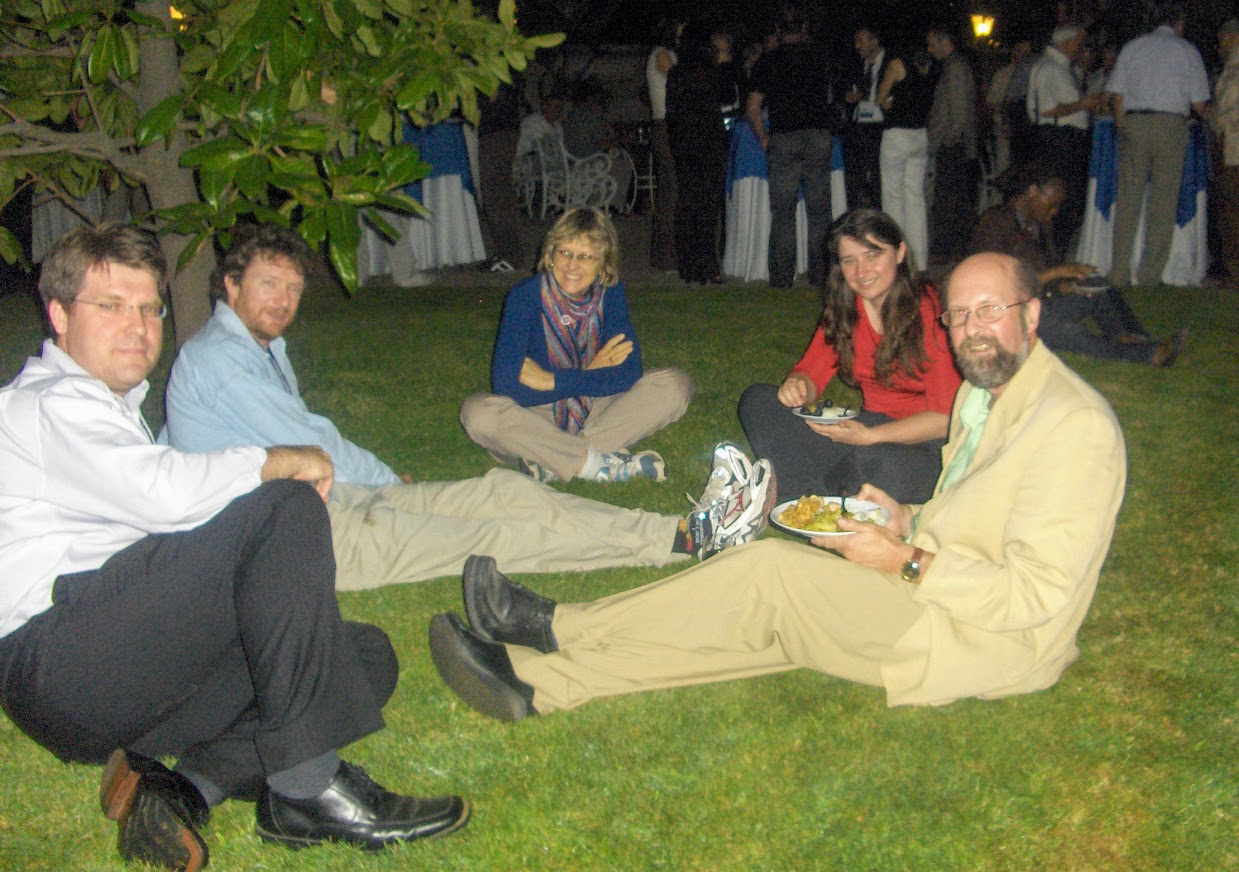
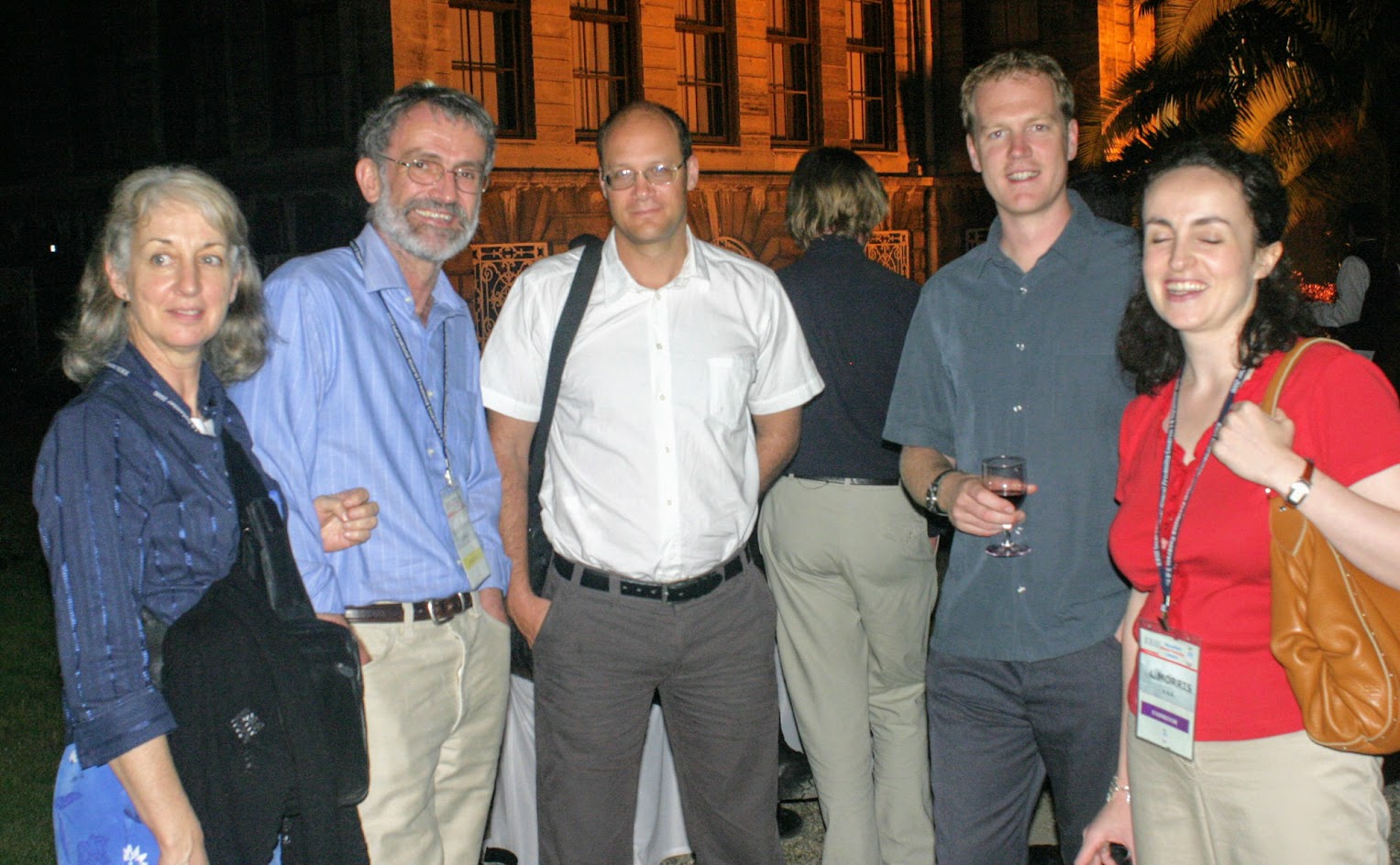
I am sure that you will recognise many of the people in the photos below, some sadly no longer with us.

Jon by the Blue Mosque in the Old City
In the Old City with Kathryn Hadler, Loise Morris and Jan Cilliers
Congress Chairman Guven Onal (2nd left) with IMPC Council members

Monday, 18 January 2021

Progress towards the Virtual Comminution Machine

The minerals industry is facing significant challenges, driven by declining ore grades, increasing demand for industrial metals (particularly related to electrification of cars and renewable energy generation) and increasing pressure on the use of carbon-based energy sources. All of these impact strongly on mineral processing and the unit operations that make up the grinding circuits that they use. 

Requirements to grind more material, to grind it finer, to grind rock with increasing amounts of gangue and with increasingly complex mineralogy will increase challenges in the development of new circuits and will require new comminution machines and machines that are better optimised. Conventional approaches for crusher and mill design and optimisation, which have been dominantly empirical, are very slow and expensive, which strongly limits innovation. The Virtual Comminution Machine (VCM) is an approach involving a combination of detailed particle scale physics-based modelling and laboratory characterisation of material behaviour, particularly for breakage. 

The development of the VCM has been enabled by the substantial growth over the last two decades in computer power, the maturation of particle based modelling methods (and software) and increasing understanding of breakage fundamentals and how to characterise these. 

We are pleased to have Dr. Paul Cleary, Chief Research Scientist at CSIRO Data61, Australia, as a keynote lecturer at MEI's online conference Comminution '21 in April. Paul will explore the VCM, its components and origins and the capabilities that it brings to understanding the detailed mechanistic behaviour of particle breakage and particle and slurry transport. The use of such information for design of new machines, for testing of novel machine concepts (before even a physical prototype is constructed) and optimisation of existing machines will be discussed. 

The presentation will showcase advanced full scale VCM models for several crushers and mills. The VCM is already being used to assess some novel comminution machines and to drive rapid design evolution. These developments are commercial in confidence.

For the past 30 years at CSIRO Dr. Paul Cleary has been recognised as a world leader in the development and application of particle based computational methods for the prediction of the behaviour of physical systems. He has published broadly, with more than 600 papers in international journals and conferences. In the recent Stanford University listing of the Top 2% of Scientists in the world Paul was ranked #1 of the 600 elite scientists in the field of Mining & Metallurgy.

#Comminution21

Thursday, 14 January 2021

Greta Thunberg's criticism of the Cumbrian coal project highlights her naivety

Environmentalist Greta Thunberg has criticised the government's decision not to intervene in plans for the UK's first deep coal mine in 30 years. The West Cumbria Mining development has led to protests by climate campaigners, including of course Extinction Rebellion, who have argued that the new mine, which will reportedly emit 8m tonnes of carbon annually, contradicts the UK’s pledge to be carbon neutral by 2050 (posting of 12 October 2020).

Extinction Rebellion Cumbria staged a "climate change crime scene" outside the council in October (Source BBC)
Ms. Thunberg tweeted to her 4.4 million followers last week "The UK government has decided not to intervene with the plans of opening a brand new English coal mine. This really shows the true meaning of so called “net zero 2050”. These vague, insufficient targets long into the future basically mean nothing today".

Her tweet has prompted hundreds of comments, the majority applauding her stand but not all, thankfully. Many of them appreciate why this mine is being developed but their comments are often met with blatant abuse from those totally ignorant of the difference between thermal and metallurgical coal.  

West Cumbria Mining plans to mine under the seabed to extract around 2.7m tonnes of metallurgical coal annually, which is essentially, and solely, for use within industry and not for power stations. Steel and chemical factories in Scunthorpe, Lincolnshire and Port Talbot are expected to utilise the mine's output, with the company arguing that the coal will replace imports and will not increase emissions because it will not be shipped over from the US, Canada, Russia and Australia. 

What Greta Thunberg, and other extremists with limited technological knowledge, do not realise is that achieving a carbon-free society will require vast quantities of raw materials to build the electric vehicles and wind turbines of the future, and the most essential material will be steel, the ubiquitous alloy used in construction. A single wind-turbine, for instance, requires well over 300 tonnes of steel, and to make steel we need metallurgical coal from which we produce coke for the iron blast furnaces.

Although environmental considerations are driving the introduction of new technologies, blast furnace related technologies for the production of pig-iron are still by far the most common methods for ironmaking and are predicted to be the single largest process until 2050. The blast furnace is reliant on a plentiful supply of coke, the hot air blast oxidising the coke to carbon monoxide, which reduces the iron ore, hematite, to pig-iron, a very brittle alloy, containing around 4% carbon. Liquid pig-iron is then refined in oxygen converters, which reduce the carbon content to a value dependent on the use for the steel, 'mild steel', which is used for general engineering applications, having a carbon content of round 0.2%.

It is unlikely that technologies that do not use liquid pig iron will dominate in the coming decades, and ore, coal and limestone will remain the main raw materials used to make pig-iron. Existing technologies that produce liquid pig-iron outside the blast furnace are considerably inferior to blast furnace smelting with respect to productivity and integral total fuel consumption, which includes the fuel costs incurred to produce coke, agglomerated ore-bearing materials, hot blast air, and oxygen. The blast furnace process is also the leading technology in terms of the scale of production and has the lowest production costs. 

So it may seem paradoxical, but mining of coal is essential in the quest for a zero-carbon society. Metallurgical coal is required to produce steel, but it is rarely appreciated that fossil fuels, whether from coal or gas, will also be needed for some time yet, in order to help build the electric vehicles and wind turbines of the future. There just aren't enough renewable sources of energy at present to provide the energy to mine and extract the necessary raw materials and to manufacture the multitude of renewable energy devices and electric vehicles which are proposed.

We have talked a lot on the blog about educating mining sceptics, but the unfortunate thing is that those that we really need to educate are often those with the highest profile, who attract hordes of unthinking followers. 

@barrywills

Saturday, 9 January 2021

Comminution '21 online website now live

As announced last month Comminution '21, originally scheduled to be held in Cape Town, will now be a virtual event to be held over the same dates, April 19-22, 2021.

We are pleased to advise that the online website is now live, and from this you can submit your abstracts and register for the event. The deadline for abstract submission is the end of this month.

We have two well known comminution experts presenting keynote lectures. "The slow journey to practical energy efficient comminution" will be given by Chris Rule, Independent Metallurgical Consultant, Seymet Pty Ltd, South Africa, and we are also pleased that Dr. Paul Cleary, of CSIRO  Data61, Australia, has agreed to present a keynote. Appropriately called "Progress towards a virtual comminution machine" more details will be announced soon. In the recent Stanford University listing of the Top 2% of Scientists in the world Dr. Cleary was ranked #1 of the 600 elite scientists in the field of Mining & Metallurgy.

All presenters will be invited to submit papers after the conference. These will be peer-reviewed and, if accepted, published immediately in the first available regular issue of Minerals Engineering, and included in the Virtual Special Issue of the conference on ScienceDirect. This is an ideal opportunity to present your work to an international audience and have your paper published in a refereed journal of high repute, the conference itself providing initial peer-review via discussion.

The latest updates will be published via #Comminution21.

Friday, 8 January 2021

Recent comments

There have been comments on the following postings since the last update:


We welcome and encourage your comments on blog postings (see also the posting of 2nd April 2019). If you do not have a Google account, the simplest way to add a comment is by selecting 'anonymous' as your profile, but please leave your name and affiliation in the comment. Alternatively, email your comment directly to bwills@min-eng.com.

Last month there were around 14,000 page views, so interacting with the blog enhances your international presence by providing you, and your company or Institute, with valuable exposure.

If you are in Web View (mobile users can access this by scrolling down to the bottom of the screen) you can also check various things in the right hand column:
  • The latest MEI tweets from @barrywills
  • The most viewed posts in the last 7 days, month and year
  • Dates of blog posts (click on the black arrows to open up individual months and postings)
  • Labels, or categories
You can also subscribe to blog alerts by email, and access MEI's Facebook page and MEI Online via links in this column.

Tuesday, 5 January 2021

MetSoc Hydrometallurgy Scholarship Honours Prof. Fathi Habashi

Professor Fathi Habashi, Emeritus Professor of Extractive Metallurgy at Laval University, Canada is one of our profession's most prolific scribes, so it is strange not to see him listed in the Mining & Metallurgy group in the listing of the world's top 2% cited scientists. He does appear in the overall list, however, but strangely in the group Materials, and I am sure there are many other such anomalies.

I have known Fathi for many years, meeting regularly in USA for the SME Annual Meetings, but the last time I saw him was four years ago in Quebec City, where he kindly showed Barbara and me around the Laval University campus (posting of 10 September 2016). I was amazed to see that a whole section of bookshelves in the university library was devoted to his publications, many books and journal papers.


Fathi's involvement with students is particularly worthy of note, as at the age of 92, he continues to mentor aspiring professionals and encourage Canadian undergraduate students to pursue hydrometallurgy. It is for this reason that Metsoc's Hydrometallurgy Section chose to honour Prof. Habashi by naming one of its undergraduate awards after him, and the 2020 recipient of the Fathi Habashi Scholarship is Ahmed Kabil

Ahmed is a fourth-year chemical engineering student at the University of Toronto and his research focused on various methods for the removal of phosphorous and arsenic from aqueous effluents. Kabil, along with every future recipient of the award, will receive a certificate which includes a citation recognizing Prof. Habashi.

Friday, 1 January 2021

2021: bring it on!

Ebenezer Scrooge. That is who I feel like today, sitting alone in my office on New Year's Day. Barbara and I had planned a family get together for today, which had to be cancelled due to increased Coronavirus restrictions which were imposed yesterday due to the rapidly spreading new strain of the virus. Cornwall, which at the beginning of the month was in medium alert Tier 1 is now in the very high alert Tier 3, while the majority of England is in the toughest Tier 4. With Scotland, Wales and Northern Ireland in complete lockdown, with few exceptions the whole of the UK is effectively in quarantine.

Last night we were also on our own, celebrating not so much the beginning of the New Year as the end of the old one.

All a far cry from our past New Year celebrations, joyous affairs with family and friends. A particularly memorable one was way back in 1987 when we were joined by two young researchers from Asia, who were spending some time at CSM. One, a very affable fellow, whose name and research discipline escape me, was from the Republic of Korea. He is on the far right of the photo below, in which you might be able to spot Amanda, Jon, Barbara and me.

New Year's Eve, 1987

Third left on the back row is Dr. Gu Feng, of Qingdao Employee's College of Mines, China, who had just arrived in Cornwall, his first time out of communist China, which must have been a huge cultural shock, not the least being one of our New Year parties.

Gu Feng worked with me at CSM for a number of months and as a "stocking-filler" for the newly formed Minerals Engineering we put together a short paper on chromite processing which was published in Volume 1 in 1988. 

The presence of these two scientists from so far away highlights the importance of international collaboration. As of today the UK is an independent country and hopefully the word Brexit will soon be assigned to the memory banks. Thankfully the deal negotiated with the EU retains involvement with collaborative programmes of research, such as Horizon 2020, the biggest ever EU Research and Innovation programme.

Worryingly though, Prime Minister Boris Johnson has announced that the UK will not continue to participate in the Erasmus scheme, an EU programme that helps students study in other countries, and will be replacing it with a new scheme named after the mathematician Alan Turing. He said that under the new scheme students would have the opportunity not just to go to European universities but to go to the best universities in the world. Another of his U-turns, as in Parliament on 15th January last year he said "there is no threat to the Erasmus scheme. We will continue to participate, and UK students will continue to be able to enjoy the benefits of exchanges with our European friends and partners, just as they will continue to come to this country." (YouTube).

Although coronavirus is now affecting student mobility, figures from before the pandemic showed that about half of UK university students who studied abroad did so through Erasmus and a report from the House of Lords EU Committee warned the benefits of the Erasmus programme, which is 30 years old and took many years to establish itself, would be very difficult to replicate with the national programme that the government is planning. 

However there is much to be optimistic about as we enter the new year, particularly the thought that the vaccines will lead us into a new era, the 'new normal'. The Pfizer-BioNTech vaccination programme is well under way, and only two days ago the Oxford-AstraZeneca vaccine was approved for use in the UK, with the first doses due to be given next week.

Despite having to cancel or postpone all MEI Conferences in 2020, we are sure that all our 4 conferences this year will go ahead. Comminution '21 will be our first virtual conference and the call for abstracts deadline is the end of this month.

In June Biomining '21 and Sustainable Minerals '21 will take place, also as virtual events, and more details will be announced very soon. Flotation '21 is in November, and hopefully by that time face to face events will be the norm, so we hope to be back in Cape Town at the end of the year.

In the meantime, look after yourselves and a happy new year from all of us at MEI. And a special thanks to all those who have contributed to the blog via comments. I really do appreciate interaction such as this and particularly in these hard times it is important to talk to each other even if it is via social media. So please do keep your views and ideas flowing, and if you have not already done so, I invite you to subscribe to blog alerts via email.

@barrywills